Understanding the Impact of Opinion Polls on SA's Electoral Landscape
With the Local Government Elections approaching in South Africa, opinion polls reveal shifting voter sentiments and the challenges facing major political parties. This article explores the implications of these polls on the electoral landscape.
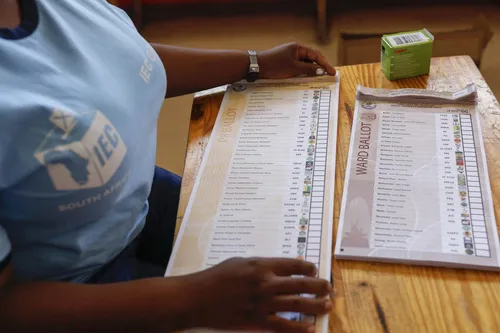
Opinion polls are commonly used before elections to predict outcomes, with social media playing a significant role. In Zambia, between June and November 2025, the Zambia Election Research Network (ZERN) conducted polls that revealed 41% of participants felt the economy had worsened since the last election, while only 38% felt their personal lives improved. Regarding projected results, 55% supported the incumbent party, 13% preferred the opposition, and 32% were undecided.
In Israel, 55% of projected results support Benjamin Netanyahu’s Likud party, with 13% backing the opposition and 32% undecided. In the upcoming American midterm election on November 3, 2026, polls by Logan Phillips show that the Democratic Party has a 57.6% chance of winning, compared to the Republican Party’s 42.4%.
For South Africa, various opinion polls have emerged in anticipation of the upcoming Local Government Election (LGE) on November 4, 2026. The Social Research Foundation (SRF) projected that the African National Congress (ANC) support will decline, while the Democratic Alliance (DA) support will increase in Johannesburg Metropolitan Municipality.
In Tshwane, both the SRF and The Common-Sense surveys suggested that the DA and Freedom Front Plus (FF+) could jointly govern the city, while other parties would have minimal representation.
In KwaZulu-Natal, especially in eThekwini Metropolitan Municipality, the KwaZulu-Natal Inkatha Freedom Party (MKP) emerged as the favorite. This was due to the party's growing popularity since its formal announcement in December 2023. However, the MKP's support may be reduced from previous figures. The results should be understood in context, with the ANC's projected decline attributed to factors like the president's false promise of a new dawn, increasing unemployment and crime rates, factionalism within the ANC, and allegations of illegal immigration.
While the DA and MKP show signs of change, voters should remain vigilant and critical when interpreting the results, considering factors like survey motives, conductors, sample size, and diversity.
Written by urgent.news from IOL's reporting — not their text. Machine-written — may contain errors; check the original before relying on it.