Parliament at a standstill, protests on streets: The Monsoon session story
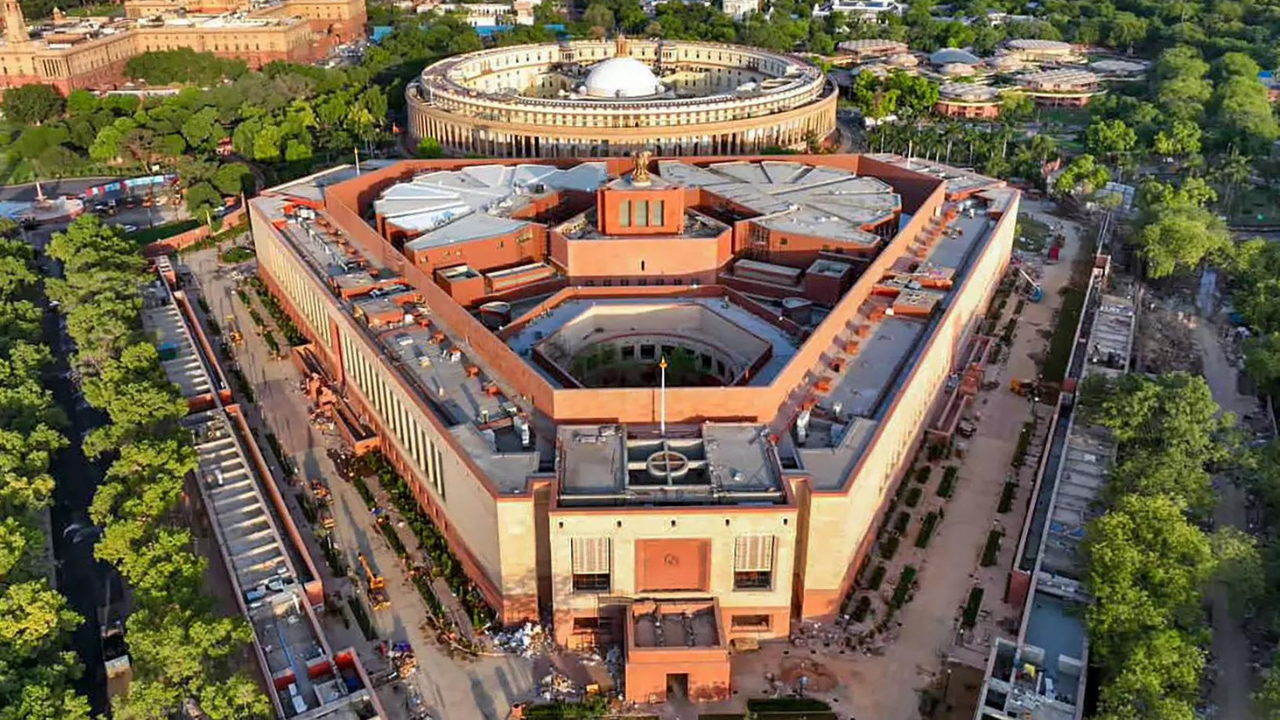
For 25 days, the Monsoon Session of Parliament unfolded in two distinct arenas. In the House, proceedings were repeatedly interrupted, sessions were frequently adjourned, and Question Hour saw minimal time allocated. Outside, political activity remained incessant. Student demonstrations, opposition leader protests, ministerial exchanges, and even protests within Parliament turned into public performances.
The session ran from July 20 to August 13. Despite legislative progress, much of the political confrontation transpired away from the Houses.
Lok Sabha functioned for about 19% of its scheduled time, while Rajya Sabha operated for roughly 39%. Question Hour faced the most significant setback, with less than 1% of its allotted time utilized. Parliamentary affairs minister Kiren Rijiju acknowledged this dichotomy, stating, "It was a good session... we have passed 13 bills; but it was not a good session in terms of discussion."
The government managed to push through several bills, often via voice votes amidst opposition protest. Of the 12 bills passed, 12 were also approved by the Rajya Sabha.
The session saw passage of 11 Bills in Lok Sabha and two in Rajya Sabha. Both Houses cleared 12 bills, and the Demands for Excess Grants for 2022-23 were also addressed. Two ordinances were converted into bills—the Supreme Court (Number of Judges) Amendment Ordinance, 2026, and the Income-Tax (Amendment) Ordinance, 2026. The Foreign Contribution (Regulation) Amendment Bill, 2026 was referred to a Joint Committee.
The Public Examinations (Prevention of Unfair Means) Amendment Bill, 2026, introduced amid concerns of examination irregularities, garnered attention for its amendments to ensure fair practices. Introduced by the BJP, the Bill utilized contemporary language to connect with younger voters. Other notable Bills included the Prevention of Insults to National Honour (Amendment) Bill, Registration of Births and Deaths (Amendment) Bill, and the MSME Development (Amendment) Bill. However, the political climate was dominated by protests outside.
The session commenced with student protests over NEET examination irregularities. After scientist Sonam Wangchuk's hunger strike intensified the agitation, leading to confrontations with police which resulted in injuries. The opposition leader Rahul Gandhi joined the protests, adding fuel to the political fire. Meanwhile, Dharmendra Pradhan, previously the Education Minister, resigned, marking another significant event in the session.
Written by urgent.news from Times of India's reporting — not their text. Machine-written — may contain errors; check the original before relying on it.
This story
This is one outlet's version. Read the fullest account.