Musk’s headaches: meet China’s corporate matrix challenging his business empire
US entrepreneur Elon Musk has long been highly respected in China. His business ideas – from electric cars to rockets, humanoid robots and brain implants – have spawned Chinese followers, many of which now pose growing threats to Musk’s business empire. These Chinese competitors tend to follow a similar strategy: capitalise on the large domestic market to grow their business while taking…
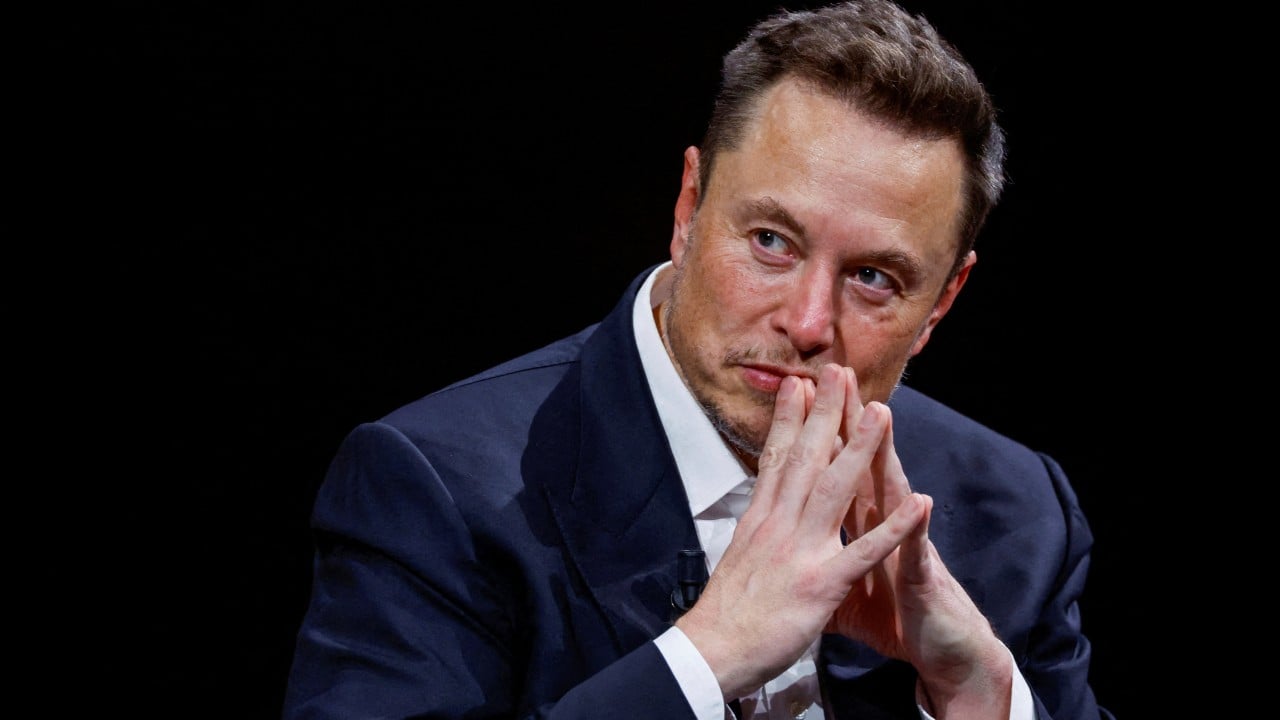
Elon Musk enjoys considerable respect in China, where his business concepts – ranging from electric vehicles to rocket technology and brain implants – have garnered a substantial following. Numerous Chinese entities are now posing significant challenges to Musk's business empire, employing a common strategy of leveraging the extensive domestic market and capitalizing on the country's integrated supply chains and rapid manufacturing capabilities. This article examines some of the most formidable competitors in Musk's primary industries.
In electric vehicles and autonomous driving, Chinese firms such as Nio, Xpeng, and BYD have emerged as major competitors to Tesla. Nio and Xpeng, founded by William Li and He Xiaopeng respectively, were inspired by their experience with Tesla in China. Meanwhile, BYD has surpassed Tesla to become the leading global manufacturer of battery electric vehicles, projecting a global expansion strategy.
Autonomous driving is spearheaded by Baidu's Apollo Go platform, alongside up-and-coming companies like WeRide and Pony.ai, which are rapidly advancing driverless operations in key Chinese cities. Additionally, Momenta has obtained regulatory approval in Germany to commence testing its autonomous driving systems on public roads.
Huawei's automated driving system has logged over 12.1 billion kilometers of operation, providing valuable data for neural network training.
SpaceX faces competition from both private launch firms like LandSpace and CAS Space, and state-owned China Aerospace Science and Technology. LandSpace aims to raise 7.5 billion yuan for reusable rockets, and both LandSpace and CAS Space plan to allocate IPO proceeds to this sector. China successfully recovered an orbital-class rocket booster for the second time on July 10, marking a significant milestone in space technology.
In the satellite broadband arena, Starlink contends with Beijing's vast SatNet constellation and the Thousand Sails constellation backed by Shanghai.
In the realm of humanoid robots, Tesla's Optimus faces stiff competition from Chinese companies such as Unitree Robotics, Agibot, UBTech Robotics, BYD, Xiaomi, and Xpeng. Despite Tesla yet to officially launch Optimus, Chinese firms have established themselves as the world's largest suppliers of humanoid robots. Agibot has produced its 15,000th robot, while Xpeng plans to manufacture over 1,000 Iron humanoids monthly and launch global deliveries by 2027.
Lastly, in brain-computer interfaces, Chinese startups like Neuracle Technology, BrainCo, and NeuroXess are leveraging government support to expedite commercialization. China's regulatory environment is facilitating this advancement, as seen with Neuracle Technology's recent approval for a hand-movement implant in paralyzed patients.
Written by urgent.news from SCMP Business's reporting — not their text. Machine-written — may contain errors; check the original before relying on it.
This story
This is one outlet's version. Read the fullest account.