Modi aims to have 50 Indian firms in Fortune 500 list
Agencies New Delhi Prime Minister Narendra Modi, in his Independence Day speech on Saturday, set a target for India Inc. to have 50 Indian companies on the Fortune 500 list within...
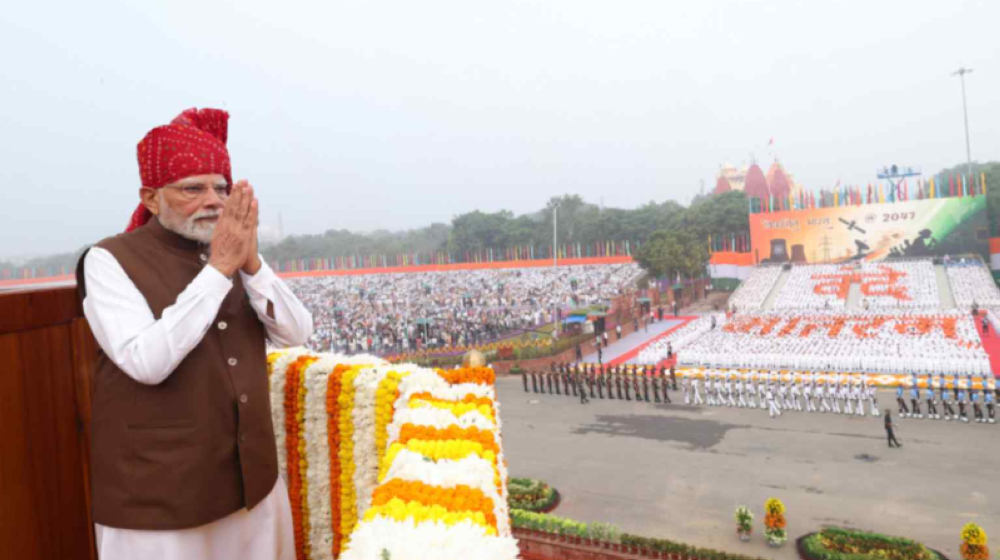
Prime Minister Narendra Modi addressed the nation on Independence Day, setting an ambitious goal for India Inc. to have 50 Indian companies on the Fortune 500 list within the next decade. The Fortune 500 list, published annually by Fortune magazine, ranks the world's largest companies by revenue. In 2025, these companies generated a combined revenue of $43.1 trillion, accounting for more than one-third of the world's GDP.
Modi's target extends to specific sectors, including banking and pharmaceuticals. He aims for at least one Indian bank among the world's top five banks and one Indian pharmaceutical company among the world's top five pharmaceutical companies. Currently, there are 10 Indian companies listed in the Fortune 500, with Reliance Industries and the Life Insurance Corporation of India among the top 100.
Other notable companies include Indian Oil Corporation, State Bank of India, Oil and Natural Gas Corporation, HDFC Bank, Bharat Petroleum Corporation, Tata Motors Passenger Vehicles, and ICICI Bank.
Modi also urged Indian micro, small, and medium enterprises (MSMEs) to capitalize on trade agreements and expand their reach to global markets. He highlighted the opportunities provided by India's free trade agreements, which number around 40, and encouraged MSMEs not to miss these opportunities. Additionally, the Prime Minister emphasized the importance of Indian agricultural products such as shrimp reaching international markets, urging these products to move from farms and factories to consumers worldwide.
Modi's comments align with a broader push for manufacturing and exports, aiming to build complete value chains within India, from components to finished products. He advocated for greater focus on "Make in India," "Vocal for Local," and "Swadeshi," while urging businesses to utilize the market access provided by trade agreements. The Prime Minister's overarching economic goal is to create Indian companies and products capable of competing globally as India strives to become a developed nation by 2047.
The Prime Minister also pointed to the changes in various sectors over the past 12 years to support his faster pace of development. He noted a nearly fourfold increase in defence production, a fivefold increase in khadi and village industries production, a sevenfold rise in electronics manufacturing, a 21-fold increase in modern railway coach production, a 33-fold rise in mobile phone production, and a 100-fold growth in digital transactions.
Modi referred to this accelerated growth as "Shakti ki Sapt Dhara," or seven streams of strength, encompassing manufacturing, agriculture and food processing, technology and innovation, connectivity and infrastructure, defence, the green and blue economy, and India's soft power.
Written by urgent.news from Qatar Tribune Business's reporting — not their text. Machine-written — may contain errors; check the original before relying on it.