Urgent.News

One page, thousands of outlets. See who else covered it.

Editions

Business

Los problemas de los magnates del baloncesto en Wall Street

Los problemas financieros de algunos de los grandes propietarios de la NBA contrastan con la nueva gran apuesta de Wall Street: financiar el auge de Nvidia y la inteligencia artificial. Leer
Los problemas de los magnates del baloncesto en Wall Street

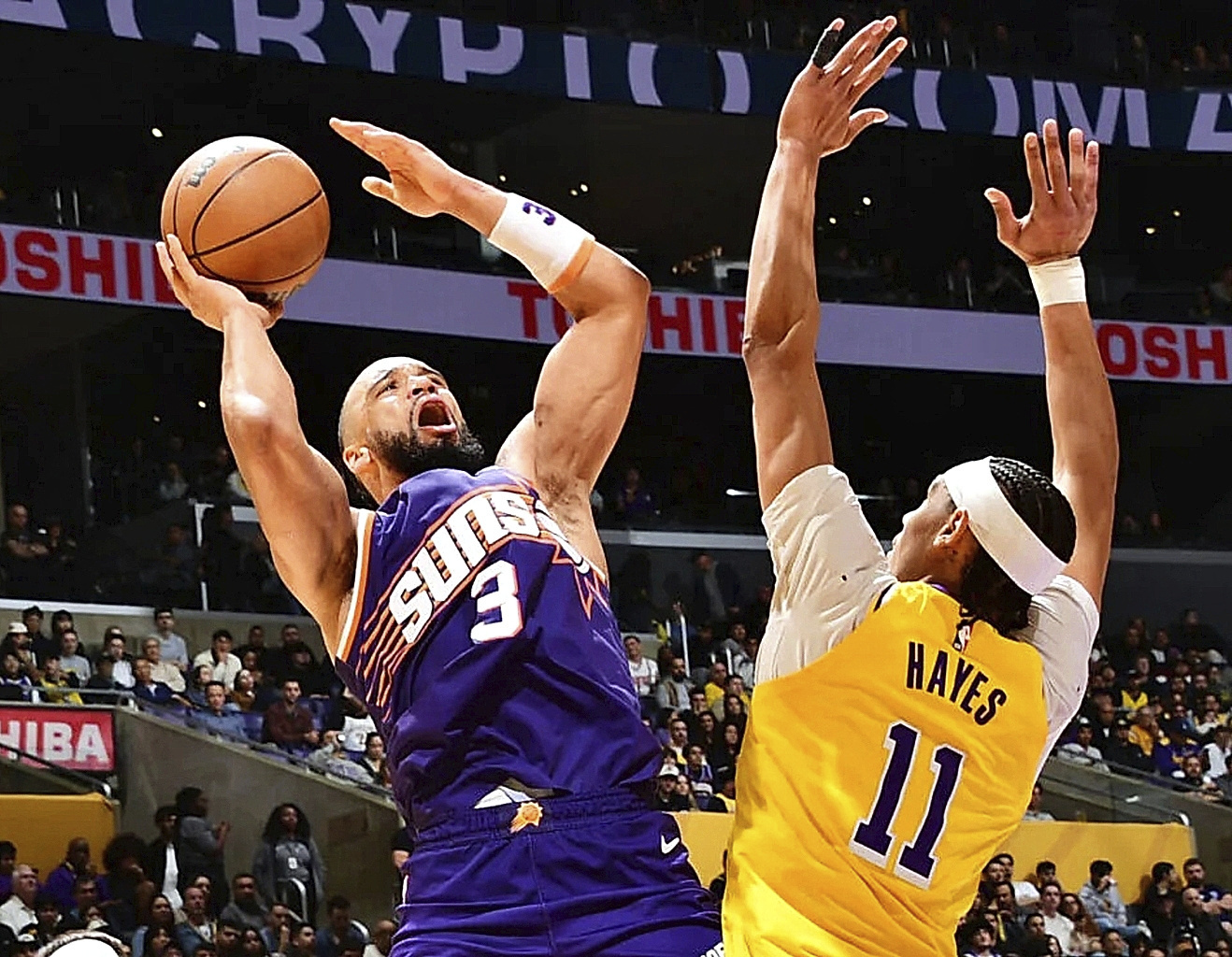
Some of the NBA's top owners' financial issues contrast with Wall Street's new big bet: financing Nvidia's rise and artificial intelligence. There is constant pressure on the multi-millionaire owners of basketball teams on Wall Street. Although mid-August is usually a calm time for the sport, as the NBA season has not yet started, several NBA team owners have financial problems.

Mark Walter, co-founder of Guggenheim Partners, is under investigation by authorities for his private credit holdings in his life insurance empire. He owns the Los Angeles Lakers, one of the most iconic teams in NBA. The other is Mat Ishbia, owner of the Phoenix Suns and CEO of United Wholesale Mortgage (UWM). Walter's insurance companies sought to reduce their stakes in assets tied through sale or restructuring.

The Lakers' sale would attract attention to Walter's other sports investments: the Los Angeles Dodgers baseball team and Chelsea FC soccer club. Walter may also have to divest himself from them. Meanwhile, Ishbia has had a difficult run lately, but the basketball enthusiast might find some consolation in the fact that he still owns an NBA team.

In early 2025, UWM planned to purchase the mortgage management company Two Harbors and acquired significant coverage against interest rate fluctuations, as mortgage companies suffer losses when rates fall. However, the plan failed because UWM lost the transaction to a competitor in March and rates spiked. The week before, UWM revealed a $603 million loss related to the coverage and announced a $2.1 billion capital injection led by Oaktree Capital Management, with an additional $150 million contribution from Ishbia.

Oaktree's financing conditions were not cheap and UWM also gave it two seats on its board of directors. Oaktree now has the final say on UWM's dividend policy. The millions of dollars in annual dividends Ishbia earned from his 80% stake in UWM were crucial for buying the Suns. Now the UWM dividend has been suspended. J Crew is one of the most prestigious American fashion brands.

However, over the last decade, Wall Street's powerful figures have been key players in the company that became famous thanks to Mickey Drexler and Jenna Lyons. During the 2020 pandemic, the hedge fund Anchorage Capital took control of J Crew. Anchorage was co-founded by Kevin Ulrich, a former Goldman Sachs trader, who gained fame for taking control of the Hollywood studio MGM and then selling it to Amazon.

The goal was that Ulrich's purchase of J Crew would make him a key figure in New York's fashion scene. However, according to Sujeet Indap and Eric Platt, the last few years have not been easy. Tariffs have affected the company due to rising production costs, there has been a high level of turnover in top management, and employees do not appreciate UWM's CFO, Eric Wang, an adjunct of Ulrich in Anchorage with little retail experience, as he runs the company like a spreadsheet.

J Crew's short-term loan fell to less than 75 cents per dollar at the beginning of this year, but recently recovered to around 80 cents. J Crew reorganized in 2020 with a valuation of $1.75 billion, a figure that likely fell over the years. Anchorage may have to hold onto J Crew for a while, trying to demonstrate that financial experts can also understand fashion.

Over the last decade, many private market sectors, valued at $22 trillion, have struggled to keep pace with the tech surge in public markets, leading the industry to present itself as a portfolio diversifier rather than a source of extraordinary returns. The magnates of the market have been criticizing the growing concentration of the seven tech indices, whose valuations have skyrocketed.

Marc Rowan, CEO of Apollo Global, was the most outspoken in expressing this: "Basically, we have used the country's pension system as collateral for Nvidia," he declared in February 2025. Less than two years later, Rowan's firm is part of an ambitious $500 billion plan to use investor portfolios as collateral for Nvidia, along with heavyweight financial figures like Blackstone, BlackRock, Brookfield, Goldman Sachs, and KKR.

Their goal is to finance Nvidia's clients by buying and leasing their chips, with repayments distributed among investors such as insurance companies, pension funds, and investment funds.

Written by urgent.news from Expansion ES's reporting — not their text. Machine-written — may contain errors; check the original before relying on it.

Read the original at expansion.com →

More in Business

More from Sunday 16 August →