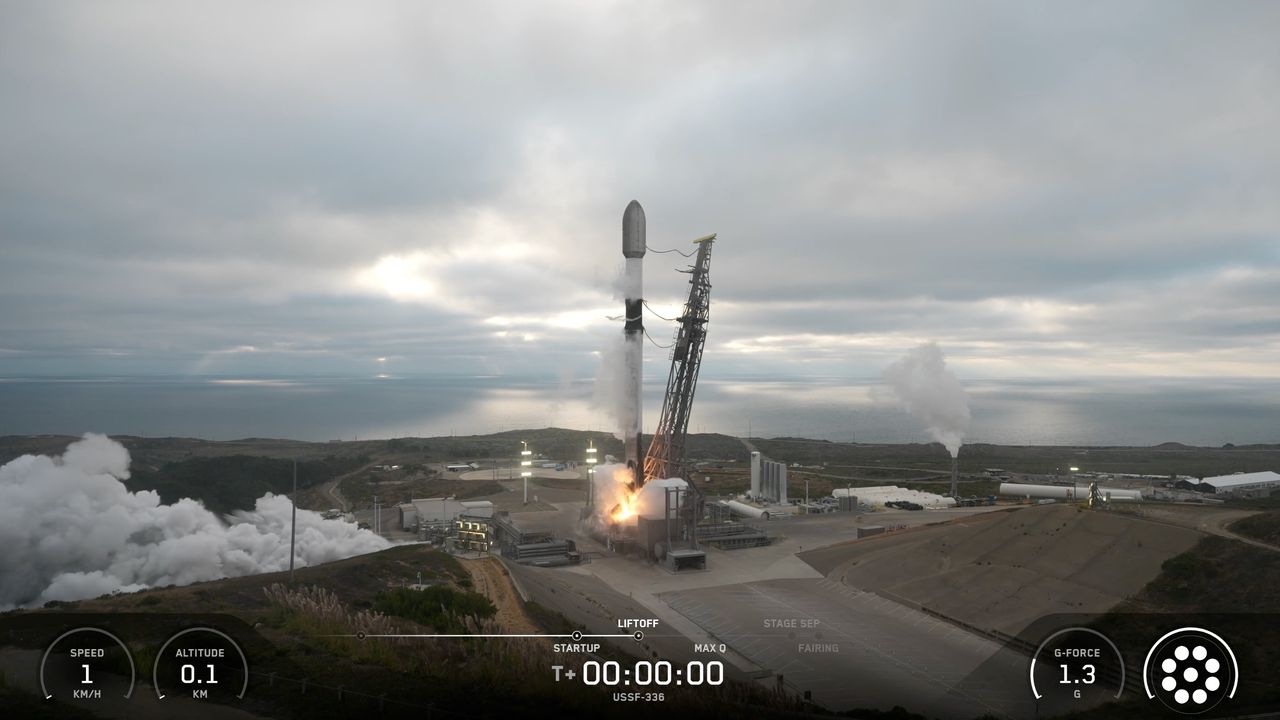
Japan aims for the moons of Mars
The unmanned MMX, set to blast off from Tanegashima Space Center in the coming months, could also lay the groundwork for humans visiting the red planet.
Japanese scientists are preparing an ambitious mission to Mars’ moons, Phobos and Deimos, in hopes of uncovering vital information about the Solar System’s origins and the potential for life on Earth. The unmanned Martian Moons eXploration (MMX) spacecraft, scheduled for launch from Tanegashima Space Center, could also pave the way for future human expeditions to the red planet.
After orbiting Mars for three years, MMX will attempt to land on Phobos, collecting a minimum of 10 grams of material from its surface, while the French rover IDEFIX will study the moon’s terrain. Additionally, MMX will observe Deimos, but will not attempt a landing. Upon returning to Earth in the mid-2030s, the sample capsule will touch down in Australia.
The Japan Aerospace Exploration Agency (JAXA) believes that MMX’s findings could shed light on how Mars and its moons formed, offering crucial insights into the birth of our Solar System. One theory postulates that the Martian moons formed after a celestial body collided with Mars, while another suggests they are asteroids from the outer Solar System captured by Mars’ gravity.
By determining which theory is correct, researchers hope to better understand the mechanisms that delivered water, volatiles, and organic compounds to the inner rocky planets, potentially paving the way for habitable environments. Patrick Michel, a French astrophysicist involved in IDEFIX, stated that if Phobos and Deimos are indeed remnants of early delivery systems, they could hold clues to the origins of life itself.
The mission will also explore the possibility of using Phobos as a “natural space station” to develop the technology required for crewed Mars exploration. The MMX mission is a collaborative effort involving Japan’s National Aerospace Development Agency (NADA), France’s National Centre for Space Studies (CNES), the German Aerospace Center (DLR), NASA, the European Space Agency (ESA), and numerous universities and tech companies.
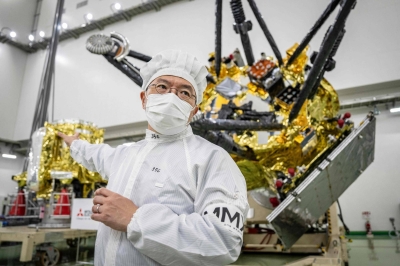
Developing the probe’s landing legs proved particularly challenging due to Phobos’ low gravity, according to Akinari Uehara, a Mitsubishi Electric engineer. While Japan’s unmanned Smart Lander for Investigating Moon (SLIM) experienced a mishap during its moon landing in 2024, it still transmitted data and survived several lunar nights.
Japan has also previously returned samples from space, including the Hayabusa-2 mission, which retrieved 5.4 grams of rock and dust from an asteroid in 2020. However, MMX is not the only Mars mission attempting to bring back material. NASA’s Perseverance rover, currently roaming Mars since 2021, has collected samples for potential return to Earth.
The mission was effectively cancelled by the Trump administration following a US Congress vote in January. China, meanwhile, has announced its Tianwen-3 spacecraft will launch around 2028 and return Mars samples to Earth around 2031, potentially earlier than MMX’s sample return. China’s Tianwen-1 mission already landed the Zhurong rover on Mars in 2021, marking one of Beijing’s most successful space program achievements.
Written by urgent.news from Discovered's reporting — not their text. Machine-written — may contain errors; check the original before relying on it.
Also reported by 3 other outlets
- Japan aims for the moons of Mars phys.org
- Japan aims for the moons of Mars gulfnews.com
- Japan aims for the moons of Mars digitaljournal.com