Japan aims for Mars' moons to unlock clues to origins of the Solar System
The unmanned Martian Moons eXploration (MMX), set to blast off from Tanegashima Space Center in the coming months, could also lay the groundwork for humans visiting the red planet.
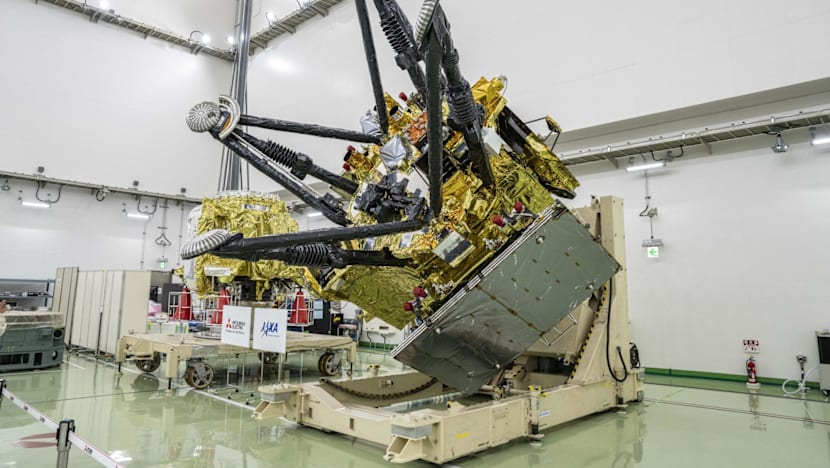
Japan is preparing an unmanned mission to Mars moons, MMX, to retrieve samples that could reveal the origins of the Solar System and life on Earth. The mission, set to launch from Tanegashima Space Center, will orbit Mars for three years and attempt to land on Phobos, one of Mars' moons. The spacecraft, along with the French rover IDEFIX, will collect at least 10 grams of material from Phobos' surface, while observing Deimos, the other Martian moon, without landing.
The mission aims to shed light on Mars' formation, its moons' origin theories, and how habitable environments might have developed on Earth-like planets. JAXA hopes the mission will also explore the possibility of using Phobos as a natural space station for future crewed Mars exploration. If successful, MMX will collect samples to return to Earth around 2031, potentially before China's Tianwen-3 mission.
Written by urgent.news from Channel News Asia's reporting — not their text. Machine-written — may contain errors; check the original before relying on it.