Inside the Experimental Traps Scientists Set for Ghostly Neutrinos
Observatories have been built in mines, deep under the Antarctic ice sheet, and elsewhere in an effort to detect the fleeting particles.
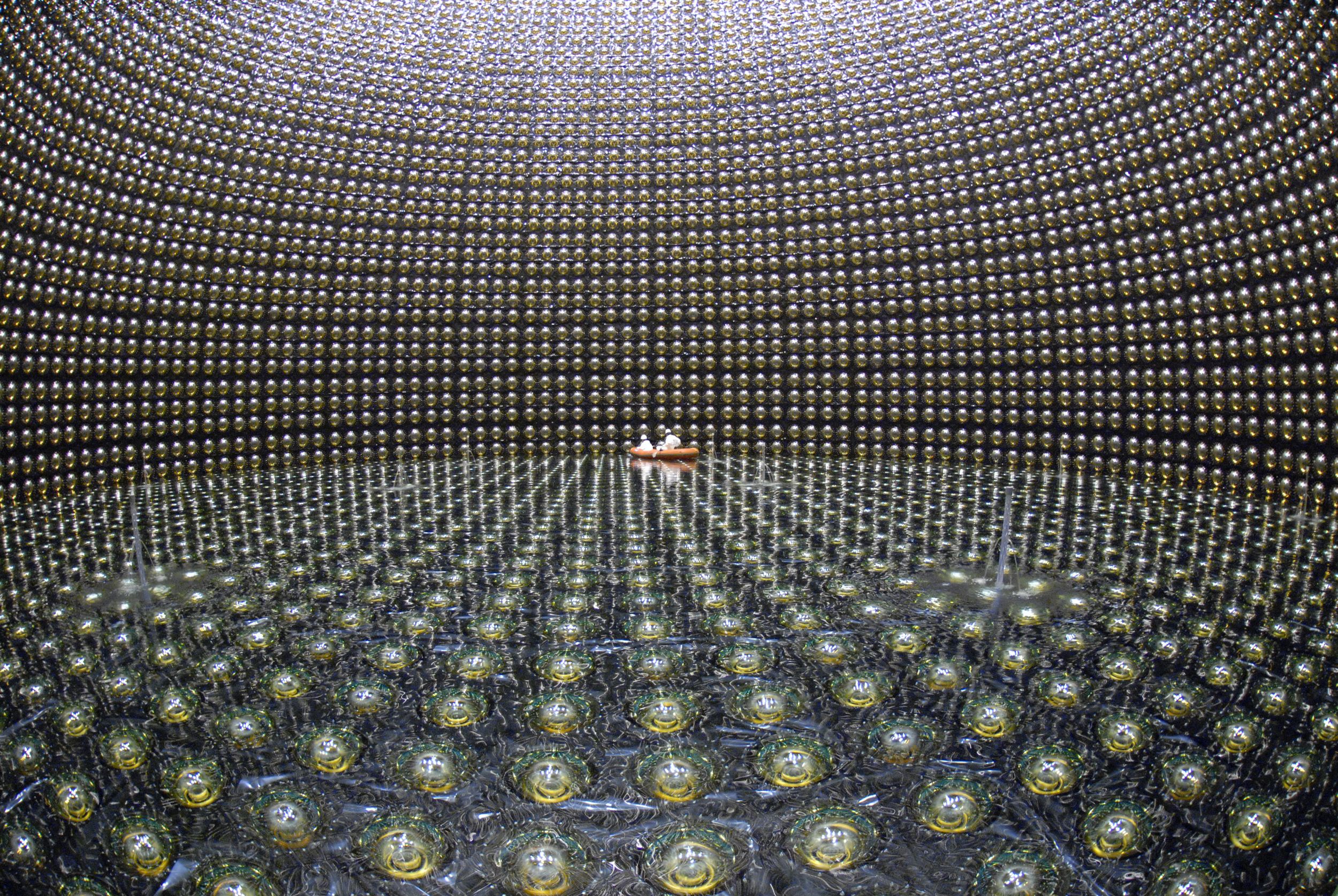
In the early 1950s, scientists grappled with why energy seemed to vanish during a process called beta decay. Austrian physicist Wolfgang Pauli proposed a particle, later known as the neutrino, carrying the missing energy. Almost massless and uncharged, neutrinos can traverse Earth and its contents undisturbed. In 1956, physicists Reines and Cowan confirmed the neutrino's existence.
The question arose: could neutrinos help us study the nuclear activity within stars like the sun? To detect these elusive particles, scientists needed to build enormous, deeply buried facilities to shield them from background radiation. In the 1960s, Ray Davis Jr. and colleagues in the Homestake mine of South Dakota placed a tank 1.5 kilometers underground filled with a chlorine-based fluid.
When a neutrino collided with a chlorine nucleus, it transformed into argon, which the team could detect. However, their 25-year experiment only observed a third of the predicted solar neutrinos, known as the solar neutrino problem. This mystery persisted until even larger detectors, like Kamiokande in Japan, discovered that neutrinos have mass and can oscillate between flavors.
This revelation confirmed Pauli's initial postulation. Recent detector projects, such as IceCube Neutrino Observatory in Antarctica and Cubic Kilometer Neutrino Telescope in the Mediterranean Sea, have expanded our understanding of cosmic neutrinos and their origins. Upcoming projects, like China’s Jiangmen Underground Neutrino Observatory and Japan’s Hyper-Kamiokande, aim to refine our knowledge of neutrino oscillations.
These audacious experiments, built on the principle of thinking big, going deep, and being patient, have gradually unveiled the secrets of the elusive neutrino, once thought undetectable.
Written by urgent.news from Wired Science's reporting — not their text. Machine-written — may contain errors; check the original before relying on it.
This story
This is one outlet's version. Read the fullest account.