How members of England’s 1939 Chess Olympiad team became wartime codebreakers
As World War II erupted in 1939, England’s chess team withdrew from the Buenos Aires Olympiad. In Grandmaster Aarav Dengla’s fourth column for TOI, he explores how three players, Hugh Alexander, Stuart Milner-Barry, and Harry Golombek, returned home to join Bletchley Park. Harnessing chessboard skills like pattern recognition and strategic elimination, they played pivotal roles in cracking…
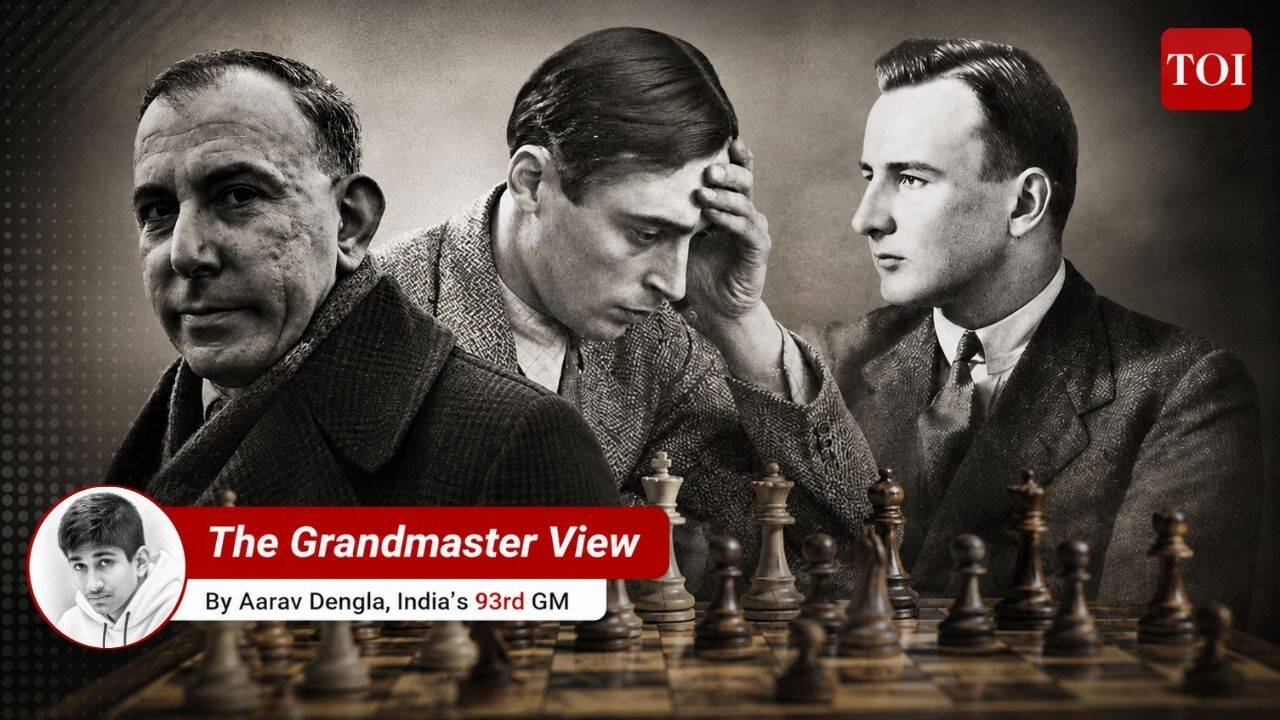
On the fateful day of September 1, 1939, when Germany launched an invasion of Poland, the final stage of the 1939 Chess Olympiad was unfolding in Buenos Aires. This was the largest Olympiad ever organized, with twenty-seven national teams competing. Among the participating nations was England, which sent a team consisting of five players: Hugh Alexander, Sir George Thomas, Stuart Milner-Barry, Harry Golombek, and Baruch Wood.
Despite finishing third in their preliminary group, England secured a spot in the championship final.
As the players stepped into the tournament hall, they were unaware of the dramatic events unfolding in Europe. In response to Germany's invasion, Britain declared war on Germany on September 3. England promptly withdrew from the competition, returning to their homeland as the other teams continued. When the dust settled, Germany emerged victorious, finishing half a point ahead of Poland.
For three members of the English team - Alexander, Milner-Barry, and Golombek - the journey back home would lead them to work that would remain secret for decades. Alexander, Milner-Barry, and Golombek joined the Government Code and Cypher School at Bletchley Park. Britain had assembled an elite team comprising chess players, mathematicians, linguists, engineers, intelligence analysts, and machine operators at Bletchley Park.
Their mission was to break the Enigma code, which the German armed forces used to encrypt their communications.
While chess players may not be naturally adept at cryptanalysis, the trio's skills in concentration, narrowing down alternatives, pattern recognition, and patience when facing insurmountable challenges proved invaluable at Bletchley. Alexander arrived at Bletchley Park in February 1940, working in Hut 6, which dealt with codes used by the German Army and Luftwaffe.
Later, he shifted to Hut 8, where he became Alan Turing's deputy and eventually acting head. Milner-Barry, on the other hand, worked in Hut 6, leading a group that searched for "cribs" - pieces of plaintext that could serve as potential hypotheses for decryption. Golombek worked in Hut 8 on naval Enigma before moving to another section towards the end of 1942.
Breaking Enigma was no easy feat. The code used a vast array of configurations that changed regularly, making it challenging to decipher. The codebreakers at Bletchley had to rely on human judgment, analyzing captured material, understanding German procedures, identifying repeated phrases, operator errors, and the inherent mathematical properties of the Enigma machine. It was a team effort that depended on the collective expertise of individuals from various disciplines.
Remarkably, the chess trio did not achieve success in codebreaking alone. They built upon the work of Polish cryptanalysts who had already made significant progress before the war. At Bletchley Park, thousands of individuals contributed to the interception, analysis, processing, and distribution of intelligence. After the war, the trio returned to civilian life.
Golombek ventured back into chess as a writer and arbiter, while Milner-Barry joined the Treasury. Alexander, however, continued his work in the secret realm, eventually leading codebreaking efforts at GCHQ, the British agency responsible for signals intelligence.
For decades, these men were bound by a strict code of secrecy, forbidden from discussing their work at Bletchley Park. The contributions of Alexander, Milner-Barry, and Golombek remained classified, and they were not publicly credited for their crucial role in turning the tide of World War II.
Written by urgent.news from Times of India's reporting — not their text. Machine-written — may contain errors; check the original before relying on it.