Ethiopia’s 2026 Elections: An Autopsy of a Failed Transition to Democracy
Ethiopia's 2026 election highlights a troubling pattern of democratic regression, revealing the entrenched political culture that undermines genuine electoral competition and accountability. This analysis explores the implications of recent political developments and the challenges facing opposition actors in the quest for democracy.
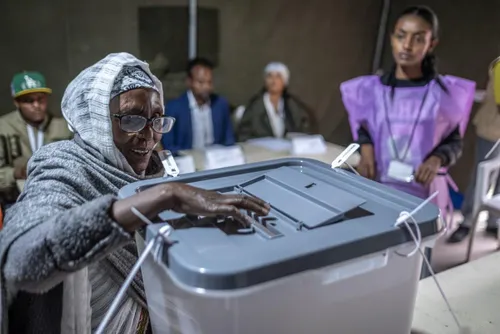
The Ethiopian 2026 elections marked a critical juncture in the country's long-standing struggle to transition from autocracy to democracy. Rather than representing a genuine democratic shift, the elections served primarily as evidence of a persistent pattern of failure. The 2018 opening, which initially revived hopes for democratic change, ultimately followed the same trajectory as the post-2005 elections, where the ruling party secured nearly 100% of legislative seats.
By the time of the 2021 election, opposition actors had already been weakened by arrests, harassment, legal restrictions, and violence. In the 2026 election, the Prosperity Party secured a dominant majority, winning 438 out of 486 House seats, with the remaining seats going to sixteen other parties and eight independent candidates.
The ruling party's decision not to contest several constituencies, while framed as a commitment to openness to opposition competition, actually represented managed pluralism rather than genuine competition. This election also witnessed the rollback of many reforms introduced with the 2018 transition, leading to fragile accountability frameworks and questions about the independence of key institutions.
Compounding these issues, the election was conducted amidst armed conflict, insecurity, and widespread displacement, further undermining its credibility. The 2026 elections, like previous ones, failed to break the long-standing trajectory of Ethiopia's political landscape. Throughout these cycles, the central failure lay in the inability to establish a political order where opposition was not lethal and losing power was survivable.
Opposition fragmentation and a hostile political environment also played significant roles in the failures. While incumbent parties bear the greatest responsibility, opposition actors' fragmentation and lack of professionalized organizations have also contributed to the lack of a credible democratic alternative. This cycle of elections, reform, and regression has allowed the party-state to claim procedural legitimacy and entrench dominant-party rule, with little indication that the Prosperity Party intends to cede power electorally or engage in a negotiated settlement with its opponents.
Written by urgent.news from IOL's reporting — not their text. Machine-written — may contain errors; check the original before relying on it.