Egypt unearths major discoveries along ancient Horus military route
Dubai: An Egyptian archaeological mission has uncovered a massive mud-brick wall, ancient stone roads and an inscription bearing the titles of King Ramses II at Tell Abu Seifi in Ismailia province, shedding new light on the ancient Horus military route and its role in defending Egypt’s eastern frontier. The discoveries at the site in Qantara include the outer wall of a sanctuary surrounding a…
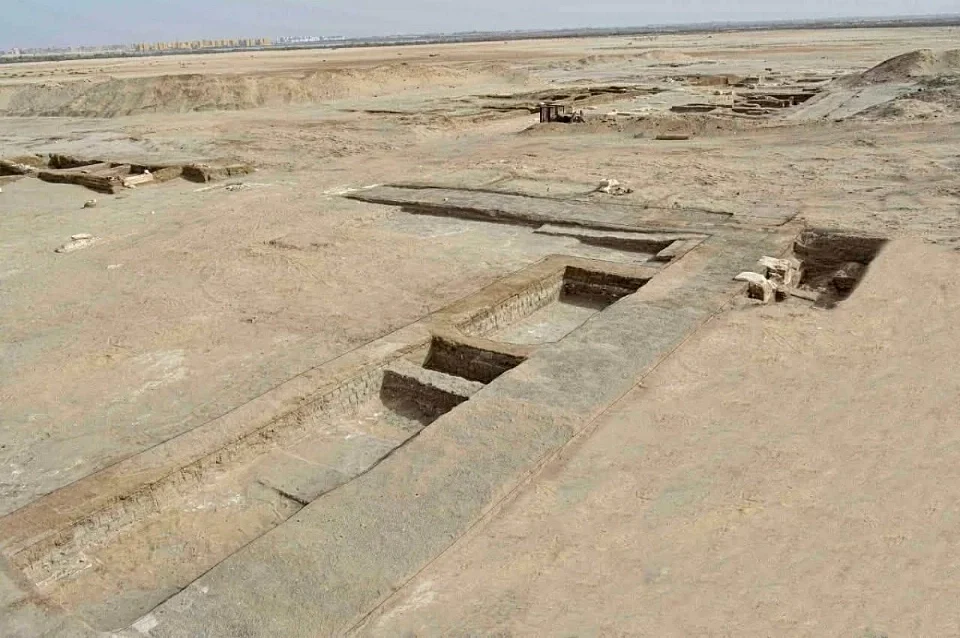
An Egyptian archaeological expedition has made significant discoveries at Tell Abu Seifi in Ismailia province, along the ancient Horus military route. The team found a massive mud-brick wall, ancient stone roads, and an inscription with King Ramses II's titles. This site near the Egyptian city of Mesen was once part of a fortified sanctuary surrounding a large temple.
The excavations revealed the gateways, chambers, and successive construction layers of the wall, as well as two stone roads built during different periods. The first road dates back to the Ptolemaic period, while a later Roman road was constructed atop it. Among the most notable finds was half of a sandstone lintel, inscribed with titles of Ramses II and a text about restoration work on a Horus statue.
Other artifacts included parts of a schist statue from Egypt's 26th Dynasty, a Late Period statue, and basalt fragments of royal and falcon statues. These discoveries indicate that the site underwent several phases of development, serving military, religious, and economic purposes over centuries. The findings reinforce Tell Abu Seifi's importance as a key site along the ancient Horus military route, which played a crucial role in protecting Egypt's eastern borders.
Written by urgent.news from Gulf News's reporting — not their text. Machine-written — may contain errors; check the original before relying on it.