Covert Mideast Oil Flows Are Keeping Global Prices in Check
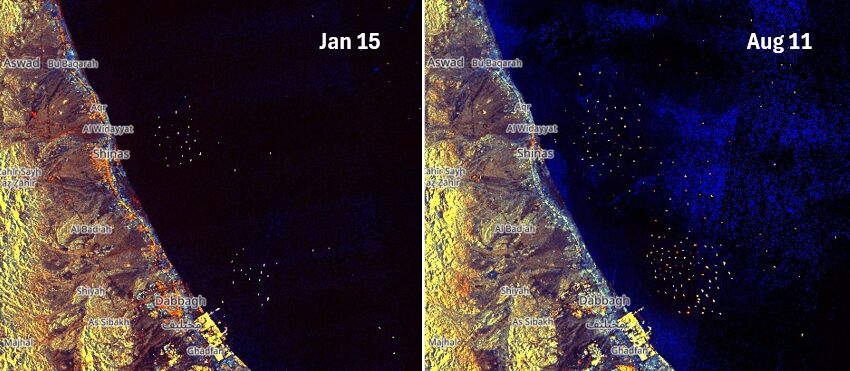
Middle Eastern oil producers are actively transporting large quantities of crude oil through the Strait of Hormuz to maintain stable global oil prices and curb potential inflation caused by the Iran conflict, despite ongoing attacks on vessels. This covert movement, often referred to as the "dark shuttles," has become crucial for global markets, which feared a much larger supply shock when the war began.
The trade has surpassed market expectations, with volumes reported at 4 million barrels per day, although some estimates suggest it could be even higher. Before the Iran war, approximately 20 million barrels per day crossed the Hormuz, representing about a fifth of the world's oil supply. Current estimates suggest that 9 million barrels per day are currently crossing, which is near the high end of the pre-war rates.
The ongoing shipments, combined with other measures such as pipeline workarounds, stockpile releases, and reduced global demand, have helped limit the economic impact of the war. Despite the challenges and risks involved, the United Arab Emirates' state oil giant, Abu Dhabi National Oil Co., has sold around 135 million barrels of crude and announced another round of sales.
The covert nature of these shipments, combined with the increasing number of incidents and attacks, highlights the significant risks associated with maintaining energy prices at a stable level.
Written by urgent.news from Yahoo Finance's reporting — not their text. Machine-written — may contain errors; check the original before relying on it.
This story
This is one outlet's version. Read the fullest account.
- Covert Mideast Oil Flows Are Keeping Global Prices in Check supplychainbrain.com
- Covert Mideast oil flows are keeping global prices in check japantimes.co.jp
- Covert mideast oil flows are keeping global prices in check fortune.com