Charcha Time: Maharashtra FDA’s Crackdown — Do Restaurant Managers Need Hospitality Degrees?
With inspections, licence suspensions, and stricter compliance measures by Commissioner Tukaram Mundhe making headlines, industry’s latest concern is if managerial roles should be reserved for hospitality graduates only or FoSTaC-certified and other graduates qualify. Satya Tirtharaj Ghosal moderates a debate Vijay K. Shetty, President of AHAR Making hospitality graduates mandatory for managerial…
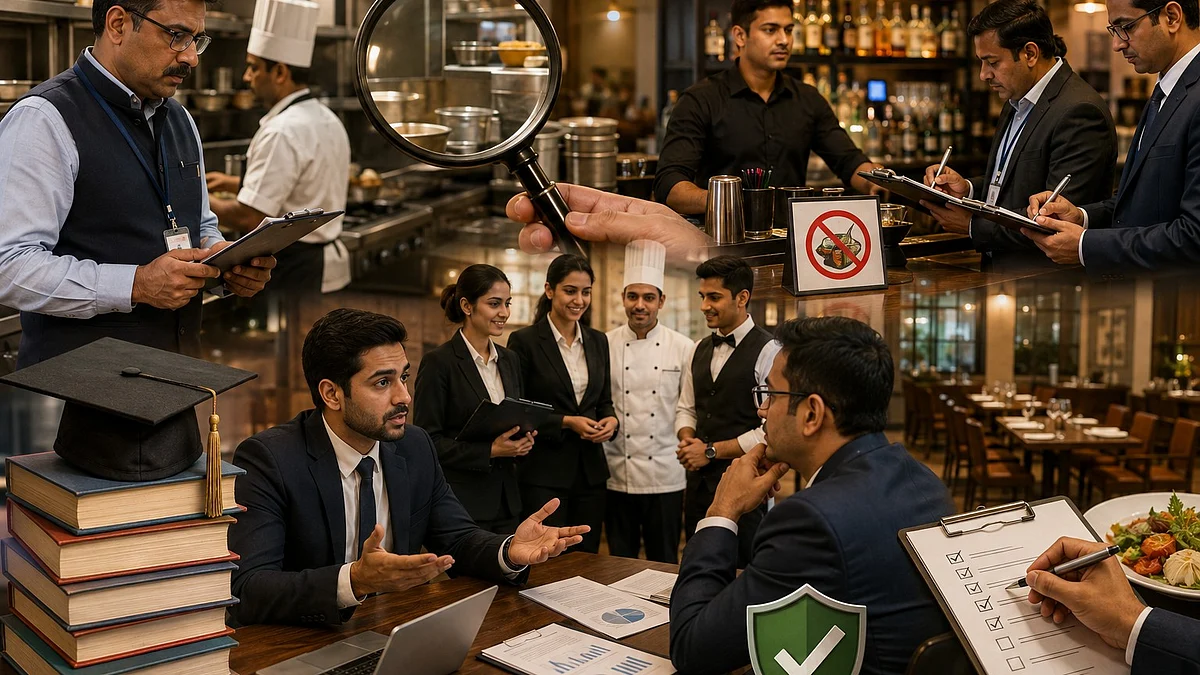
The Maharashtra Food Safety and Drug Administration (FDA) has recently intensified inspections and compliance measures, raising questions about the qualifications required for restaurant management positions. Some industry leaders argue that only hospitality graduates should hold managerial roles, while others believe that certified FoSTaC (Food Safety Training and Certification) professionals and other graduates can also qualify.
Satya Tirtharaj Ghosal moderated a debate which highlighted that managing a restaurant or bar demands practical experience gained through years of hands-on work, which often surpasses textbook learning alone. Many successful managers have run establishments for decades without formal hospitality degrees, suggesting that these individuals could benefit from attending FoSTaC programmes instead.
While restaurant management extends beyond hospitality knowledge, encompassing taxation, workforce management, licensing, procurement, inventory control, and financial planning, commerce or business management graduates with relevant industry experience could potentially lead operations just as effectively. A strict requirement for hospitality degrees could negatively impact employee morale and hinder career progression for those who have advanced through experience.
In response to these concerns, the Food Safety and Standards Authority of India (FSSAI) amended its guidelines in February 2018, permitting either professionally qualified individuals or FoSTaC-trained employees to oversee operations. The FoSTaC programme aims to enhance food safety standards and hygiene practices across food businesses. Employees who complete this training gain a blend of practical operational knowledge and structured food safety training, making them well-equipped to maintain compliance.
An existing model already exists, where a FoSTaC-trained employee can manage a food business, given the appropriate staffing ratio. Companies like Red Apple Kitchen Consultancy Pvt Limited (Toscano) follow this model, where all managers and supervisors possess formal hotel management degrees and certifications, along with FoSTaC certifications. Their organisation conducts food safety and FSSAI-related training twice a year to keep supervisory and managerial teams updated.
While formal hospitality education provides a strong foundation, it should not become a prerequisite for leadership roles. Systems, processes, and continuous learning play a crucial role in maintaining standards. Hospitality education primarily focuses on foundational skills, while practical expertise is honed through on-the-job experience. For instance, day-to-day operations often do not require specialised accounts or excise knowledge, as these responsibilities are handled by dedicated professionals.
Ultimately, compliance with regulations can be achieved through recognised qualifications, training programmes, or organisational restructuring. Mandatory qualifications could increase hiring costs and extend recruitment timelines, but if implemented judiciously, they could bolster professionalism and elevate industry standards for the better.
Written by urgent.news from Free Press Journal's reporting — not their text. Machine-written — may contain errors; check the original before relying on it.