Viksit Bharat 2047: A Roadmap to Becoming a Developed Nation
The writer examines India's ambitious goal of becoming Viksit Bharat (Developed Nation) by 2047, as we break down the essential strategies for achieving a thriving, developed nation.
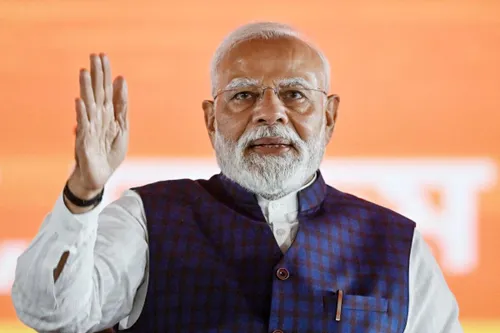
The Government of India has established a significant objective for the nation: to become Viksit Bharat by 2047, marking a century since India's independence. Though it's widely understood that Viksit Bharat implies a developed country status, determining the specific aspects of this development remains essential for public policymaking.
This article aims to outline these aspects. India currently boasts the fourth-largest economy in the world by Gross Domestic Product (GDP), but given the massive population of over 1.5 billion, the current GDP of $4.5 trillion is somewhat inadequate. To truly become Viksit, India must witness a substantial increase in its GDP, reaching at least $10 trillion.
Achieving this target is feasible if certain actions are taken. India's foreign trade, constituting 40% of its GDP, must double in terms of international trade share, increasing its global export proportion from the current 2% to 10%. Moreover, Foreign Direct Investment (FDI), currently just over $100 billion, must also expand extensively.
To foster this growth, the Indian government needs to implement comprehensive economic reforms across sectors like land, labor, power, agriculture, infrastructure, and regulation. Alongside GDP acceleration, it is critical that this growth is inclusive, ensuring it benefits the underprivileged segments of society. Initiatives like the Pradhan Mantri Garib Kalyan Yojana have been introduced, but job creation for the youth must be a national priority for both central and state governments.
Simply put, the government alone cannot provide all the necessary jobs; fostering an ecosystem where the youth become entrepreneurs and job creators is crucial. India's education system predominantly emphasizes rote learning, resulting in numerous graduates who may not be immediately employable. Consequently, skilling and re-skilling of graduates, along with vocational training, industry-academic collaboration, and technology education, particularly in fields like Artificial Intelligence, should be given top priority.
Education spending, both public and private, must significantly increase, especially in states lagging behind the national average. Furthermore, Research and Development must receive prime importance across all relevant institutions. While India's near 1.5 billion population could serve as a demographic advantage, it will only be beneficial if the population possesses the requisite skills to thrive in a knowledge economy.
Although India is experiencing a demographic dividend, this potential remains unrealized until the population is adequately skilled. India's healthcare sector is undergoing significant transformation due to digitalization and infrastructure expansion, yet challenges persist. Issues such as rising medical costs and an increasing burden of chronic diseases need addressing.
The government's Ayushman Bharat and Ayushman Arogya Mandir schemes have made substantial progress in improving healthcare accessibility. However, public healthcare spending still falls short of desired levels. India also faces the risk of becoming a global hub for heart disease and diabetes. Therefore, India must continue enhancing its public health infrastructure to ensure it is accessible, affordable, and of high quality for all.
The National Health Mission is making commendable strides and requires further strengthening and streamlining. India should not adopt the high-carbon development paths followed by industrialized nations or China's continued reliance on coal. As the only major economy capable of pursuing a low-carbon pathway to high-income status, India must take the lead in sustainable development, not only for global expectations but also for the welfare of its citizens.
In summary, India is well-positioned to become Viksit Bharat by 2047. However, this transformation will require a whole-of-government approach and a mission-oriented mindset in the next two decades, as they represent a critical period in India's history.
Written by urgent.news from IOL's reporting — not their text. Machine-written — may contain errors; check the original before relying on it.