UPSC Mains Answer Practice — GS 1: First World War and India’s freedom struggle (Week 167)
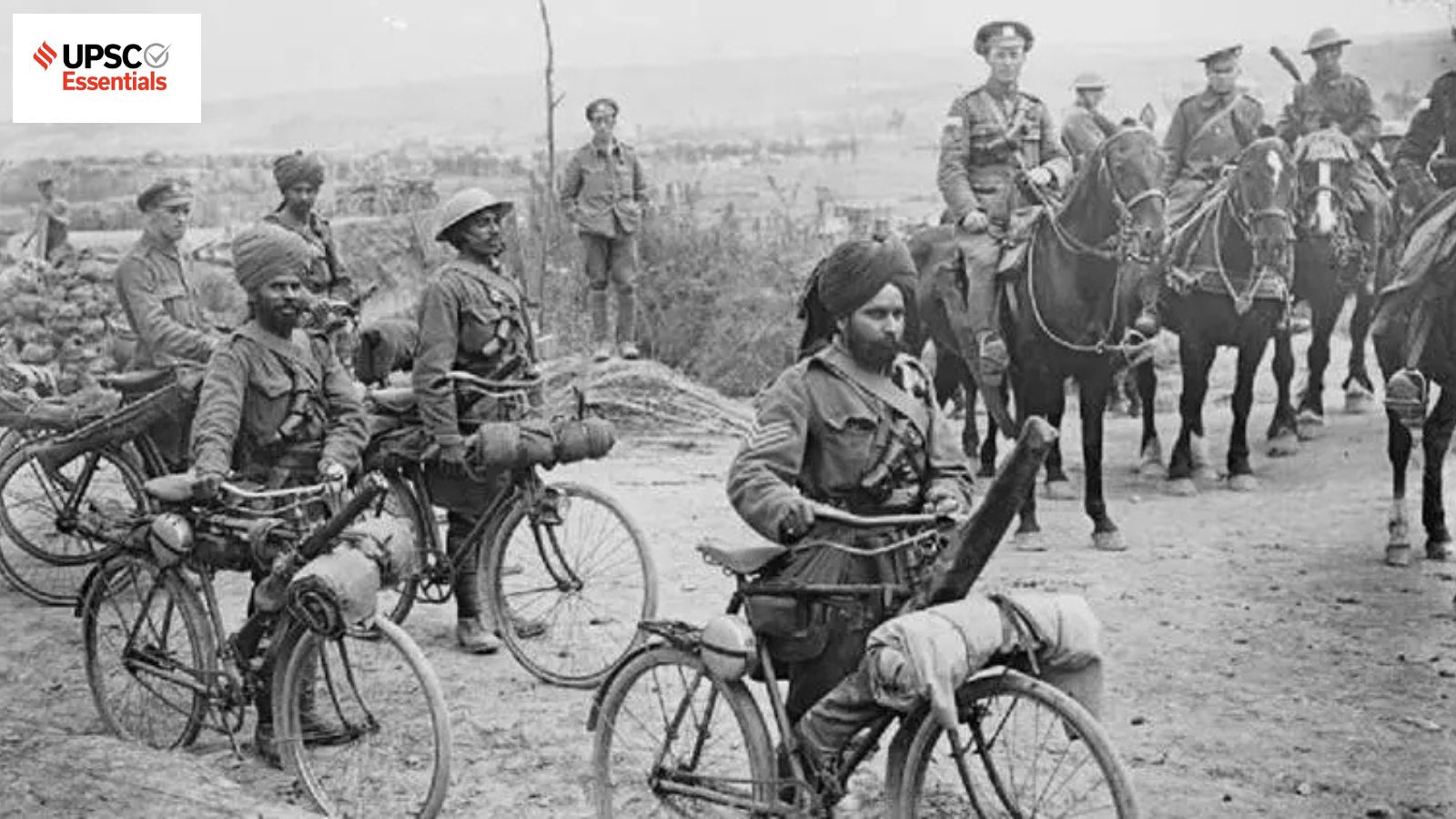
The First World War marked a pivotal juncture in the trajectory of Indian nationalism, fundamentally reshaping the nation's political, economic, and social landscape. This essay explores the multifaceted consequences of the war on India's freedom struggle, emphasizing the political, economic, and social ramifications that emerged from this global conflict.
Politically, the war unveiled a stark divergence between India's aspirations for self-governance and the colonial powers' intentions. Indian leaders, initially hopeful that their wartime sacrifices would translate into enhanced political representation, were bitterly disappointed upon returning home to a colonial regime that remained steadfastly resistant to meaningful political reforms.
The war catalysed a wave of disenchantment and galvanised the demand for responsible government and greater Indian participation in the governance of the country. The Indian National Congress, buoyed by the wartime experience, began to advocate for more substantial self-rule and higher-grade employment opportunities within the military, reflecting a burgeoning demand for Indian-led governance structures.
Economically, the war inflicted severe hardships on India, exacerbating the already fragile colonial economy. The substantial financial burden of supporting Britain's war effort, coupled with rising taxes and shortages of essential goods, plunged millions into poverty and sowed the seeds of social unrest. Crop failures and economic disruption led to widespread food shortages, further fueling public discontent.
These economic challenges broadened the base of anticolonial politics, linking the struggle for political independence to fundamental concerns over economic well-being, livelihoods, and survival. As the war's economic toll mounted, it became increasingly clear that national freedom was inextricably tied to the alleviation of widespread poverty and deprivation.
Socially, the war left an indelible mark on Indian society, exposing the deep-seated contradictions inherent in India's colonial relationship with Britain. Indian soldiers, serving abroad with the British Empire, returned home to a society marked by racial prejudice, colonial oppression, and a stark absence of genuine political rights.
The wartime experience left many soldiers disillusioned with the inherent hypocrisy of British colonialism, as they witnessed the stark inequalities and injustices faced by Indians at home. The paradox of Indians fighting for an empire that denied them basic freedoms galvanised a new consciousness about the legitimacy of colonial rule and spurred a surge in social movements aimed at challenging and dismantling the colonial order.
The return of soldiers and their firsthand exposure to the realities of imperial governance served as a powerful catalyst for reimagining India's national identity and aspirations for self-determination.
In conclusion, the First World War served as a watershed moment in the evolution of Indian nationalism, catalysing a profound transformation from an elite, constitutional demand for political reforms to a mass, anti-colonial movement. The war's political, economic, and social consequences intertwined to erode the colonial veneer of legitimacy, engendering a more inclusive and assertive form of nationalism that would ultimately pave the way for India's eventual independence.
Through the prism of the war, Indian nationalism transcended its earlier confines, becoming a broader, more resonant struggle against colonial domination, thereby laying the groundwork for the Indian independence movement.
Written by urgent.news from The Indian Express's reporting — not their text. Machine-written — may contain errors; check the original before relying on it.