Secondhand book sales are booming. Is it because of AI?
Booksellers are reporting mysterious bulk orders. It's thought the books are being used to train AI - and ending up pulped.
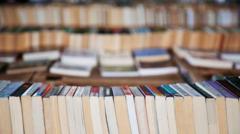
The secondhand book market is currently experiencing a surge in activity, leaving booksellers puzzled about the cause. Stuart Manley, a veteran bookseller from Barter Books in Northumberland, has observed an unprecedented increase in bulk orders from a Canadian company. These orders have surpassed his typical weekly sales by a significant margin.
While the final destination of these books remains unknown, many booksellers suspect that they are being purchased for use in AI training. This suspicion stems from a 2025 US court ruling, which deemed the use of books to train AI software as not violating copyright law. The ruling was based on a lawsuit against AI company Anthropic by three authors.
Judge William Alsup stated that Anthropic's practice of transforming books for AI training fell under the umbrella of "exceedingly transformative" activities, making it permissible under US law. Books are being destroyed during the training process, leading to concerns among booksellers. David Tobin, owner of Walden Books in London, expressed his sadness at the potential destruction of rare and antique books.
The court documents revealed that Anthropic's project, known internally as "Project Panama," aimed to destructively scan all books in existence. This practice, referred to as "destructive scanning," involves shipping books to facilities where they can be rapidly scanned, with the spines removed and the remains recycled. Project Panama has sparked discussions among booksellers, with many unaware that their books are being targeted for this purpose.
Experts believe that the diverse subject matter of the purchased books, ranging from obscure Latin texts to cowboy novels, further supports the AI training hypothesis. The availability of unique and scarce texts could provide valuable material for enhancing large language models, which power generative AI tools like chatbots. However, the idea of books being destroyed during this process raises ethical concerns.
Some booksellers, like Derek Walker of McNaughtan's in Edinburgh, acknowledge the potential loss of rare editions, especially those with only a few surviving copies. Nevertheless, booksellers argue that recycling books can be a viable solution, especially for titles that the public no longer desires. While the UK's copyright laws differ from those in the US, experts maintain that permission from copyright owners is required for acts of copying and training.
Written by urgent.news from BBC Technology's reporting — not their text. Machine-written — may contain errors; check the original before relying on it.
This story
This is one outlet's version. Read the fullest account.