Operation Sindoor Declassified: How India Narrowed 34 Targets To 9 For Precision Strikes After Pahalgam Terror Attack
Newly declassified accounts of Operation Sindoor have revealed how India's military leadership drew up a preliminary list of 34 targets following the Pahalgam terror attack and, after intensive intelligence assessments, narrowed it down to nine sites for precision strikes in Pakistan-occupied Jammu and Kashmir (PoJK) and Pakistan. The selection process was guided not simply by the number of…
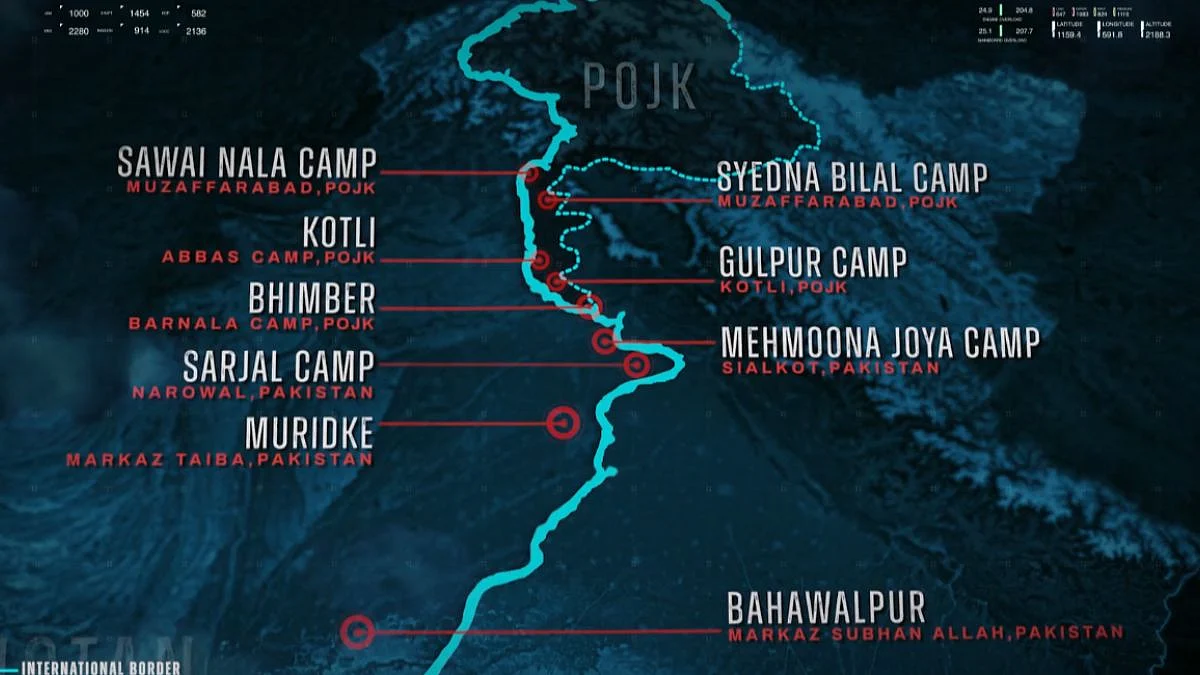
Operation Sindoor, the declassified Indian military operation following the Pahalgam terror attack, was meticulously planned to minimize civilian casualties while delivering a strong message to terrorist networks. Initially, Indian military leaders considered 34 potential targets, but after rigorous intelligence assessments, this list was narrowed down to nine sites in Pakistan-occupied Jammu and Kashmir (PoJK) and Pakistan.
Prime Minister Narendra Modi insisted on targeting only terrorist camps, with no collateral damage, and the attack aimed to deter terrorist groups and discourage recruitment.
The selection process involved a daily 24-hour research effort, considering factors such as the feasibility of targeting, the presence of key terrorist figures, mission success likelihood, and minimizing civilian harm. The nine targets chosen included five in PoJK and four in Pakistan, with Air Chief Marshal A.P. Singh emphasizing the need for precision strikes.
Army Chief General Upendra Dwivedi noted that all selected buildings were thoroughly analyzed to determine the optimal weaponry and methods for each strike. Military planners ultimately targeted seven locations with the Indian Army and two with the Indian Air Force, with Army Chief General Upendra Dwivedi stating that every building at the chosen sites was meticulously examined to ensure accuracy.
Written by urgent.news from Free Press Journal's reporting — not their text. Machine-written — may contain errors; check the original before relying on it.