Neera Chandhoke on what Pyaasa, Dharamputra and protest songs tell us about freedom
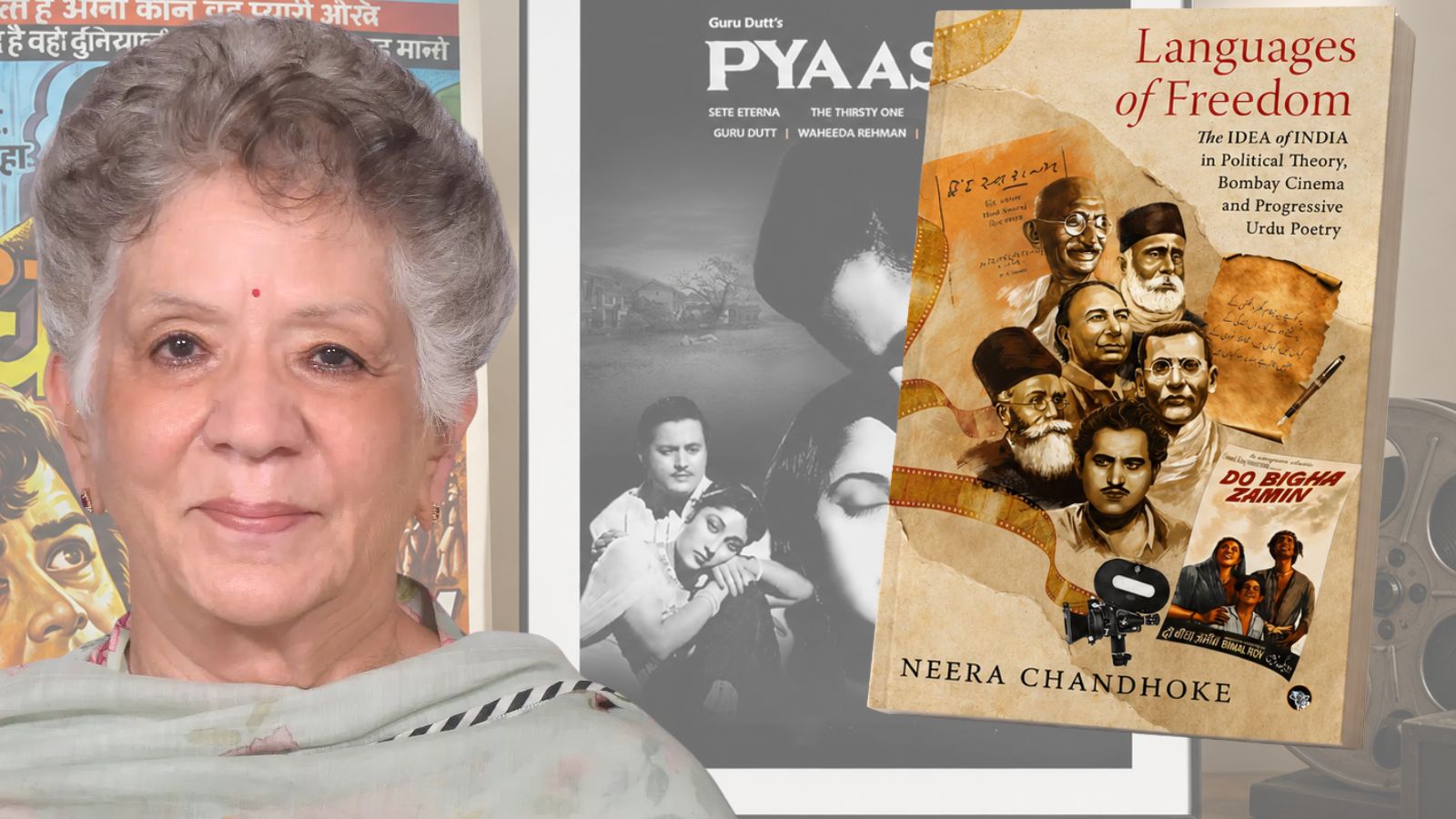
In the 1957 film Pyaasa, Guru Dutt portrayed a destitute poet confronting the degrading reality of women exploited in sex work during India's post-Independence era. Heartbroken, he sang the poignant line, "Kahaan hain kahaan, where are they, the keepers of dignity?" Political scientist Neera Chandhoke highlights this movie as a prime example of how popular cinema utilized its power to criticize those in authority.
In her recent book, Languages of Freedom: The Idea of India in Political Theory, Bombay Cinema and Progressive Urdu Poetry, Chandhoke discusses how the Bombay film industry became deeply intertwined with the nationalist movement. Early films such as Achhut Kanya (1936) tackled the issue of untouchability, while post-Independence films like Dharamputra (1961) openly criticized the government, including its then Prime Minister Jawaharlal Nehru.
Chandhoke cites the film's protagonist, who asks, "If only we could ask this question during our regular bouts of violence in India, perhaps we could foster a sense of humanity and brotherhood towards our fellow citizens." For Chandhoke, freedom is not merely a theoretical concept; it requires constant struggle and is best understood through cultural mediums like cinema, poetry, and songs sung during times of collective outrage and hope.
This idea of freedom as performance became most evident during the recent protests led by Gen Z students against paper leaks, where the slogan 'azadi' echoed once again. Like their predecessors from the Progressive Writers Movement, who founded in 1936, these students drew inspiration from progressive Urdu poetry. Sahir Ludhianvi, the renowned lyricist of the aforementioned song, was one of them.
Chandhoke believes that the Progressive Writers significantly expanded the definition of freedom within the national movement, often to the dismay of conservative leaders. The 1932 anthology Angare caused such controversy for its frank portrayal of women's bodies that its authors risked excommunication. Yet, those very writers amplified the concept of freedom in the Indian struggle for independence, making them more radical than even the national leaders.
Chandhoke also found it intriguing that the protesters of today adopted a line from contemporary Urdu poet Manzar Bhopali: "Mujhko apne bank ki kitaab dijiye, desh ki tabaahi ka hisaab dijiye" ("Give me the books of your bank, give me the account of the nation's ruin"). This demand for transparency and accountability resonated strongly among the movement's participants.
Chandhoke draws a clear distinction between the concepts of azadi and Swaraj. While Swaraj, popularized by Mahatma Gandhi, was rooted in personal virtues like ahimsa (non-violence) and mobilized through philosophical principles, azadi was a secular concept championed by Bhagat Singh, an atheist who rejected religious rhetoric and opposed the incorporation of religion into the independence movement.
For Chandhoke, azadi encompasses not only the liberation from patriarchy and economic hardship but also the notion of agency - the right to do as one pleases. However, Chandhoke warns that India's cultural heritage has been gradually narrowed down and distorted into a single identity. She questions whether our cultural narratives should be limited to Brahmanical upper-caste traditions, or if we should also embrace diverse, shared traditions that once united communities.
The erosion of these shared traditions, she argues, diminishes our cultural resources and hinders the flourishing of freedom. When asked to define freedom, Chandhoke emphasizes three fundamental aspects: the freedom to think, the freedom to pursue freedom, and the freedom to protest against violations of those rights. She laments the current state of civil liberties in India, lamenting the indifference of many Indians towards their fellow citizens' struggles.
Written by urgent.news from The Indian Express's reporting — not their text. Machine-written — may contain errors; check the original before relying on it.