Independence Day: 8 decades, 18 Lok Sabhas - How Indian elections have evolved since 1947
Independence Day 2026: In the last eight decades, Indian general elections have evolved from an exercise involving a few hundred million people to a gigantic logistical operation involving nearly one billion voters.
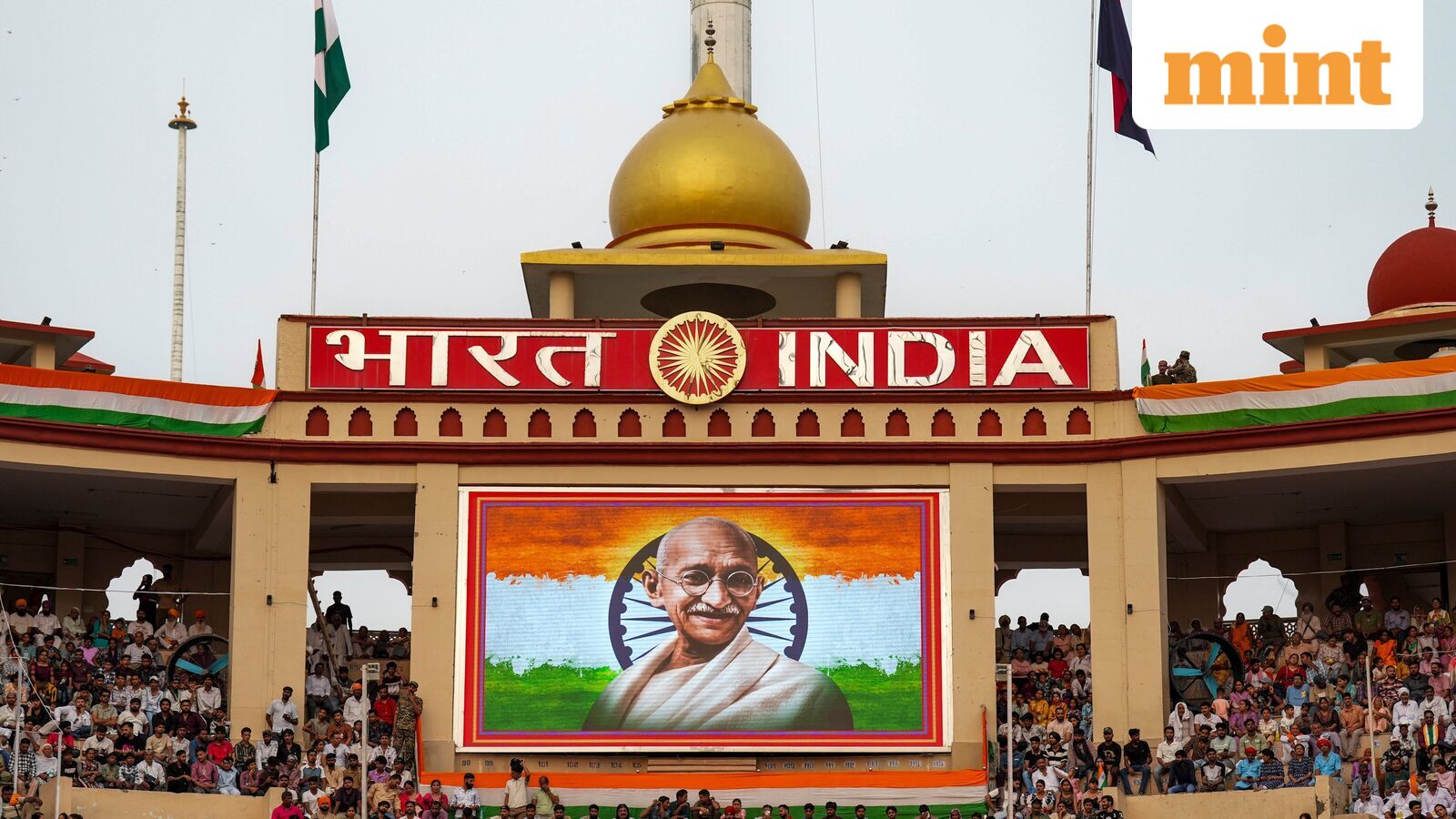
On Independence Day 2026, India observed the 75th anniversary of its universal adult franchise system. The inaugural general election in 1951-52 was a bold democratic experiment for a country that had just gained independence, with a largely rural population facing poverty. At that time, there were 17.32 crore registered voters (excluding Jammu and Kashmir) out of a population of 36 crore, resulting in a voter turnout of 45.67 per cent.
By the 2024 Lok Sabha election, the electorate had surged to 97.98 crore, and the voting participation rose to 66.10 per cent. Over the past eight decades, Indian elections evolved from a small-scale affair involving a few hundred million individuals to a colossal logistical operation encompassing nearly one billion voters.
Initially, the elections were conducted using paper ballots. However, technology gradually transformed the electoral process. The Election Commission introduced Electronic Voting Machines (EVMs) in the Parur Assembly Constituency of Kerala in 1982. Subsequently, EVMs replaced paper ballots nationwide, being utilized in all 543 Lok Sabha constituencies for the first time.
The next significant change was the implementation of Voter Verifiable Paper Audit Trail (VVPAT) in 2013, which added a paper verification layer to electronic voting.
India is now the world's largest democracy, with its voter base growing more than fivefold from 17.32 crore in 1951 to 98 crore in the 2024 general elections. The voting process itself has undergone substantial changes, progressing from paper ballots to Electronic Voting Machines and finally to EVMs equipped with VVPAT. The first Lok Sabha elections took place between October 25 and November 21, 1951, and the Indian National Congress secured 364 out of 489 seats, with Jawaharlal Nehru becoming the Prime Minister.
The minimum voting age was initially set at 21 years, but it was subsequently lowered to 18 years in 1989. In the 2024 Lok Sabha election, approximately 22.3 crore Indians aged between 18 and 29 were registered as voters, representing 22.78 per cent of the country's electorate. A noteworthy shift has been the increased participation of women in elections.
While women's turnout in the 2009 Lok Sabha elections was 55.8 per cent, it surpassed men's turnout of 60.36 per cent in 2014. In the 2024 elections, women's turnout reached 65.78 per cent, matching the overall turnout of 66.10 per cent.
Following independence, the first few decades were marked by Congress dominance at the national level in Indian politics. This dominance shifted after the 1967 Lok Sabha elections, followed by political upheavals in the 1970s, the Janata experiment in 1977, the return of Congress in 1980, and the emergence of coalition politics from the late 1980s and 1990s.
The 1989-2014 era demonstrated that Indian politics could no longer be characterized by one-party dominance. The BJP's rise subsequently led to another structural change, with the BJP winning elections in 2014 and 2019 with a simple majority. However, in the 2024 general elections, the BJP had to form a government with allies, with Prime Minister Narendra Modi serving as the chief minister for the third consecutive term.
The Congress's traditional social coalition began to disintegrate during the Mandal era, which was marked by the implementation of the Mandal Commission recommendations in 1990. The Commission recommended a 27 per cent reservation in central government jobs for Other Backward Classes (OBCs), in addition to the existing reservations for Scheduled Castes and Scheduled Tribes.
This led to the emergence of leaders such as Lalu Prasad Yadav, Mulayam Singh Yadav, and Nitish Kumar, who built powerful political bases around social justice and backward-caste mobilization. These parties strengthened their positions in states like Uttar Pradesh and Bihar, contributing to the political landscape becoming more fragmented, competitive, and caste-conscious.
Caste has always played a significant role in Indian politics, but its electoral expression has evolved over time. Leaders who built their political bases around social justice and backward-caste mobilization emerged on the Indian political scene. The BJP, led by Lal Krishna Advani, conducted a nationwide campaign for the construction of a temple in Ayodhya, which culminated in the demolition of the Babri Masjid in December 1992.
This event sparked Hindu-Muslim riots across the country. In 2019, the Supreme Court ruled that the land in Ayodhya should be handed over to a trust for the construction of a Hindu temple, subject to certain conditions. A separate piece of land in Ayodhya was awarded to Muslim groups. On August 5, 2020, Prime Minister Narendra Modi laid the foundation stone for the Ram Mandir.
Written by urgent.news from Live Mint's reporting — not their text. Machine-written — may contain errors; check the original before relying on it.