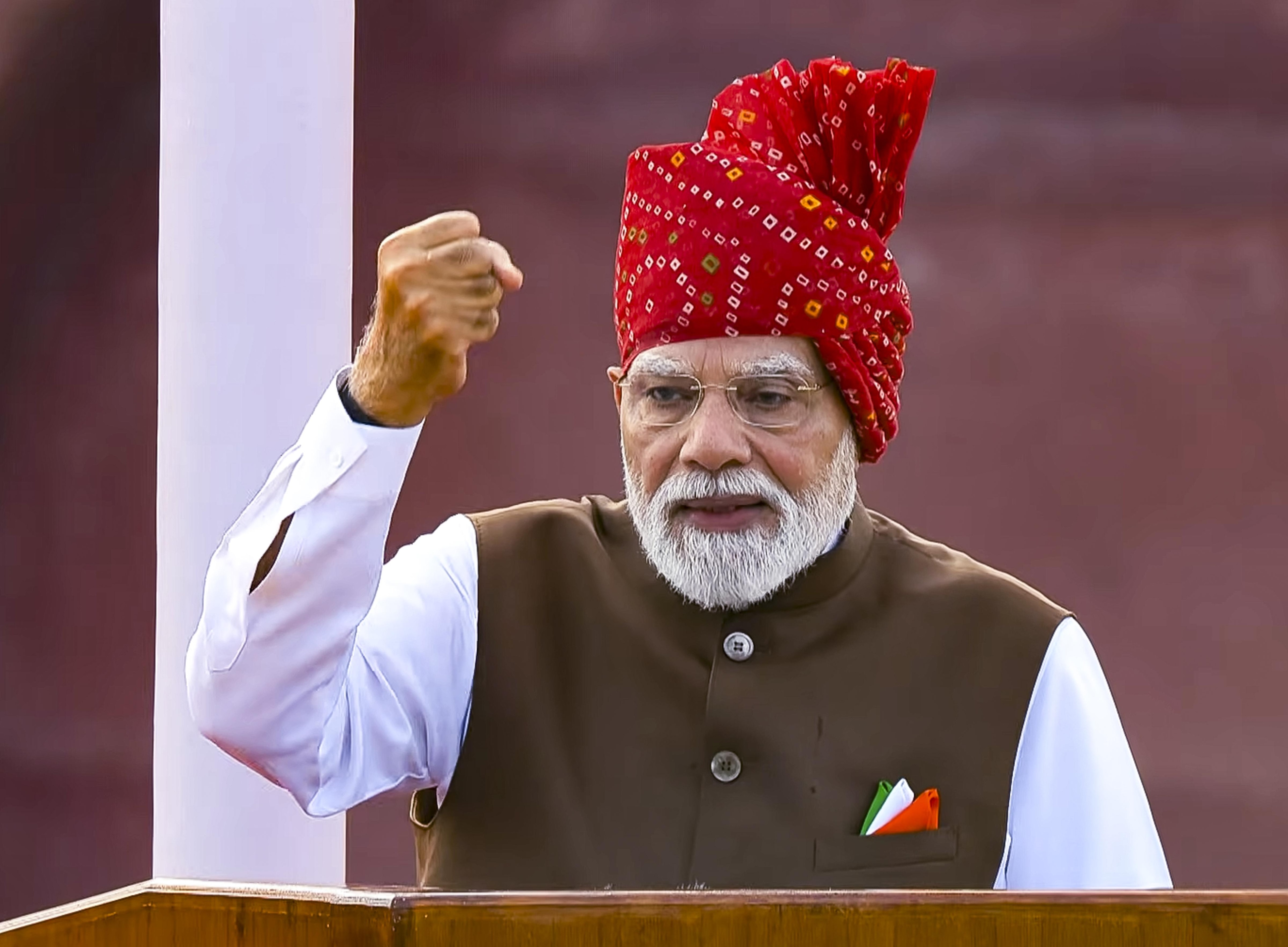
Independence Day 2026: The road to UPI
On India's 80th Independence Day, a simple transaction involving a QR code moving money across hundreds of kilometers became a symbol of the nation's digital financial journey. This seemingly modest development marks a significant chapter in a long history of how money has traveled across distances in India.
Centuries ago, merchants relied on a system of hundis - credit instruments passed through trusted networks of merchants and bankers to remit funds, borrow money as credit instruments, and finance trade as bills of exchange. There was no need for physical movement of coins as the instructions for payment were carried by the hundi.
While the methods have evolved, the underlying principle of moving value across distance without physically transporting the money itself remains constant. From hundis and indigenous bankers, through colonial banks, nationalized branches, electronic transfers, debit and credit cards, ATMs, and finally UPI, India has continually innovated to find new ways to answer this fundamental question of financial connectivity.
Before the advent of banks, India already possessed a sophisticated financial network. Hundis, which had been in use since the 12th century, played a crucial role in this ecosystem. These instruments enabled the remittance of funds, borrowing of money as credit, and financing of trade as bills of exchange. The system thrived due to the trust and reputation among merchants and indigenous bankers who understood one another's creditworthiness.
With the arrival of the British, a new financial architecture began to emerge alongside these indigenous systems. The Bank of Bengal, Bank of Bombay, and Bank of Madras were established in 1806, 1840, and 1843 respectively. In 1921, these banks merged to form the Imperial Bank of India. The Reserve Bank of India came into existence on April 1, 1935, with the primary responsibilities of regulating banknote issue, maintaining monetary stability, and operating the country's credit and currency system. The Reserve Bank of India was nationalized on January 1, 1949.
As India gained independence, the financial landscape underwent a transformation. The nation transitioned from relying solely on indigenous networks of credit and remittance to a formal banking system that had evolved under colonial rule. The government took control of the Imperial Bank in 1955, transforming it into the State Bank of India.
Subsequently, the government nationalized 14 major commercial banks in 1969 and six more in 1980, significantly expanding the banking network. By March 1990, the RBI reported that there were 97 scheduled private banks, 557 non-scheduled private banks, and 395 cooperative banks in India.
Written by urgent.news from The Economic Times's reporting — not their text. Machine-written — may contain errors; check the original before relying on it.