Did Nvidia’s Jensen Huang just make the AI buildout too big to fail?
Nvidia Corp. is no longer just selling technology. It is helping create a financial asset class around artificial intelligence compute. In our last Breaking Analysis, we argued that AI can be technologically transformative and still produce a capital bubble. Our thesis was simply that the bubble pops if deployable supply grows faster than monetizable demand – […] The post Did Nvidia’s Jensen…
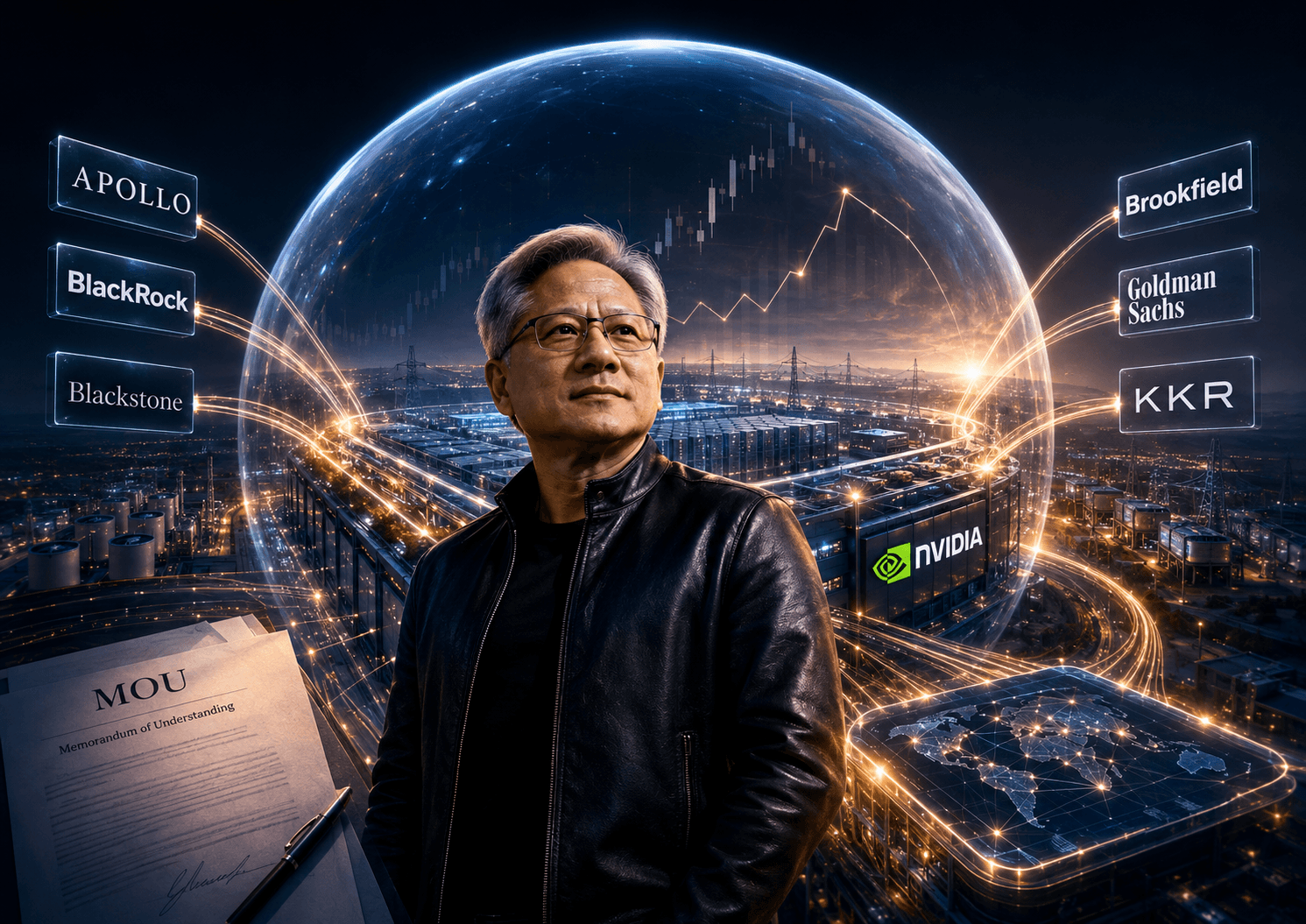
Nvidia Corp. has taken an unprecedented step by attempting to create a financial asset class around artificial intelligence compute. In a recent announcement, CEO Jensen Huang revealed partnerships with prominent financial institutions to establish financing platforms capable of mobilizing over $500 billion for AI infrastructure. This move signals a significant shift in how AI compute is perceived and monetized.
The goal of these partnerships is to turn AI compute into collateral and the AI factory into a repeatable, financeable infrastructure asset. By doing so, Nvidia aims to move AI beyond just being a chip story and integrate it with credit, leverage, customer contracts, and monetization. This development could potentially reduce the cost of capital and broaden access to AI infrastructure.
However, it is crucial to understand that this is not merely a program aimed at selling more GPUs. Nvidia is essentially building a capital market around its architecture, transforming the AI infrastructure into an investable asset class. The AI chip cycle is evolving into a credit cycle, with institutional investors providing debt and equity to dedicated financing vehicles to acquire or lease Nvidia systems, secure sites, and build AI factories.
The success of this endeavor hinges on the ability to create financeable assets that encompass the Nvidia platform, customer contracts, sites, power connections, expected monetization profiles, and residual values of the equipment. The customer agreements, known as offtake contracts, play a pivotal role in this process, as they provide the necessary assurances to lenders regarding who is obligated to pay, the commitment duration, the take-or-pay nature of the contract, and the customer's ability to cancel or renegotiate.
While this new capital market has the potential to reduce AI bubble risk, it is essential to recognize that it may also introduce new complexities and interdependencies. The AI infrastructure is becoming increasingly interlinked with credit, leverage, and cash flow, making it essential to analyze the broader implications of this development.
Written by urgent.news from SiliconANGLE's reporting — not their text. Machine-written — may contain errors; check the original before relying on it.