Cómo nublarse el entendimiento y envenenarse el corazón
Es injusto juzgar a los antiguos por sus obras mejores y a los contemporáneos por las peores
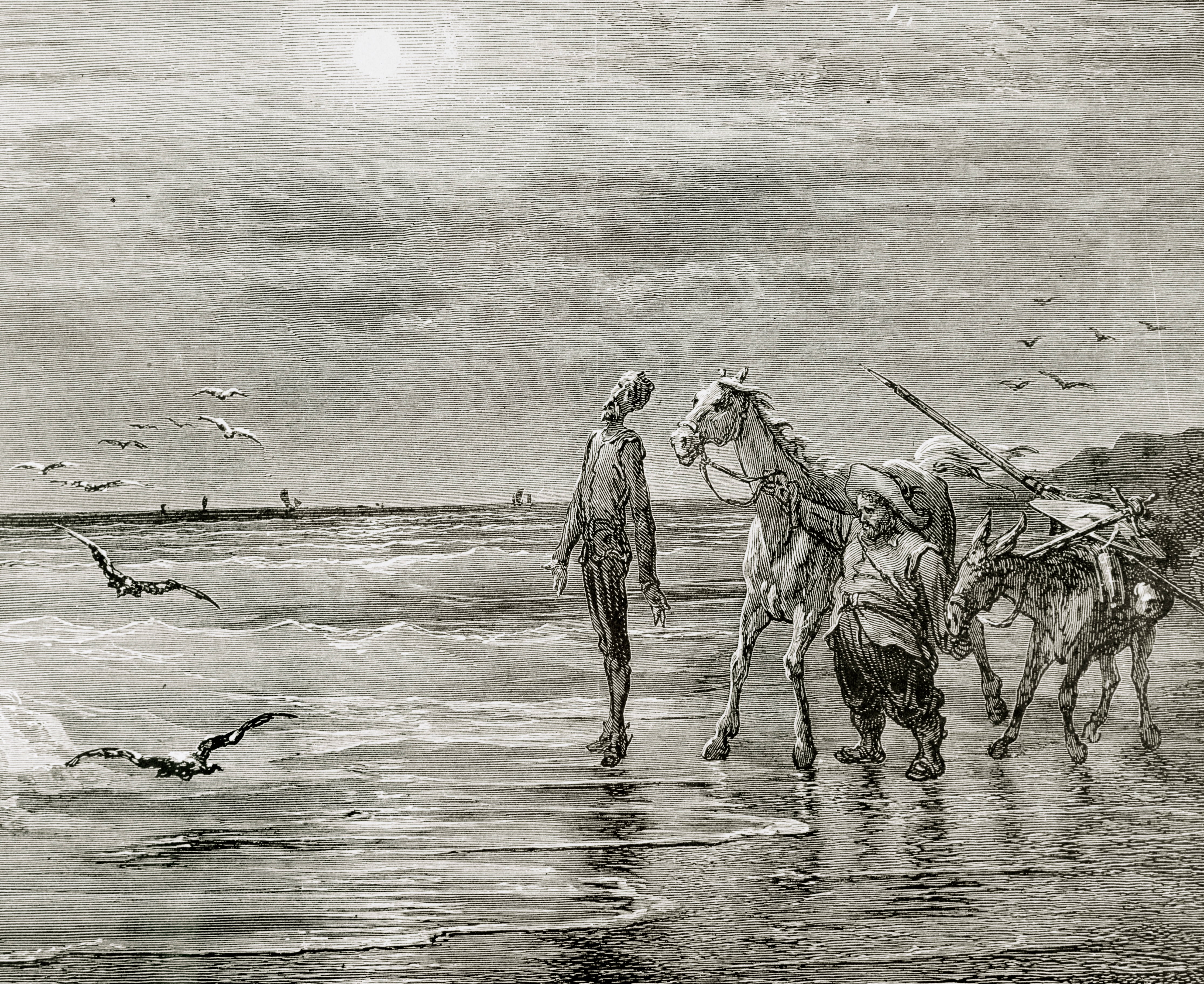
On a day in 1803, Samuel T. Coleridge jotted down the core principle of criticism in his notebook, which I would translate to Spanish as: "Never should one seize the opportunity to reason against the principle that clouds the understanding and poisons the heart, according to which a work must be judged by its flaws rather than its virtues.
Every work has its first shortcomings – we know this a priori – but not its last, and therefore, whoever discovers them tells you something you couldn't have anticipated with certainty or even with probability." This principle could only be conceived by a poet of great stature. Judging a work by its shortcomings rather than its virtues poisons the heart and clouds the understanding because it places the judge above the judged, deprives them of humility, which is the greatest virtue, and condemns them to the worst fault, which is hubris, the hubris that in Greek tragedy leads men to confront the gods, who punish them for it.
No work is without blemish. Even the most praised novel has had improper references since its publication (or before); some are foolish, such as Lope de Vega's witty "no poet is so foolish as to praise Don Quixote"; others are petulant condemnations from Nabokov, Martin Amis, or Paul Groussac, who accused the book of being cruel, too long, or written in "extravagant prose"; other criticisms, on the other hand, are not so absurd.
Let's be honest: what would happen in the midst of the adventures of Don Quixote with the story of The Curious Impertinence? Wouldn't Miguel have left it for the Exemplary Novels, perhaps belonging to it? And what does Tolstoy say about the epilogue of War and Peace? How did he think of dumping that last sermon upon us? Who dares to impose how we should understand his novel, as if the reader were an idiot?
Some might argue that Quixote and War and Peace are written a bit "whatever comes out," to put it as Unamuno would say, and that they do not commit these novelistic lapses that more rigorous, geometric, or deliberate works avoid. False. One could cite examples of great works by Kafka, Joyce, or Faulkner; none of them, like Madame Bovary, a novel embalmed with a persistent legend of perfection.
That is why the wise have spent almost two centuries trying to explain how it is possible for a third-person narrative to begin as if it were first-person (Nous étions à l’étude, quand le Proviseur entra, arraque le relatif: “Estábamos en la hora de estudio quand le directeur entra”) and, after much effort, the only plausible explanation of this glaring incoherence is that it has no explanation.
Quandoque bonus dormitat Homerus. And like even the best scribe makes a mistake – that's what Horace's verse means – becoming the clever one by focusing on a work's flaws only serves to poison the heart and cloud the understanding, making oneself seem clever, which is what foolish people usually do. Besides, at the beginning of Coleridge's principle, I would add one clause.
We judge Shakespeare by King Lear, not Tito Andrónico and his outrageous grandiosity; we judge Cervantes by Don Quixote, not the Persians, a novel that can be praised enthusiastically, but only if we haven't read it (all indications point to Miguel seeking to atone for the success of Quixote by making the Persians as bad as possible, a serious writer's worst mistake: trying to prove he is serious by showing he is not).
Despite this, more than one has condemned García Márquez forever for his last novel, Memories of My Ugly Whores, as if he had not written One Hundred Years of Solitude. This is the clause I would add to Coleridge's beginning: it is unjust to judge the ancients by their best works and the contemporaries by their worst. This said, it is enough to add that everyone should enjoy what pleases them, and that, although the gods continue to punish our pride – we have carried it for a long time, but they still are – if anyone enjoys clouding their understanding and poisoning their heart, let it be with my blessing.
Written by urgent.news from El Pais's reporting — not their text. Machine-written — may contain errors; check the original before relying on it.