Zhu Rongji’s Death Is the Final Knell for China’s Breakneck Reform Era
Under President Xi Jinping, politics and security, not real change, come first.
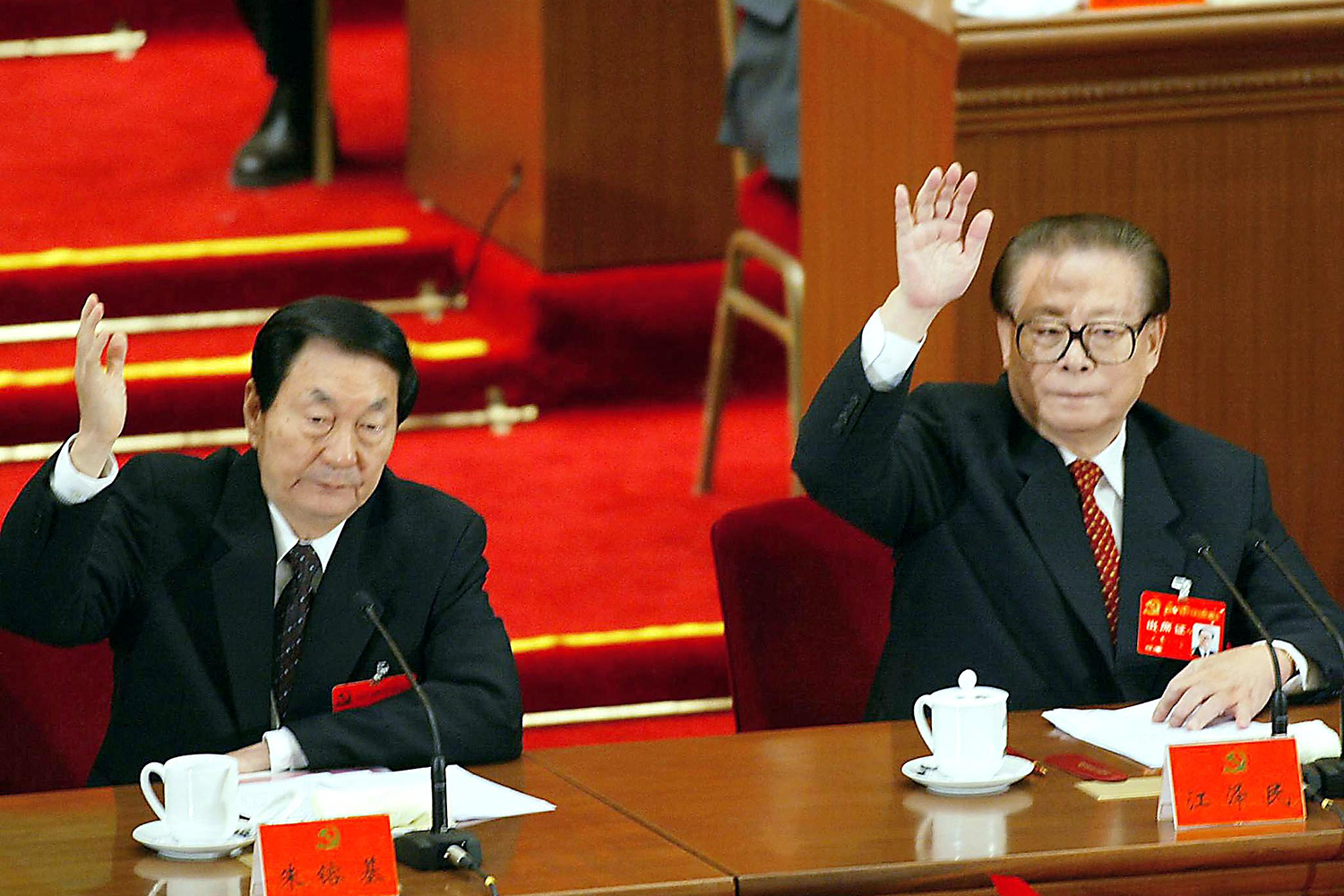
On August 17, China will commemorate the 100th anniversary of the birth of Jiang Zemin, the former Chinese Communist Party general secretary who passed away in 2022 at the age of 96. To mark this occasion, Beijing has organized a series of commemorative events. Now, Jiang's political partner, Zhu Rongji, has also died, on August 12 at the age of 97. This tragic coincidence has led to the perception of the end of the era of rapid reform that these two leaders represented.
Jiang and Zhu, together, formed the "golden partnership" of the CCP's third-generation leadership, which came to power in the 1990s. Together, they oversaw one of the most significant periods of reform in modern Chinese history. However, China's reform journey did not begin with this duo. It was initiated by Deng Xiaoping in 1979, with rural reform, special economic zones, price reforms, and the emergence of the private economy preceding Jiang and Zhu's contributions.
Jiang and Zhu's era marked a rapid transformation of China's economy from a planned system to a market-oriented one, gradually integrating market elements into the overall economic structure and changing China from a deeply planned economy to a market economy with key features. The legacy of this era includes bringing inflation under control, advancing fiscal and tax reforms, rebuilding the financial regulatory system, restructuring state-owned enterprises, reforming government institutions and the housing system, further opening up the economy, responding to the Asian financial crisis, and joining the World Trade Organization (WTO).
The Jiang-Zhu era was effective due to the clarity of market-directed reform. The goal of a "socialist market economy" was established at the 14th National Congress, and further affirmed at the 15th National Congress. While state-owned enterprises remained dominant, multiple forms of ownership coexisted. Although discrimination based on ownership was not entirely eliminated, the economic growth increasingly came from private businesses, foreign investment, and export manufacturing.
The rapid growth was driven by capital creating jobs, wealth, and tax revenue, and the distinction between "state" and "private" became less politically charged.
Globalization was actively embraced, culminating in China's accession to the WTO in 2001. China believed that to develop, it had to align with the world market, accept international rules, attract foreign capital, technology, and management expertise, and use external competition to spur domestic reform. Reformers tackled difficult problems head-on, including price, enterprise, housing, employment, finance, taxation, and foreign trade reforms.
They directly altered the mechanisms of the economy, willing to accept significant social pain, such as state-owned enterprise restructuring and massive layoffs, to create a market system.
Written by urgent.news from Foreign Policy's reporting — not their text. Machine-written — may contain errors; check the original before relying on it.