Vote-Buying, Political Warfare and the Demise of the ANC
Explore how litigation against Nkosazana Dlamini-Zuma serves as a political distraction from the deeper issues of vote-buying within the ANC, revealing the complexities of power struggles in South African politics.
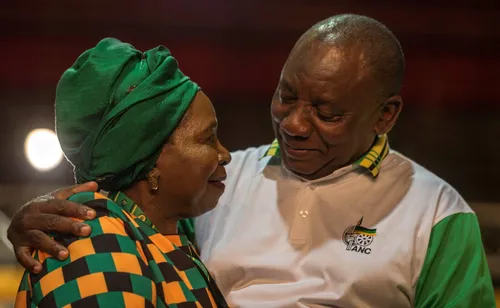
The ongoing conflict between former Minister of International Relations and Cooperation Dr Nkosazana Dlamini-Zuma and her party colleagues Fikile Mbalula and Ronald Lamola has captured the attention of the public. Dlamini-Zuma accused her party members of engaging in vote-buying at ANC conferences, a matter that is fundamentally a political issue rather than a legal one.
Threats of litigation merely serve as a distraction. In December 2022, Gwede Mantashe, the newly re-elected ANC national chairperson, bluntly stated that fighting against money had been a significant challenge. He recounted an incident where a person claimed to have 40 delegates and requested R100,000, to which Mantashe responded that he would rather use the money to buy sheep or cattle.
This practice of vote-buying to influence ANC conference outcomes is not new and reached a particularly egregious level during the 2017 ANC elective conference. An estimated R1 billion was allegedly used to purchase the presidency, with funds reportedly coming from the ANC's sworn enemies. Constitutional Court Chief Justice Mogoeng Mogoeng described such largesse as an investment, stating that providing a million rand would result in personal benefits such as becoming a multimillionaire.
Ramaphosa's claim of ignorance regarding the funding of his 2017 presidential campaign was dismissed by the Court, which noted that emails revealed the President's high involvement in the campaign's affairs. Mogoeng argued that the campaign was not for the party's benefit but for Ramaphosa's personal gain. The Court did not find that Ramaphosa's involvement amounted to personal benefit.
The issue of vote-buying is unlikely to be resolved through the courts, as it is a political matter requiring a political solution. The practice implicates high-ranking individuals in both the party and state, making it challenging to resolve. Dlamini-Zuma's initial reference to individuals implicated in vote-buying has inadvertently delayed the urgent discussion on the role of money in politics.
While the courts have protected Ramaphosa, raising questions about the principle of transparency in democracy, it is crucial to address the underlying political problem rather than relying on litigation to cover up the issue.
Written by urgent.news from IOL's reporting — not their text. Machine-written — may contain errors; check the original before relying on it.