Vietnam urged to adopt multi-layered governance to tackle drone threats
Vietnam needs to pivot toward a sophisticated, multi-layered airspace governance framework to effectively neutralize escalating drone threats while safely fostering technological innovation and next-generation urban logistics. Authorities advised to push for hard tech, strict drone laws after airport scare Tan Son Nhat airport seeks counter-UAV systems after drone incident
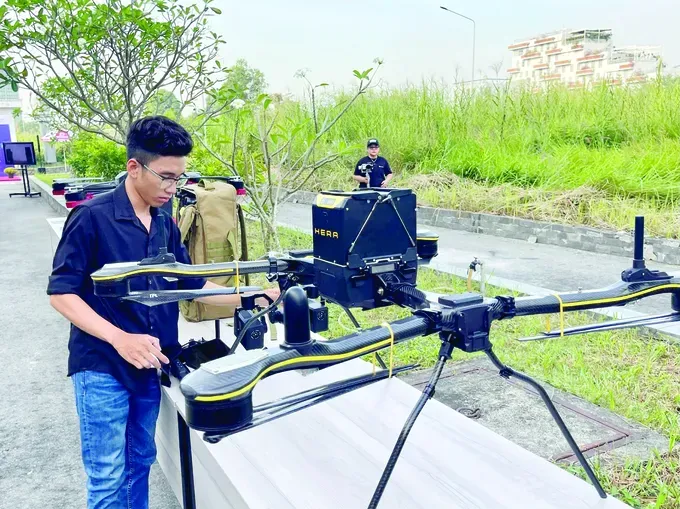
Vietnam must adopt a multi-layered governance approach to address the growing drone threats, while still encouraging the growth of technology and innovative urban logistics. Drones, or unmanned aerial vehicles (UAVs), are revolutionizing industries such as agriculture, logistics, and infrastructure inspection. However, these same technologies can pose significant risks to aviation safety.
A small UAV can disrupt an international airport, causing flight diversions, extensive damages, and even halting airport operations. Conventional radar systems struggle to detect low-flying UAVs, creating a complex challenge that goes beyond simply banning these devices.
Singapore provides an insightful example of a country that successfully manages UAV threats through a comprehensive, multi-layered governance framework. After UAV incursions disrupted Changi Airport in 2019, Singapore didn't simply rely on a rudimentary anti-drone arsenal. Instead, they implemented a unified "whole-of-government" approach, where multiple agencies collaborate to monitor and respond to scenarios.
By sharing data and adhering to a synchronized protocol, Singapore effectively mitigated the risks posed by UAVs, highlighting three essential lessons for Vietnam.
Firstly, Vietnam needs to develop a sophisticated airspace governance system for its national airports, starting with major hubs like Noi Bai, Tan Son Nhat, Da Nang, and Cam Ranh. These airports should be interconnected on a unified platform, integrating airport operation centers, air traffic control, UAV defense systems, and AI-powered real-time situational awareness. This approach not only enhances security but also fosters the development of a cutting-edge smart airspace governance model.
Secondly, Vietnam must invest in constructing Long Thanh International Airport as a next-generation facility, incorporating advanced surveillance and control systems. By adopting Singapore's model, Vietnam can create a world-class smart airspace governance system that safeguards national airspace while promoting the growth of the UAV economy.
Lastly, simply enforcing regulations isn't enough. Vietnam must prioritize proactive threat interception and enforcement, accompanied by stringent penalties for violators. Public awareness campaigns should educate residential communities surrounding airports about the potential consequences of lax UAV regulations, emphasizing that seemingly innocuous drone flights can have catastrophic impacts on aviation safety.
In conclusion, Vietnam has the opportunity to not only accelerate through the AI revolution but also establish itself as a trailblazer in governance models for the digital age. By shifting from sectoral isolation to integrated system governance and moving from reactive to predictive operations, Vietnam can transform its national airspace into a secure and thriving environment for UAV innovation.
Written by urgent.news from SGGP English Edition's reporting — not their text. Machine-written — may contain errors; check the original before relying on it.