US ambassador to Beirut says Israeli attacks in south Lebanon will continue until Hezbollah is disarmed
Israeli attacks in southern Lebanese villages will continue until Hezbollah disarms, US ambassador to Lebanon Michel Issa said on Friday. “They’ll stop when it’s time to stop. Tell Hezbollah that as soon as it hands over its weapons, everything will stop,” Mr Issa said after meeting Parliament Speaker Nabih Berri. His comments came a day after Lebanese Prime Minister Nawaf Salam condemned what he…
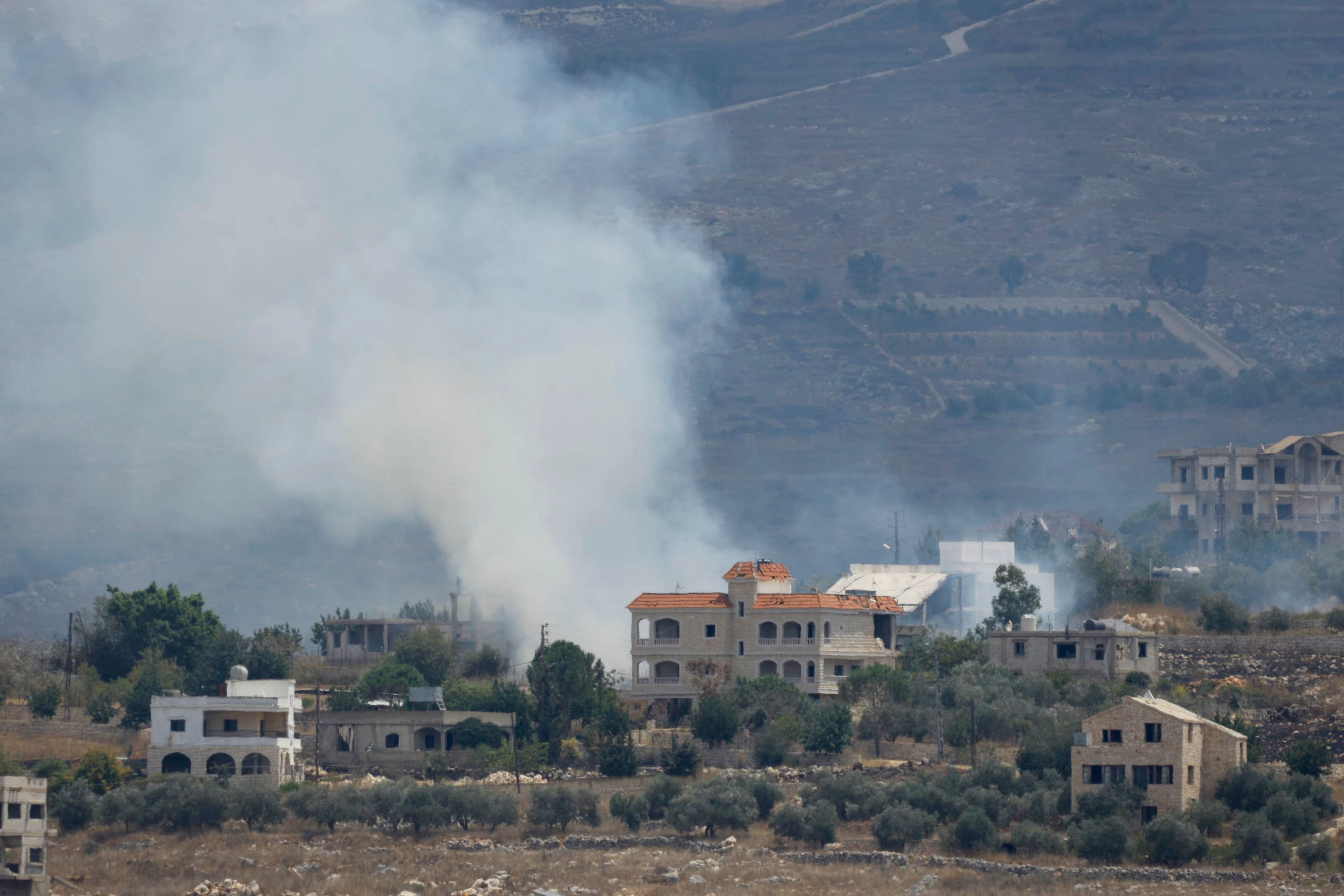
US Ambassador to Lebanon Michel Issa stated on Friday that Israeli attacks in southern Lebanese villages will persist until Hezbollah disarms. According to Issa, the attacks will cease once Hezbollah hands over its weapons, as he remarked after meeting with Parliament Speaker Nabih Berri. This comment followed Lebanese Prime Minister Nawaf Salam's condemnation of Israeli actions, including attacks, incursions, and the destruction of homes, neighborhoods, infrastructure, government buildings, and places of worship in south Lebanon.
Salam argued that labeling entire villages and towns as military facilities is illogical and does not justify their destruction or the displacement of inhabitants.
Issa's remarks came during a two-day visit to Lebanon, alongside Senior Centcom Officer Lt-Gen Joseph Clearfield. The delegation met with Lebanon's political and military leaders, including President Joseph Aoun and Army commander Brig Gen Rodolph Haykal, to revive stalled negotiations between Lebanon and Israel. The discussions primarily focused on resolving the framework agreement, the establishment of a verification mechanism for disarming Hezbollah and Israel's withdrawal, and the Lebanese army assuming control.
Issa mentioned that a shortlist of candidates for the verification mechanism was discussed, although no final decisions had been made, with the US seeking input from several countries. The recent talks in Rome had not yielded significant practical progress. Israeli forces had previously issued displacement orders for residents of the village of Al Mansouri and launched airstrikes on several areas in south Lebanon, accusing Hezbollah of breaching the ceasefire agreement.
The US delegation's visit aimed to address these obstacles, but intensified Israeli attacks and bulldozing operations in south Lebanon continued, particularly around the Ali Al Taher ridge.
Despite the ongoing negotiations in Rome and positive atmosphere, Israel's Prime Minister Benjamin Netanyahu hinted at potential military action in the area, accusing Hezbollah of stockpiling weapons there. In June, Israel conducted a major operation around Ali Al Taher, surrounding and isolating the region. While Hezbollah denied Israel's claim, the situation has become increasingly tense, with a clear divide between the diplomatic track and ground realities.
The US seeks to advance a process based on Hezbollah's disarmament and the Lebanese Army's deployment, while the Lebanese government demands an end to the Israeli military campaign. Israel, in turn, appears to be consolidating its position on the ground, while Hezbollah has criticized the US-mediated framework agreement and the extensive negotiations leading up to it.
Written by urgent.news from The National UAE's reporting — not their text. Machine-written — may contain errors; check the original before relying on it.
This story
This is one outlet's version. Read the fullest account.