This wild accessory made my iPhone think it was a BlackBerry
Hello again and welcome back to Fast Company ’ s Plugged In . Most obsolete technologies are gone forever, and thankfully so. I will never again buy a new computer with a floppy disk drive, CRT display, or FireWire , and neither will anyone else. We’re all better off for it. But there’s something about tiny, plasticky, defiantly tactile keyboards that speaks to a dedicated minority of smartphone…
In a world where obsolete technologies are becoming relics of the past, there remains a niche group of smartphone users who are drawn to tiny, tactile keyboards. The iPhone, which entered the market nearly two decades ago, signaled the beginning of the end for these physical keyboards. However, they have persisted through various means, including Android phones with physical keyboards and ways to retrofit them onto other models, even iPhones.
One of the most intriguing champions of physical phone keyboards is a small company called Clicks, founded by Michael "MrMobile" Fisher and Kevin "CrackBerry Kevin" Michaluk, both former tech journalists who lived through the era of the BlackBerry. Clicks is dedicated to keeping the flame alive for the once-mighty form of input.
I, personally, am not a BlackBerry user; however, I have always admired the company's persistence and ingenuity. Clicks initially focused on creating keyboard-equipped cases for iPhones and other phones, making them appear as if they were the world's tallest BlackBerrys. Despite my reservations about the case's specific phone model and its cost, Clicks has unveiled a new product: the Power Keyboard.
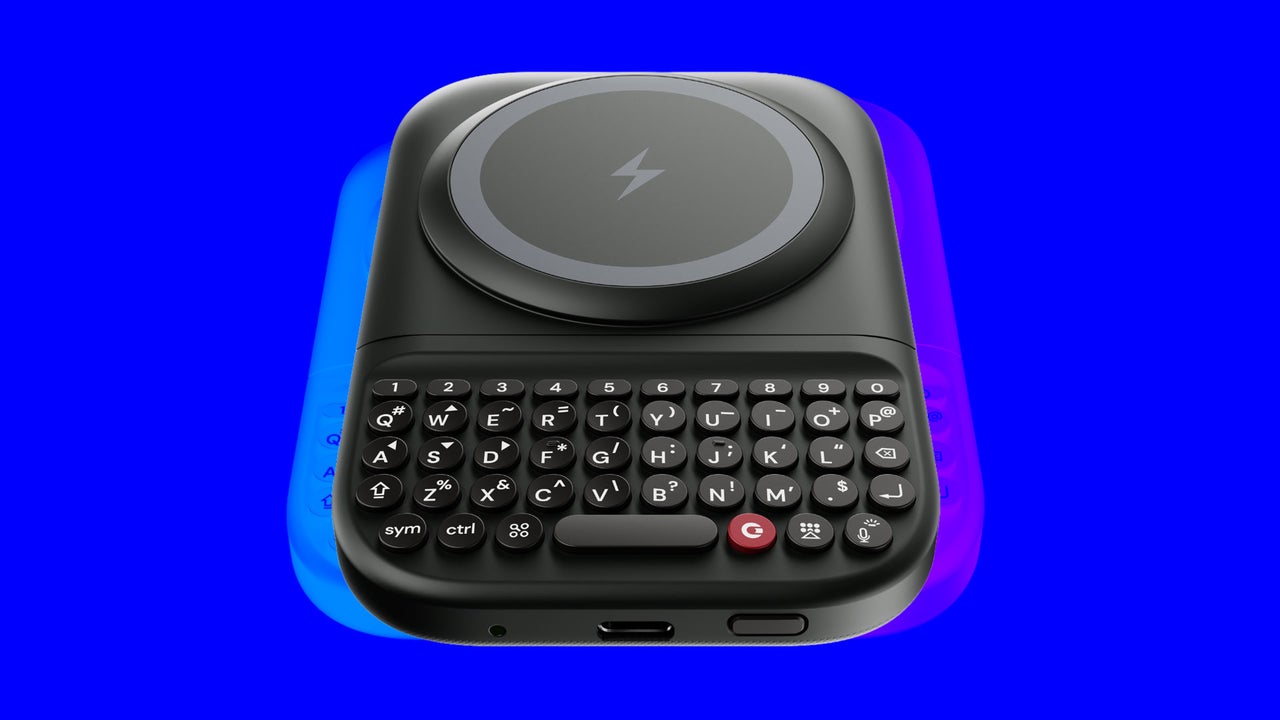
The Power Keyboard, announced in January and now available for $99, is a self-contained, battery-powered Bluetooth keyboard that attaches magnetically to the back of iPhones with MagSafe and Android phones with similar Qi2 technology. When needed, the keyboard slides out on rails beneath and slightly behind the phone. It offers a level of flexibility not possible with keyboard cases, allowing users to attach and remove it at their discretion, even when their phone is already in a case.
The keyboard boasts a 47-key backlit keyboard with a dedicated row of number keys, a feature absent in BlackBerrys and Clicks's own cases. The keys have a responsive feel, making typing on plastic a distinct advantage over glass. The magnetically attached keyboard and rail mechanism provide a sturdy and satisfying sliding experience.
While the top edge of the Power Keyboard intrudes on the iPhone 16's ultrawide camera, Clicks has cleverly designed a solution: swiveling the keyboard momentarily out of the way. This design choice allows for more room for content, making it easier to edit spreadsheets in landscape mode. Additionally, the keyboard's built-in 2300 mAh battery doubles as a power pack, able to charge up to nine devices that support text input via Bluetooth, including smart TVs, streaming boxes, tablets, and headsets like Apple Vision Pro.
Written by urgent.news from Fast Company's reporting — not their text. Machine-written — may contain errors; check the original before relying on it.