The Atlas Obscura Guide to the World's Strangest Christmas Traditions
Every European Christmas market sells the same mulled wine out of the same wooden hut. This is not a criticism — it is a very good hut, and the wine is warm. But it is not a reason to choose one country over another, and the "best Christmas markets" lists that dominate December travel writing are, functionally, lists of interchangeable huts. The traditions are the opposite. They are wildly,…
Every European Christmas market typically sells a consistent mulled wine. However, these markets offer unique local traditions that surpass the season's reputation. Several involve potentially dangerous situations. This guide organizes the experiences by what travelers want to see, providing specific dates for each event.
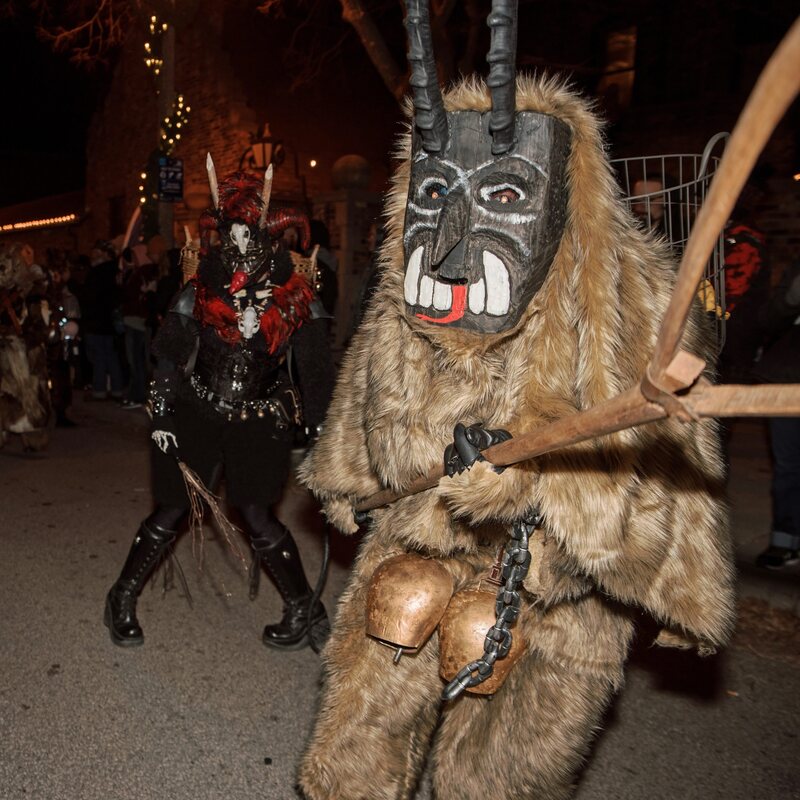
In Austria and Bavaria, Krampus figures chase through the streets on December 5th and 6th, around St. Nicholas Day. These demon-like figures, originating from 16th-century Counter-Reformation Jesuit plays, deal with naughty children. They also deal with onlookers by swatting them with switches.
Milwaukee, with its deep German roots, offers a similar experience with a Krampusnacht centered on the Pabst Brewery district.
In Central Europe, Frau Perchta, a Christmas witch haunting the darkest nights, appears as a woman in white robes or a winged crone.
Poland has Turoń, a biting, dancing bull-beast descended from the aurochs.
Iceland's Yule Cat, or Jólakötturinn, prowls on Christmas Eve and eats children not wearing new clothes. Grýla, her mother, has Yule Lads, thirteen sons arriving each night before Christmas. They live in Dimmuborgir, a field of jagged lava stacks and caves.
The Gävle Yule Goat in Sweden, erected since 1966, has been burned down repeatedly. It has a live webcam and social media accounts.
Catalonia has El Caganer, a small peasant defecating at the edge of the manger in traditional nativity scenes. La Noche de Rábanos, the Night of the Radishes, in Oaxaca, features sculptures made from radishes on December 23rd.
Written by urgent.news from Atlas Obscura's reporting — not their text. Machine-written — may contain errors; check the original before relying on it.