Scientists Have Created a New Category of Heat Waves: “Snow Eaters”
This story was originally published by Grist and is reproduced here as part of the Climate Desk collaboration. Matthew LaPlante doesn’t have to go to a lab to see his research in action. On some mornings, he can just look out his own window in the mountains high above Salt Lake City. After a warm night when the temperature […]
Scientists have identified a new category of heat waves called "snow eaters," according to a study published in the journal Science Advances. These events, which have been observed in the Western United States, are characterized by unusually high temperatures in the spring and early summer, causing snow levels to drop significantly overnight. Matthew LaPlante, a journalist and climate scientist at Utah State University, described them as "monsters" that devour snowpacks during the night.
Compared to regular warm spells, snow eater heat waves occur when temperatures remain above freezing both day and night for multiple days, typically three to five. These events can double the rate of snow melt, leading to flooding and making water resource management more challenging. The study found that the area affected by snow eaters has been increasing by an average of about 40,000 square miles per century since the 1850s, and the first snow eater of the season has been arriving about one month earlier per century.
The term "snow eater" has a history dating back to the 1880s when people in the West discussed "snow-eating" chinooks, warm mountain winds that quickly melt snow. More recently, the term gained attention in March when an early heat wave caused snowpack to disappear rapidly in the Colorado Rockies and California's Sierra Nevada.
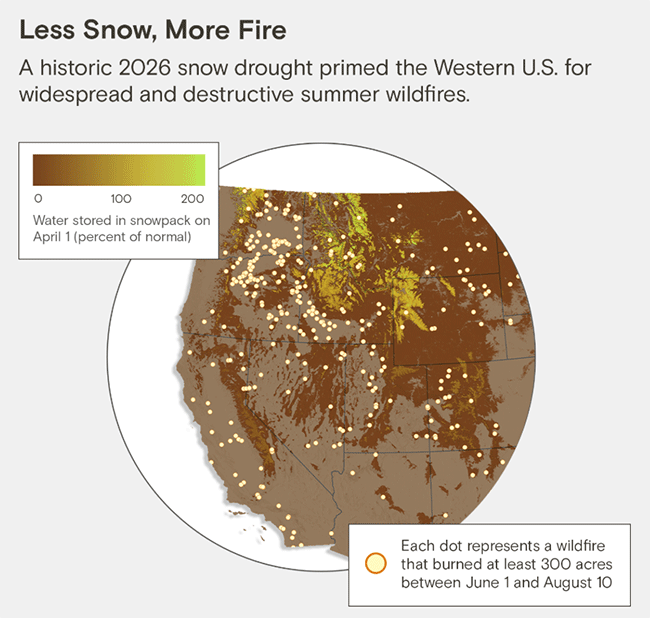
The researchers hope the term "snow eater" will raise awareness about this type of heat wave. Solar radiation, which can be overlooked as a driver of snowmelt, plays a significant role when combined with heat waves. As snow crystals warm up, they lose their reflective abilities, causing snowpacks to absorb more sunlight and melt faster. This "snowball effect" has contributed to record-low snowpack in the Western U.S. this spring.
Snow eater heat waves have been linked to severe wildfires and drought stress in mountain forests across the Western U.S. Water stored as snow melts early, posing challenges for water managers who rely on snowpack as a primary source of fresh water during the drier summer months. Early or rapid snowmelt can lead to hazards such as avalanches, glacial collapses, and permafrost melt, though more research is needed to establish these connections.
Written by urgent.news from Mother Jones's reporting — not their text. Machine-written — may contain errors; check the original before relying on it.