Infrastructure and land use behind devastating India monsoon floods
Widespread flooding in northeastern India that affected more than 500,000 people and claimed at least 99 lives between June and August 2026 was primarily driven by human factors like rapid urbanization, deforestation, and destruction of wetlands, new research says. It also points to structural failures rather than climate change. The findings were published by World […]
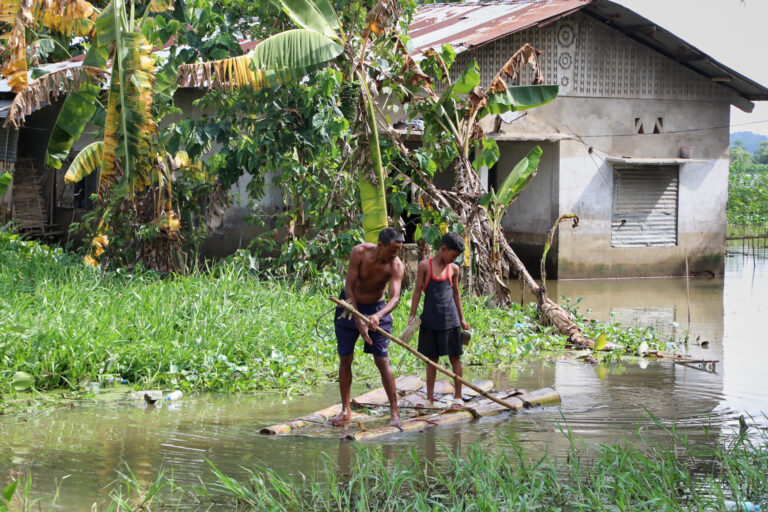
Massive flooding in northeastern India, affecting over 500,000 individuals and causing at least 99 deaths from June to August 2026, was primarily caused by human activities such as rapid urbanization, deforestation, and wetland destruction, according to new research. The findings, published by World Weather Attribution (WWA), suggest that structural failures were the main culprits rather than climate change.
The floods repeatedly impacted Assam state, a region that experiences flooding during every monsoon season as the Brahmaputra River and its tributaries overflow, often inundating the surrounding areas. Co-author Arpita Mondal from the Indian Institute of Technology Bombay explained their focus on the upper Assam region, citing the region's severe socio-economic and environmental damage, as well as the recurring catastrophic floods.
The researchers analyzed historical weather records and climate models to assess the likelihood of the extreme rainfall that occurred over a three-day period (June 26-29) and a 30-day period (June 20 to July 19). They discovered that the heavy rainfall in 2026 was not unusual, occurring roughly every one to two years. Additionally, they found no clear link between the extreme rainfall and the human-induced rise in global temperatures.
Co-author Mariam Zachariah from Imperial College London stated that when combining observational results with climate models, they found no detectable climate change signal in either type of events.
Written by urgent.news from Mongabay's reporting — not their text. Machine-written — may contain errors; check the original before relying on it.