School memories from a strict convent childhood
At my age, memories of school arrive like badly preserved photographs. Some faces remain clear, several names have vanished, and large portions seem to have been deleted by a merciful administrator. When I look at children today, with their tablets, activity clubs and water bottles that cost more than my first handbag, I cannot decide who had the better childhood. They have technology. We had…
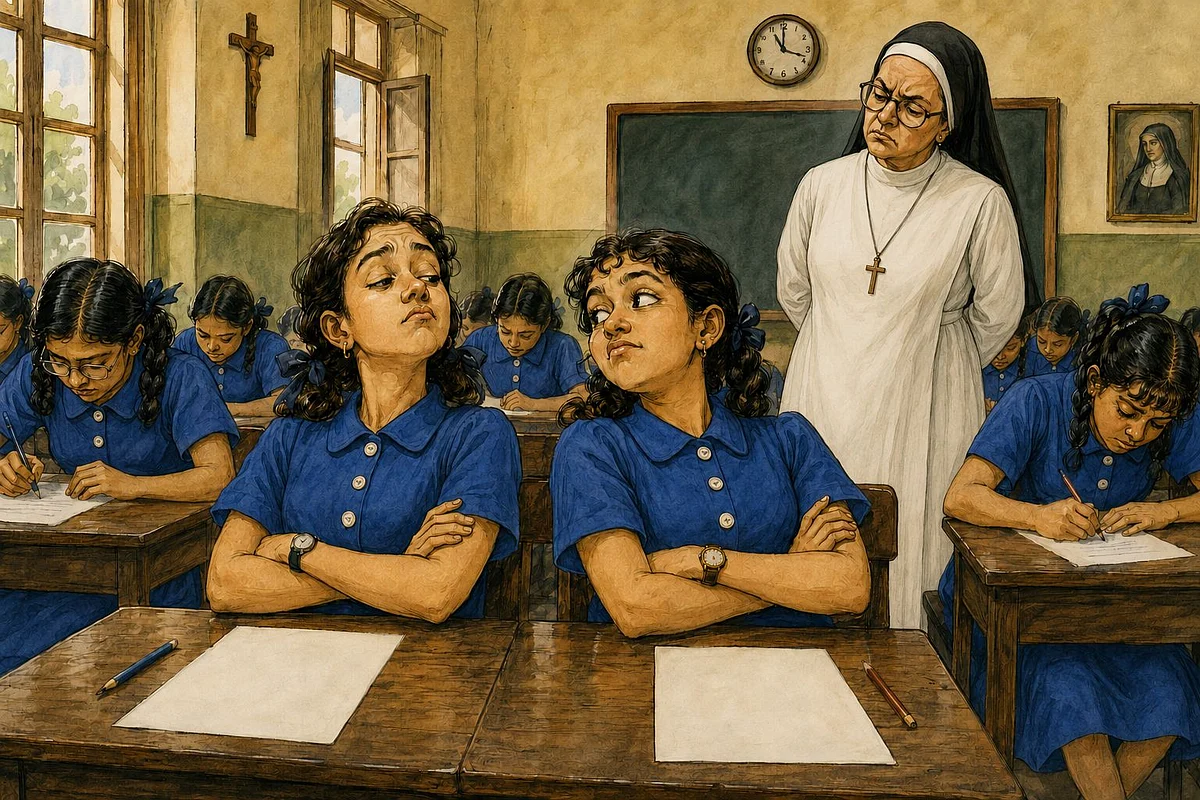
Memories of school come like faded snapshots for someone my age. Faces are sharp, names are lost, and much of it seems erased by a kind administrator. When I compare today's kids with mine, tablets and water bottles seem to overshadow the simpler times. Their childhood has technology, while ours had fewer witnesses. My school began at 5:30 am, a time that still feels like an unfair demand.
I was not a morning person then, and decades of maturity have not changed that. My Catholic mother, believing in God and punctuality, woke me for 6:30 am mass. The church was a ten-minute walk from home, making daily attendance a must. I would arrive in a comatose state, return home, get ready, and take the bus to school. By the time lessons started, I had already fulfilled one religious duty and silenced several complaints.
My mother was a strict disciplinarian. My older siblings, 14 and 12 years ahead of me, likely thought my critique was immature. They had faced my father's stricter rules, perhaps because the youngest often endures the most parental exhaustion. My father passed away when I was ten, and my mother raised me with discipline, determination, and little regard for my desire to sleep.
My strict convent school, where I spent ten years shaping my character, was both a blessing and a curse. I excelled in English, recess, and sports, but the rest of the schedule aimed to keep recess away. I was timid as a child, making me an easy target for bullies who stole my lunch. I rarely protested, sitting hungry and composing essays about injustice.
English class gave me brief moments of pride, as teachers read my work aloud, making me the classroom's literary star. My first teacher, Annie, was kind and never humiliated a child. She made lessons interesting without fear, becoming my aunt after marrying my father's first cousin. Her relationship with my parents was the most successful in our family.
Conceicao taught us English and history, making history come alive with human stories instead of dates and wars to memorize. I excelled in imaginative writing, writing animal autobiographies where I had little concern for accuracy. My teachers believed I would become a fiction writer, possibly published posthumously. My best friend, Elma, was by my side in classes eight, nine, and ten.
She helped with homework, defended me, covered for me, and befriended all my enemies. During a maths exam, a teacher scolded me for talking, leading to a principled stand and a disastrous attempt at mathematics, yet I became Green House captain and vice head girl. Schools had fewer background checks back then. We planned to study arts together after Class Ten, but our misunderstanding over college choices led Elma to join commerce.
I chose arts, and despite our great misunderstanding, we remain friends. College introduced new friends, but Elma's absence left a void. Social media now keeps us connected, reminding me of her support and causing guilt over that maths paper. School gave me good teachers, stolen lunches, inflated teenage ego, badges of responsibility, and one unbreakable friendship.
Perhaps today's kids have it better. I hope their friendships are strong enough to withstand exams, misunderstandings, and lunch theft.
Written by urgent.news from Gulf News's reporting — not their text. Machine-written — may contain errors; check the original before relying on it.