SCDF unveils new ambulance that can be reconfigured quickly to carry 2 patients at a time
Five of the new ambulances, which were developed based on feedback from frontline crews, have been deployed nationwide.
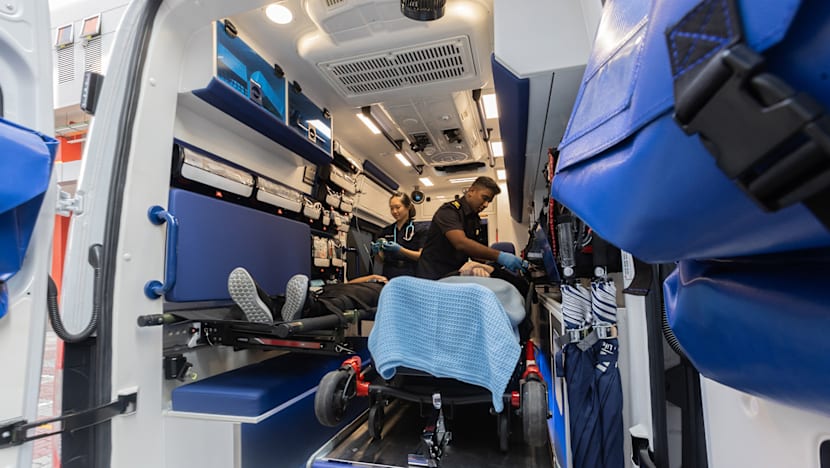
Singapore's Civil Defence Force (SCDF) has unveiled a new generation of ambulances designed to be rapidly reconfigured to transport two patients simultaneously. Known as the Gen 7E ambulance, this seventh-generation vehicle is the successor to the current sixth-generation fleet and represents a significant advancement in Singapore's pre-hospital emergency care.
According to SCDF's chief medical officer, Col Dr David Pflug, the ambulance sets a new standard for patient and crew safety, enabling paramedics to perform lifesaving procedures while remaining securely restrained throughout the journey.
The ambulance's design has been refined in consultation with frontline ambulance crews, such as paramedics and emergency medical technicians (EMTs), to create a high-performance, mobile clinical workspace. Every component, from the cabin layout to the stretcher loader system, has been optimized to enhance the speed, safety, and effectiveness of pre-hospital care.
One of the key features is the redesigned patient cabin, which can be easily reconfigured to accommodate two patients, providing crucial capacity support during multi-casualty incidents. This modular design reduces setup time and enables faster turnaround from incident sites to hospitals.
In addition to the reconfigurable patient cabin, the ambulance introduces an upgraded stretcher loading system with a more efficient pulley mechanism. This reduces physical strain on ambulance crews, improving their safety during patient conveyance. The ambulance also features an air suspension system for smoother rides and dedicated air suspension beneath the stretcher platform to minimize road vibration, which is particularly important for patients with spinal injuries or undergoing continuous chest compressions.
The vehicle's payload capacity has been increased from 3.5 tonnes to 5 tonnes, thanks to a dual rear wheel setup that improves balance, stability, and reduces road impact.
To support infection control, the ambulance incorporates a comprehensive four-tier decontamination system, including autoclave mist disinfection, deep cabin disinfection, ultraviolet disinfection, and photocatalytic oxidation air purification. Clinical equipment is strategically positioned in the patient cabin for quick access during emergencies, with aircraft-inspired drop-down safety cabinets preventing medical supplies from falling during transport.
The driver's cabin has also been redesigned with ergonomic focus, incorporating feedback from crew members to enhance operational safety and the speed of patient care.
Written by urgent.news from Channel News Asia's reporting — not their text. Machine-written — may contain errors; check the original before relying on it.
This story
This is one outlet's version. Read the fullest account.