Rejuvenating shrinking tanks in Andhra
The choking of tanks due to siltation, reduced inflows, and changes in catchment areas in Andhra Pradesh’s Chittoor district, crippled irrigation sources and put farmers in a fix, even as the district administration makes efforts to rejuvenate the water bodies, reports K. Umashankar
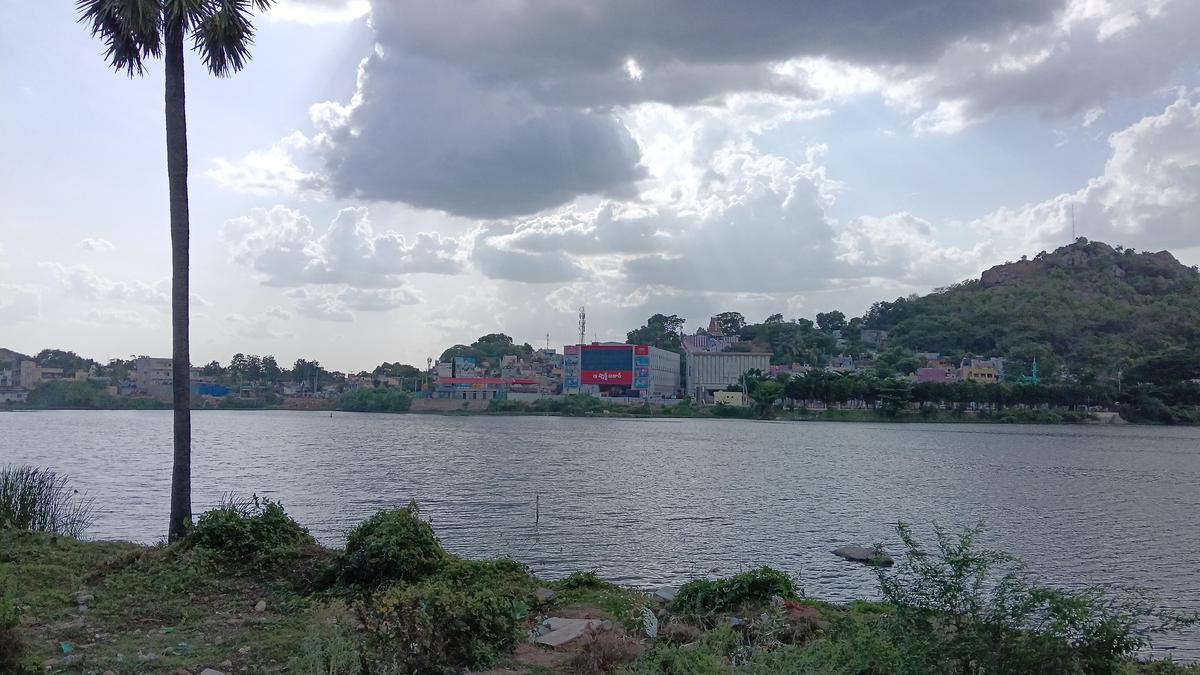
Four irrigation tanks in Gudipala mandal were inspected in May 2025, drawing concerns from farmers and residents about a growing issue across Chittoor’s traditional water-storage network. Chittoor District Collector Sumit Kumar visited Bangarappa Cheruvu, Reddamma Cheruvu, Ramireddy Cheruvu, and Narayanareddy Cheruvu after receiving complaints.
The collector acknowledged that the tanks once held water for longer periods, but silt accumulation and encroachments had reduced their storage capacity. P. Rangaiah, a farmer, lamented how they were now forced to rely on borewells during poor rains due to the diminished tank capacity. The collector ordered an investigation into encroachments, estimates for desilting, and the condition of supply channels.
MGNREGS funds were allocated for the task, while the National Highways Authority of India (NHAI) was tasked with clearing soil reportedly dumped near Bangarappa Cheruvu during expressway construction. The 2023 District Survey Report documented 4,121 minor irrigation tanks in Chittoor, with a designed storage capacity of 15,133.73 million cubic feet (mcft) and a current capacity of 8,924.23 mcft, indicating a deficit of 6,209.50 mcft.
Chittoor Municipal Corporation, once surrounded by 14 tanks, now has only Gangineni Cheruvu and Kattamanchi Cheruvu serving its drinking water needs, both of which have been encroached upon or contaminated. The Neeva River, a key water source in Chittoor city, faces encroachment and narrowing, leading to concerns about flood management and public safety.
Written by urgent.news from The Hindu's reporting — not their text. Machine-written — may contain errors; check the original before relying on it.