Quantum Computing in Everything: Where It Could Change the World and Where It Can't
What if quantum computers were used everywhere? Explore their potential in cybersecurity, accident detection, drug discovery, climate modeling, and optimization
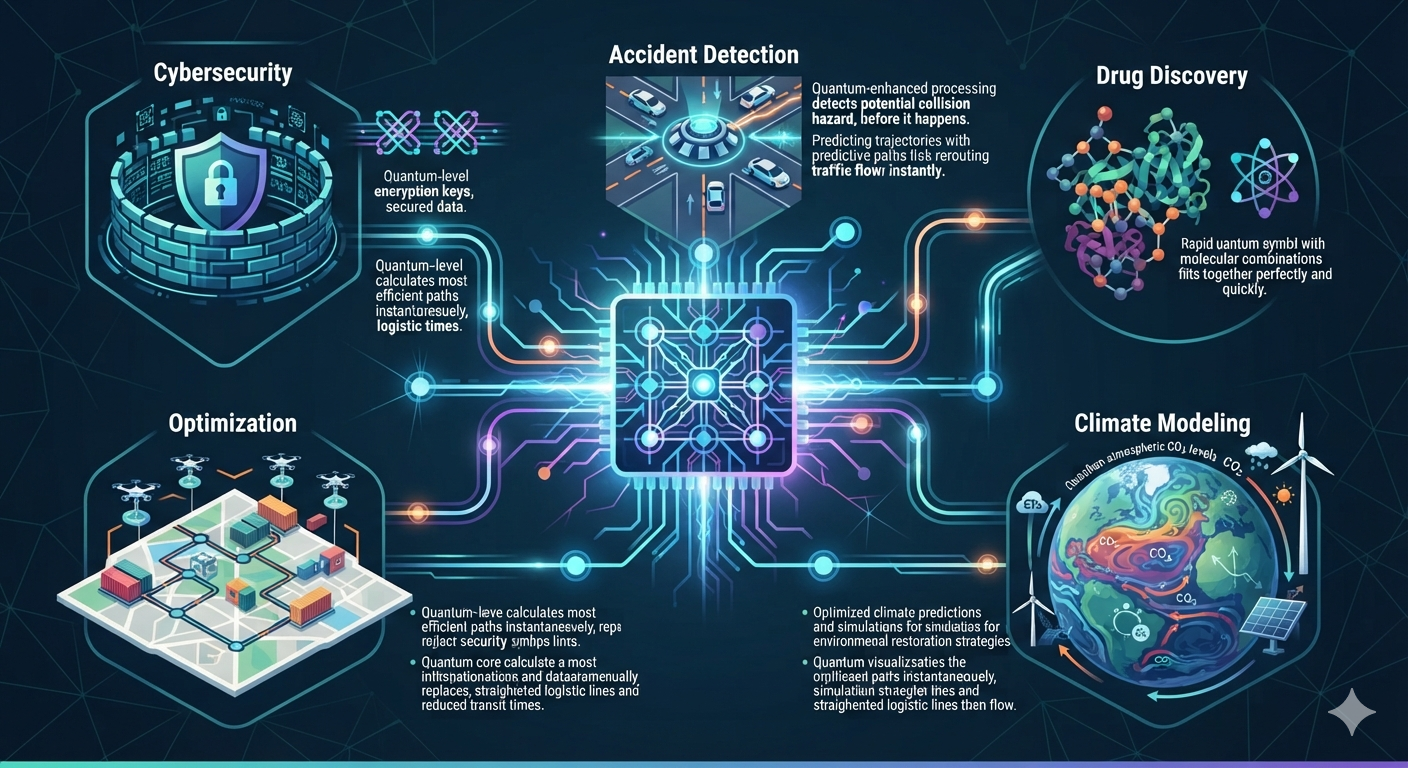
Quantum computing holds the potential to revolutionize various aspects of our world, but its widespread implementation is not without challenges. Researchers in the field continuously ponder the possibilities and limitations of applying quantum computing to everyday situations. To better understand the impact of quantum computing, let's explore some scenarios where it could make a significant difference and where it might fall short.
**Scenario 1: Accident Detection System**
In a smart city, cameras, sensors, radars, and vehicle data continuously flow to monitor traffic. Detecting accidents in real-time is a complex task that involves analyzing various data streams simultaneously. By incorporating quantum computing, the system could process an extensive range of possibilities almost simultaneously. This enables the system to identify subtle patterns and correlations across multiple sources of data, such as sudden changes in vehicle speeds, pedestrian behavior, road conditions, and even minor shifts in vehicle alignment.
These enhanced capabilities could lead to early warnings for nearby vehicles, immediate alerts to emergency services, and dynamic adjustments to traffic signals to prevent accidents. Although a quantum computer in every traffic light is unlikely in the near future, a central processing system could significantly improve the speed and depth of real-time analysis.
**Scenario 2: Quantum Cryptography Cracking**
The security of the internet relies on mathematical problems that classical computers find extremely difficult to solve, such as factoring large numbers. Quantum computers, particularly those utilizing Shor's algorithm, have the potential to break many of these classical encryption methods much faster once they reach sufficient power and stability.
This poses both an exciting and unsettling prospect. On one hand, powerful quantum computers could undermine current encryption methods, making online transactions and sensitive information vulnerable. On the other hand, quantum cryptography and post-quantum cryptography offer the prospect of unbreakable communication methods. Researchers are actively working on developing new cryptographic techniques that remain secure even against quantum attacks, ensuring the protection of our digital world in the age of quantum computing.
**Everyday Applications and Limitations**
The concept of "quantum computing in everything" extends beyond special cases like accident detection and cryptography. It includes areas such as drug discovery, weather and climate modeling, financial risk analysis, logistics optimization, and personalized medicine. In each of these fields, quantum computers could serve as specialized accelerators for the most challenging aspects of the problem.
However, while the potential benefits are significant, several limitations must be considered. Quantum computers are still prone to errors, require extremely low temperatures, are costly to operate, and demand specialized programming expertise. Moreover, they are not yet feasible for widespread use in everyday devices like smartphones or traffic cameras.
**Merits and Demerits**
The advantages of quantum computing are clear, particularly in solving complex problems that classical computers struggle with, such as optimization and simulation tasks. However, there are also notable drawbacks. Quantum computers face significant challenges, including high error rates, the need for low-temperature environments, prohibitive costs, and the requirement for specialized knowledge to program them.
The widespread adoption of quantum computing will likely be gradual, with limited applications in the near future. There is also a potential risk of quantum computers being used maliciously to break current encryption methods before secure quantum alternatives are developed. Furthermore, the high energy consumption and infrastructure requirements make widespread implementation challenging.
In conclusion, while the idea of having "quantum computing in everything" is promising, it is a long-term vision that will unfold gradually. Quantum computing will likely complement classical computers, offering enhanced capabilities in specific domains rather than replacing them entirely. As a researcher, the field represents a new paradigm in computing, challenging our understanding of information processing, security, and decision-making.
The real challenge lies not only in developing more advanced quantum computers but also in wisely determining their applications and implementing safeguards to ensure the responsible use of this transformative technology.
Written by urgent.news from HackerNoon's reporting — not their text. Machine-written — may contain errors; check the original before relying on it.