New plastic treaty document criticised for weaker ambition
Research published last year estimates that the many health problems caused by plastic pollution costs the world $1.5 trillion a year.
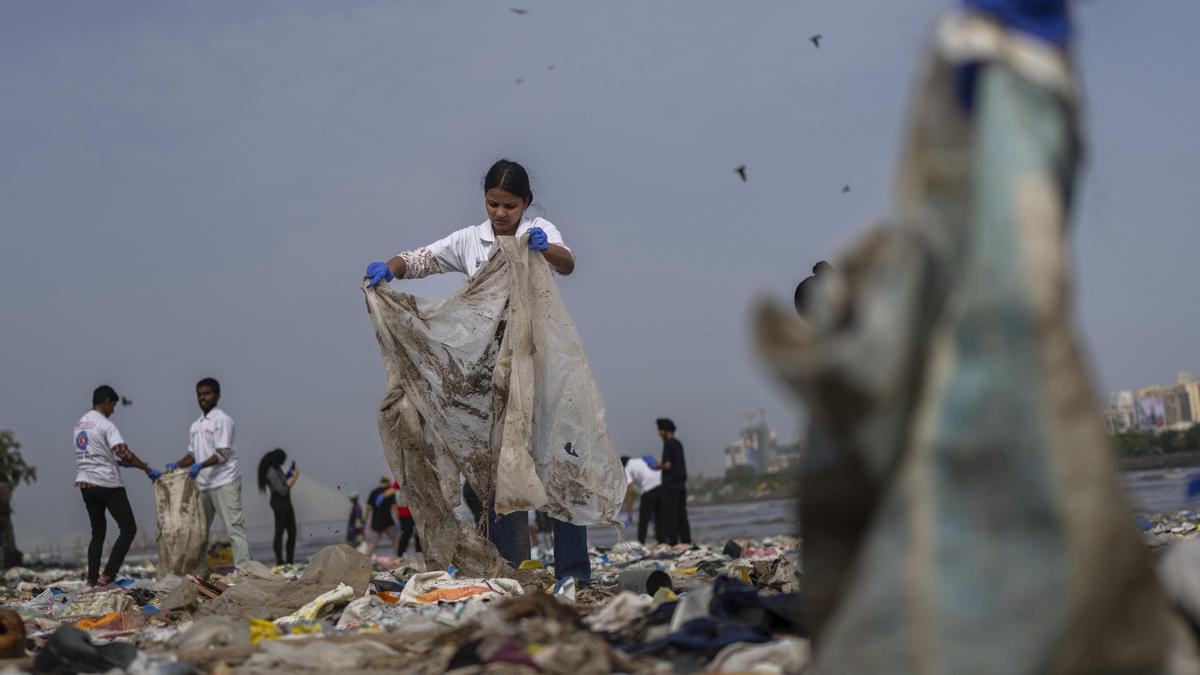
A recently released document aimed at reviving a stalled global plastics treaty has been criticized for its weaker ambition, according to a leading marine biologist. The talks to create the first-ever treaty tackling plastic pollution came to a halt in August 2025 due to opposition from oil-producing nations. The initial document, which was released to the public following the talks' collapse, has faced strong criticism from environmental groups.
Despite resembling a new draft text, the chairman of the talks, Julio Cordano of Chile, emphasized that it was an informal reference document and not a negotiated or agreed text. Richard Thompson, a British marine biologist who coined the term microplastics, stated that the document is even slightly weaker than the rejected draft from a year ago.
Thompson, an independent scientific observer to the talks, highlighted that the text falls short of providing a legal framework to address plastic pollution, which could harm both future and present generations. The Center for International Environmental Law's David Azoulay expressed concern that the text fails to offer a robust solution for future generations.
Negotiators from 185 countries have been divided between those advocating for ambitious, legally binding measures and a smaller group of oil-producing countries, including Saudi Arabia, Kuwait, and Russia, who seek a narrower focus on waste management. Thompson suggested that the pressure to reduce carbon emissions might be driving some oil-producing nations to explore plastic as an alternative market for growth, as the production of plastic is derived from petroleum.
Research published in The Lancet last year estimated that plastic pollution costs the world $1.5 trillion annually due to the health problems it causes. Thompson expressed disappointment that independent scientific observers, including himself, have been excluded from providing expert advice to negotiators, leading to unnecessary suspicion.
Calling the treaty "a once-in-a-planet opportunity," Thompson expressed no desire to agree on something too weak to deliver. The next round of informal talks is scheduled for September 27 to 30 in Bangkok, with formal negotiations hosted by the UN Environment Programme set for March 2027.
Written by urgent.news from The Hindu Health's reporting — not their text. Machine-written — may contain errors; check the original before relying on it.
This story
This is one outlet's version. Read the fullest account.