Mecca Joint Deterrence Agreement: Implications for India
Pakistan would surely try to rally the group and invoke the pact in some form in the event of tensions with India.
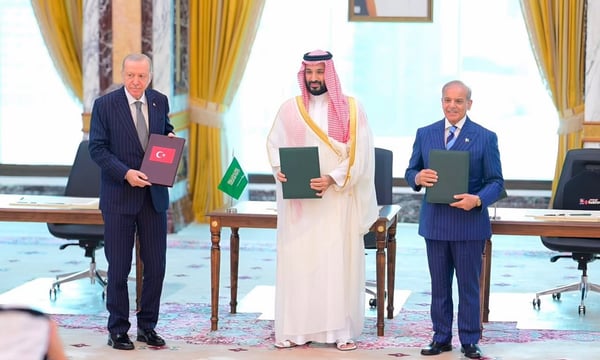
On August 7, Saudi Arabia, Pakistan and Turkiye signed the Mecca Joint Deterrence Agreement to reinforce collective defense against any act of aggression. The agreement states that an attack on any one of the three states will be considered an attack on all. Signed in Mecca by Saudi Crown Prince Mohammed bin Salman, Turkish President Recep Tayyip Erdogan and Pakistani Prime Minister Shehbaz Sharif, the pact expands an existing bilateral agreement between Saudi Arabia and Pakistan to include Turkiye.
Turkish Foreign Minister Hakan Fidan stated that more countries may join the pact, potentially Egypt, though Cairo has not responded. Saudi Arabia has opposed Egypt's inclusion due to President Abdel Fattah al-Sisi's close ties with the United Arab Emirates.
The pact, which draws parallels to NATO's Article 5, aims to strengthen mutual defense and cooperation among the three nations. India, while cautious, noted the pact's implications for regional security and peace. India remains committed to safeguarding its national interests and will take necessary measures. Pakistan may use the pact as a buffer against potential conflicts with India.
Written by urgent.news from The Diplomat's reporting — not their text. Machine-written — may contain errors; check the original before relying on it.