Climate protection and economy: Reiche sees positive aspects in reform plans for emissions trading
The carbon trading scheme is intended to make European industry more environmentally friendly. Proposals for weakening it have met with a mixed response.
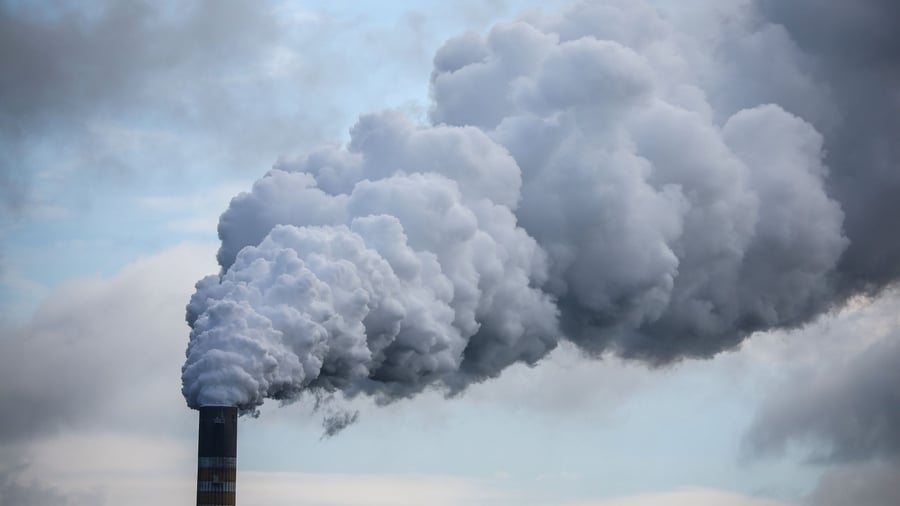
Federal Minister of Economics Katherina Reiche warns against overburdening the economy with emissions trading. She welcomes the EU Commission's proposals to mitigate the climate protection instrument, but has a few detailed comments. Reiche warns against migration "The reform of the EU emissions trading system must now be designed so that we can keep industrial production and energy-intensive companies in Germany in the long term," she told the German Press Agency in Berlin.
"Without course corrections, further migration and relocation of production threatens." What the EU Commission wants to change The emissions trading system is the EU's central climate protection instrument on the way to climate neutrality in 2050. Companies must prove they have rights to emit climate-damaging gases such as carbon dioxide (CO2).
They can trade them according to their needs, which is intended to serve as an incentive for energy-intensive industries to save greenhouse gases. This creates a price for every ton of CO2 emitted. Over the years, the number of available certificates decreases - this is intended to lead to more climate protection in an efficient way.
The Brussels authority had proposed a weakening of the central climate protection instrument. It wants the total number of available rights for the emission of climate-damaging gases such as carbon dioxide (CO2) to decrease more slowly than before. In addition, there should be more free certificates in certain areas. The reform proposal presented by the EU Commission in mid-July contains good approaches, Reiche said: "The system is supposed to be more flexible and the free allocation of certificates is to be expanded."
However, she warned that the standards applied for the free allocation of certificates must reflect reality. "If we effectively make pilot plants the standard for entire industries, then it won't work." Critics fear a shift in necessary steps The environmental protection organization WWF complained that the EU Commission was putting the reverse gear in.
"Anyone who softens the CO2 pricing now rewards not the pioneers - he rewards the laggards and burdens our climate. And we will all have to pay this bill." The Federal Association for Sustainable Economy warned against a shift in climate protection efforts. "Granting free certificates for a longer period only postpones the restructuring of industry and increases the pressure on companies in the 2040s."
The additional costs due to the Iran war and low water levels on the Rhine were already affecting the industry today. Revenues from emissions trading should be used to strengthen the affected sectors. Concerns about bureaucracy and lack of planning security The Federal Association of the German Industry emphasized at the presentation of the proposals in July that the emissions trading system alone could not support the climate-friendly transformation of industry.
What was needed was affordable green electricity and hydrogen and the necessary networks. The chemical company BASF warned that the Brussels proposal was passing by the reality of companies and would likely further increase the cost burden for the company in Europe. "What we need is quick relief, no additional burdens and even more bureaucracy."
The steel company Salzgitter insisted on planning security. "A long-term, reliably increasing CO2 market price is a prerequisite for triggering and implementing the necessary innovation leaps for the decarbonization of the EU industry," the company emphasized. The economy must be able to rely on the fact that government framework conditions are not changed in such a way that investments already made in climate protection by pioneer companies like Salzgitter are not subsequently devalued.
Translated by urgent.news. Machine-written — may contain errors; check the original before relying on it.