Interview: Schmidt, successor to Kaldemorgen: "Trust in hyperscalers has returned"
Schmidt manages the DWS fund Concept Kaldemorgen alone as of the end of 2025. In the first interview after Kaldemorgen's departure, he explains why he is reducing chip stocks and expects a gold rally.
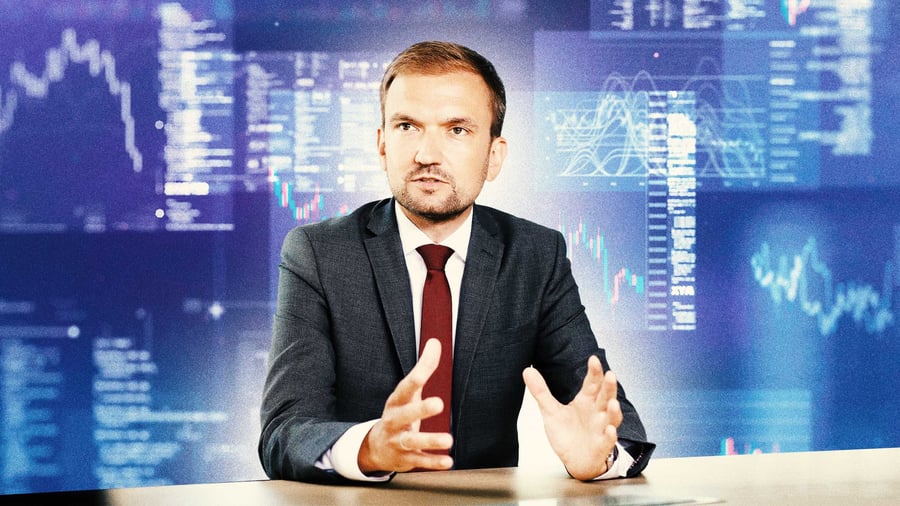
Despite possible new tensions in the Iran war, the mood on the stock markets is good. Correspondingly high is the risk appetite of many global fund managers - also at the multi-billion DWS fund Concept Kaldemorgen. "Our equity allocation is currently above average," says fund manager Christoph Schmidt in an interview with the Handelsblatt. Since the end of 2025, Schmidt has been running the fund alone. Klaus Kaldemorgen, one of the most well-known fund managers in Germany, has withdrawn from active management.
In his first interview as sole manager, Schmidt explains why he prefers European stocks - and why he expects a comeback of the hyperscalers.
You have been running the Concept Kaldemorgen fund alone since the end of 2025, because Klaus Kaldemorgen has handed over the fund management. Will the product ever be renamed after you?
That is not planned. The name stands for an investment philosophy and will continue to be the Concept Kaldemorgen. Mr. Kaldemorgen is part of the team and still comes to the office every week. We still discuss the big topics regularly. Nothing will change in the near future.
Klaus Kaldemorgen was one of the most well-known fund managers in Germany. What does your signature look like now?
The transition was planned over many years, it was no caesura. We have already been running the fund together since the end of 2022. I have already set my own priorities back then. Previously, the focus of the Concept Kaldemorgen was very strong on stable, dividend-paying stocks. That was usually at least half of the equity portfolio, sometimes more. In the meantime, growth-oriented stocks play a much more prominent role.
The risk appetite of global fund managers is currently as high as it has not been since the beginning of the year, as a recent survey by financial services provider S&P Global shows. Does that also apply to you?
Yes. Our equity allocation is currently above average. Of course, we have seen a lot of euphoria during the reporting season. There were many positive messages for investors at once. The markets may be ripe for a setback. But that should not encourage anyone to bet on falling prices in the short term.
Let's look at AI stocks. After the shares of chip manufacturers had risen rapidly in the first half of the year, many values worldwide collapsed in July. How do you assess the sector?
We have become more cautious with chip stocks. At the end of May, we started selling KI infrastructure suppliers. These include semiconductor stocks, memory chip manufacturers, but also parts of the industrial companies that benefit greatly from the expansion of data centers. The mood had simply run hot, with memory chip stocks having an extremely positive price development. And we wanted to realize profits.
The proportion of such stocks had increased significantly in September last year. Our best performance contribution this year is still one of these large memory chip manufacturers. But we have reduced the holding compared to the beginning of the year by 85 percent.
The chip manufacturer TSMC is one of the largest positions in the Kaldemorgen fund. Have you bought back after the weakness phase?
We have reduced the proportion of chip manufacturers, semiconductor stocks, and other companies that benefit from the infrastructure expansion, and we do not want to change that for now. Overall, however, stocks with AI-related stocks continue to make up a third of our equity portfolio.
The stocks of cloud providers Alphabet, Microsoft, and Amazon, called hyperscalers, were recently among the largest individual stocks in your fund. Does that mean you have increased the positions?
Yes, at the beginning of the second half of the year. We believe it makes sense to shift the focus more from KI infrastructure to cloud providers. So, away from those who get all the money, to those who spend it.
Why is that?
The KI rally will only continue if the hyperscalers prove that their billion-dollar investments really bring more sales and profits. If this proof is not provided, it will be interesting that not they will be penalized first, but the KI suppliers. Every investment cut directly affects the stock price there. The hyperscalers, on the other hand, would probably not be blamed if they were to reduce their investments somewhat.
Compared to chip manufacturers, Microsoft, Amazon, and Co. had a rather disappointing performance in the first half of the year.
The companies have to show that these huge investments pay off. In this reporting season, we have seen signs of this. Cloud growth has accelerated significantly, and further increases were mentioned in the outlook. The confidence in hyperscalers is back.
You had 13 percent cash reserves at the end of July. How does that fit with your risk appetite?
The cash quota results from other decisions. We first consider how much risk we want to take overall. Our goal is to keep the portfolio's price fluctuations small. We adjust the other components accordingly. Stocks are the performance engine, then come bonds, gold, and the currency side. What remains is the buffer.
If the markets were to rise as recently, we would of course prefer to have less cash and a higher equity allocation. But in situations like in March, when stock prices plummet, the reason becomes clear. We do not want to be forced to pro-cyclically reduce risks in a stronger setback.
You became more cautious in March, directly after the start of the war in Iran. At that time, many market experts still assumed a short war.
When the situation in Iran escalated, we partially withdrew from risk assets. That means we sold stocks, corporate bonds, and gold. The equity side...
Translated by urgent.news. Machine-written — may contain errors; check the original before relying on it.