I Wore an Electrical Muscle Stimulation Body Suit to Zap Myself Into Fitness
Can electrifying your workout offer a shortcut to a stronger, fitter you? I sweated in a skintight EMS suit for two months to find out.
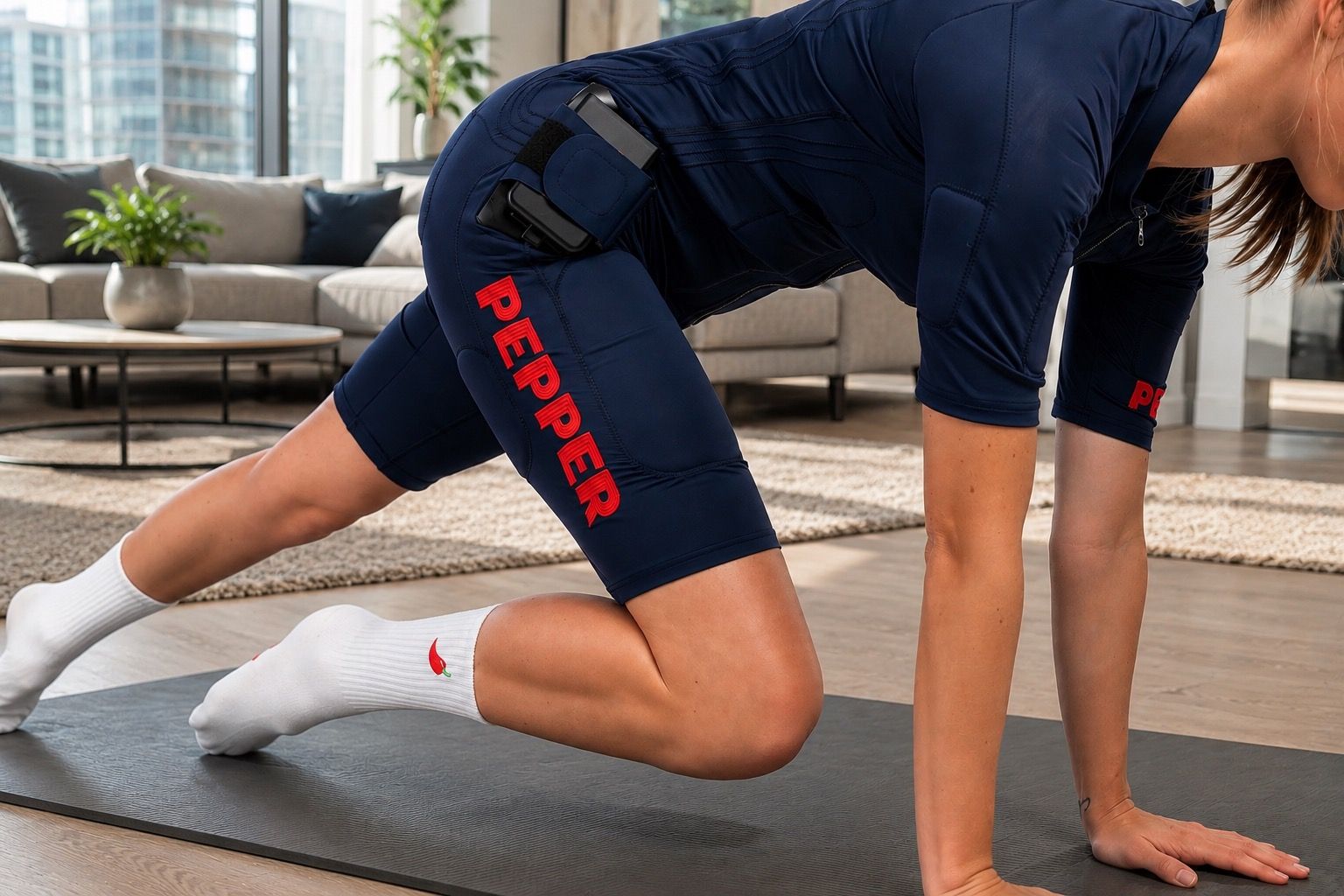
The promise of EMS suits is to stimulate muscles with electrical pulses during workouts, allowing users to perform thousands of contractions in a short period. Studios like Body20 and Manduu provide EMS training, promising complete body workouts in 20 minutes or less. A new twist is the availability of EMS suits for home use, enabling consumers to incorporate this technology into their personal fitness routines.
German-based EMS suit maker Pepper offered me a chance to test their electro-suit to assess its long-term impact. The company claims that using the suit for 20 minutes results in a caloric burn and muscle activation equivalent to an hour-long traditional workout, with less strain on joints. Several companies offer EMS suits, ranging from a $4,000 option to Pepper's $1,400 suit.
While the concept of achieving a fitness goal with minimal effort is appealing, embracing the idea of purposefully zapping oneself initially proved challenging. However, studies have extensively investigated EMS, with dozens of research papers published over the past two decades. A 2021 meta-study found significant evidence of large-sized effects on muscle mass and strength, although not on body fat mass.
A 2012 study on trained athletes showed improvements in vertical jump height and sprint times after using EMS for three to six weeks. A 2023 meta-analysis concluded that combining EMS with resistance training for eight weeks can significantly improve muscle mass, upper body strength, and reduce body fat percentage in healthy individuals.
Despite the promising research, there is no clear medical consensus on EMS. Six physicians I consulted had varying opinions. Andrew Mock, a primary care physician and five-time California Strongest Man winner, believes EMS can be beneficial for rehab patients with severe mobility issues but unlikely to provide significant value for healthy individuals.
Ethan Kellum, the team doctor for the Tennessee Titans NFL team, uses EMS for both rehab and personal workouts, emphasizing its ability to improve the communication between the nervous system and the body, especially for older patients. Joseph R. Hribick, a physical therapy professor, suggests EMS should be used as a complement to strength training rather than a replacement.
After thorough consideration, I decided to incorporate the Pepper suit into my fitness regimen for two months, three times a week, alongside my regular cardio and strength training, maintaining my diet and daily routines. The suit is wearable, akin to a wetsuit, covering abs, pecs, glutes, thighs, biceps, and multiple parts of the back with twenty electrodes.
The electrodes are dry, and sweat enhances their conductivity. The suit is designed to be tight to prevent electrode displacement, and not suitable for pregnancy or use with a pacemaker.
Upon trying various workouts, I focused primarily on strength training to build muscle. The suit's design, while effective, can be tight and somewhat uncomfortable to wear in public. The accompanying app categorizes workouts into strength, cardio, and relax, with each category having distinct electrode firing patterns.
Written by urgent.news from Wired's reporting — not their text. Machine-written — may contain errors; check the original before relying on it.