Freight Market Rejection Index: Is the ‘Softness’ Misleading? | SONAR Update
The freight market is showing what appears to be softness, but a closer look at the Rejection Index reveals a different story. This week’s SONAR update breaks down why current market conditions are actually robust, not cooling off. Learn how intermodal savings and strategic shifts are painting a picture of strength as we head into […] The post Freight Market Rejection Index: Is the ‘Softness’…
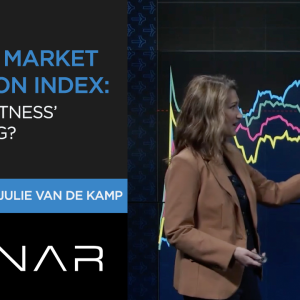
The freight market is showing signs of softness, but a closer examination of the Rejection Index contradicts this perception. According to the latest SONAR update, the current market conditions are actually robust and set to improve as we approach peak season. This shift is fueled by significant cost savings and strategic adjustments in the industry.
Key figures in the story include a 34% cost discount between intermodal contract rates and truckload contract rates, as noted by SONAR data reviewed on FreightWaves Today. Meanwhile, truckload contract rates have risen 7.5% over the past three months, while intermodal rates have only increased by 0.6% during the same period. This price differential is driving volume gains for domestic intermodal operators and the railroads that support them.
Craig Fuller, a prominent figure in the industry, highlights the 34% discount as a compelling reason for shippers to opt for rail transport over trucking. He emphasizes that the mode conversion opportunity is particularly strong in the eastern half of the U.S., where truckload capacity has been tightest, and where the majority of intermodal volume increases are taking place.
Fuller contrasts the current situation with past intermodal crunches during the COVID-19 pandemic, noting that the eastern geography of the current supply chain issues provides railroads and intermodal common carriers (IMCs) with greater flexibility in balancing their networks.
In contrast, the national tender rejection index stands at 13.5%, a rate never observed in 2024 and even during last year's peak season. While this percentage might seem modest, it represents a substantial premium compared to the previous year. Spot rates at $3.34 per mile are 21% higher than last year's levels and still within the range of the all-time record set in late 2021, which was $3.55 per mile.
Craig Fuller suggests that the current dip is a normal seasonal phenomenon rather than a structural softening in the market.
The decline in tender rejections peaked around the July 4th holiday weekend, a pattern consistent in SONAR's historical data. Fuller anticipates an uptick in rejections beginning in the last week of August, leading up to the Labor Day peak-season tightening in mid-October through early November. This period coincides with retailers pushing products into brick-and-mortar supply chains ahead of the Black Friday shopping frenzy.
Volume data provides additional context, showing that outbound tender volumes have fallen from a Memorial Day surge but are now stabilizing, surpassing comparison lines from 2024 and 2025 and aligning closely with the same period in 2023. A major mall operator interviewed by Fuller expressed that consumer activity is "really robust," reinforcing a positive outlook for the remainder of the year.
In terms of product dynamics, SONAR's platform recently launched a new intermodal API, covering rates across more than 2,000 lanes. This expanded API availability is expected to come soon, catering to the growing demand for mode conversion data as shippers seek to take advantage of the current intermodal pricing environment. Fuller singles out JB Hunt, Hub Group, Schneider, and Knight-Swift as companies well-positioned to benefit from the current intermodal pricing structure.
Written by urgent.news from FreightWaves's reporting — not their text. Machine-written — may contain errors; check the original before relying on it.