European Union: Cyprus wants to join Schengen – now the politically sensitive phase begins
Cyprus is ready to join the Schengen Area according to the European Commission. The decision now lies with the EU member states. However, they are faced with the complex reality of the divided island.
Cyprus is clear to join the Schengen Area – at least technically. After years of checks, the European Union (EU) confirms that the island republic is operationally ready to join. The government in Nicosia has implemented 120 recommendations from the EU Commission since 2021 and has thus solved all the tasks set. The Schengen Agreement, initially signed by five EU states in 1985, provides for the abolition of border controls at internal borders and the control of external borders according to common rules, as well as a uniform visa policy.
All EU states except Ireland and Cyprus, as well as Iceland, Norway, Liechtenstein, and Switzerland, are part of the Schengen Area.
Even if the Commission gives its permission, the more difficult part now begins for Cyprus. The decision on accession lies with the Council of EU member states. They have to assess a situation that did not exist with the recent Schengen accessions of Croatia, Bulgaria, and Romania: part of the territory of the Republic is not under the control of the government.
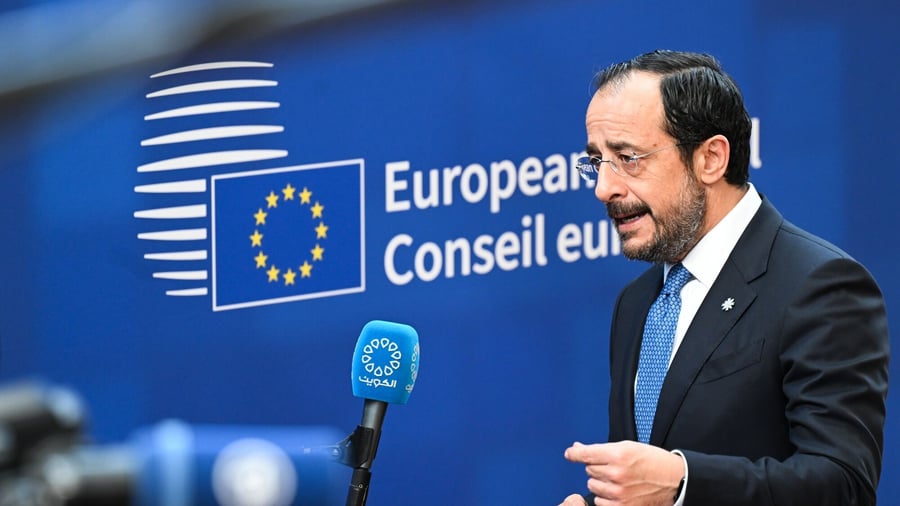
According to information from Nicosia, the topic is to be on the agenda of the EU Council in September. For Cypriot President Nikos Christodoulides, it is about more than travel facilitations. Membership would bind Cyprus more closely to the European core. The country is already part of the euro zone. Christodoulides hopes for votes for the presidential election due in February 2028 from a Schengen accession.
A 60-page assessment report by the EU Commission concludes that Cyprus meets the technical requirements for the full implementation of the Schengen acquis. In recent years, infrastructure and information systems have been modernized, and additional personnel have been built up. Progress has been made, particularly in border protection, returns, and police cooperation. The Cypriot police have already been using the Schengen Information System for around three years. In addition, gaps in visa policy have been closed.
However, Cyprus is not an ordinary candidate for membership. The special challenge is called the Green Line. Cyprus, inhabited by ethnic Greeks and Turks, has been divided since Turkey occupied the northern part in 1974 to prevent an annexation of the island by the military junta ruling in Athens at the time. The "Green Line," a demarcation line, runs between the south controlled by Nicosia and the Turkish-Cypriot north.
In the occupied zone, the "Turkish Republic of Northern Cyprus" was proclaimed in 1983, but it is only recognized by Turkey as a state.
The government in Nicosia wants to prevent Schengen from creating a new, factual border there. The Foreign Ministry argues that nothing fundamental should change at the nine crossings – three of them in the Nicosia metropolitan area, six in the west and east of the island – due to Schengen membership. The existing controls are sufficient. The EU sees it similarly but demands a clearer legal and operational definition of the procedures.
The assessment report rates the surveillance system at the demarcation line as reliable and technically advanced. Brussels is less concerned about security within Cyprus. It is more about possible gaps in the protection of the European external borders: Cyprus could become a new entry point for irregular migrants who reach the Schengen Area from Turkey via the demarcation line.
The situation is made even more complicated by the British military bases. The two so-called Sovereign Base Areas date back to the British colonial era (1878-1960). They are under British sovereignty and also lie outside the Schengen Area. Brussels calls for closer cooperation and operational improvements to ensure an adequate level of security there.
The Turkish side could benefit from the development. It has been striving for a two-state solution on the island for years. If the Schengen accession were to create the impression of a new hard border between the south and north of the island, this could provide the Turkish side with arguments for international recognition of the island's division.
Previous governments of the Republic of Cyprus have therefore been skeptical about Schengen membership. In contrast, the Christodoulides government relies on an inverse argument: Schengen will not deepen the island's division but may even help to overcome it in the long term. Freedom of movement is an instrument for peace and progress, the Foreign Ministry argues.
EU Commissioner Magnus Brunner has explicitly pointed out that the decision on the timing and modalities of accession lies with the European Council. It must decide unanimously. Christodoulides has an ambitious goal: Cyprus is to be part of the Schengen Area by the presidential election in February 2028.
Translated by urgent.news. Machine-written — may contain errors; check the original before relying on it.