El ‘momento Aranzadi’ de Vox
La ultraderecha ya no quiere ser antisistema en las formas, sino utilizar los resortes del Estado para transformarlo
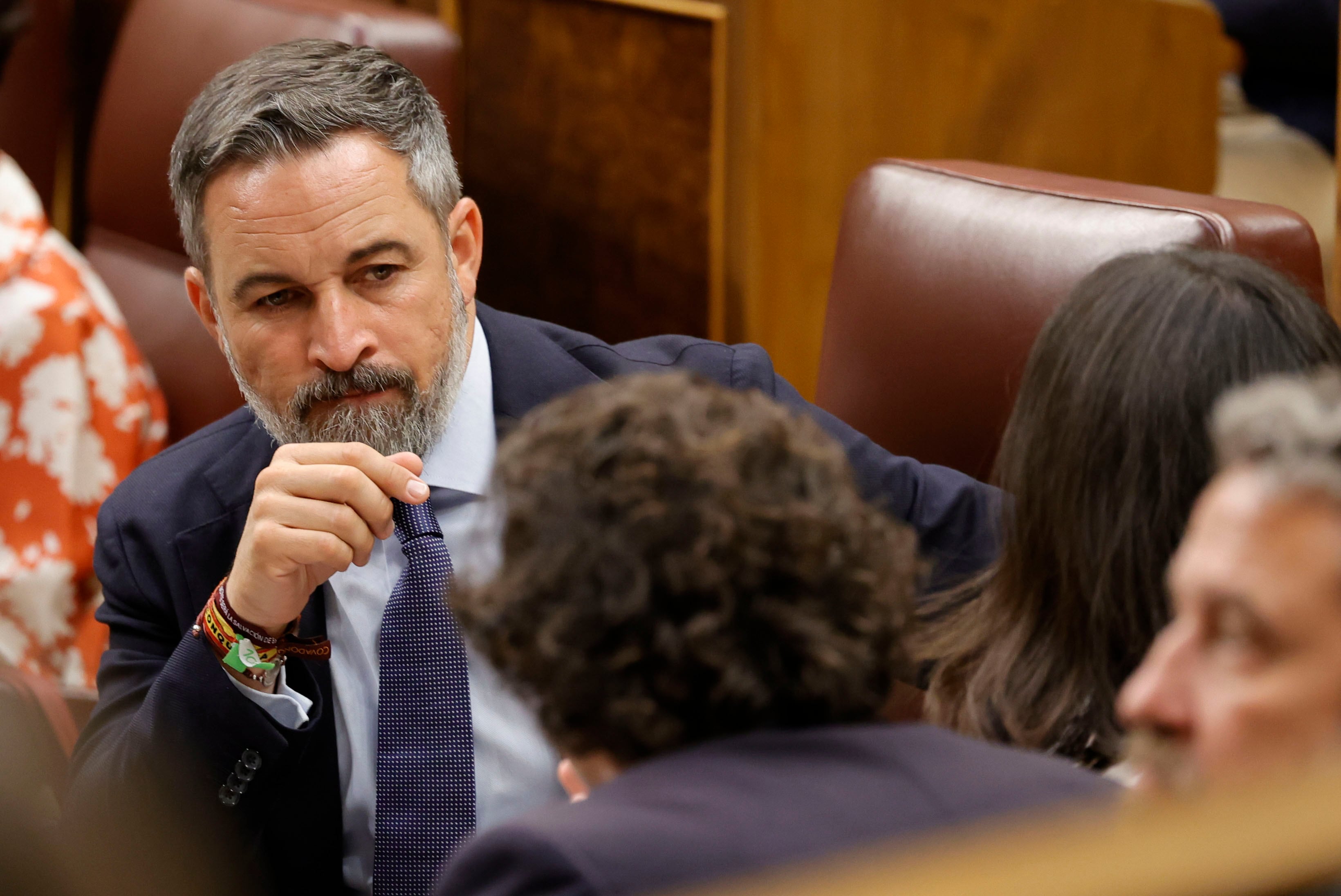
Vox finds itself in its moment of Aranzadi, a period marked by significant changes and challenges. There is a lingering concern among the far-right about whether Alberto Núñez Feijóo will hesitate to repeal many left-wing laws if Vox reaches the presidency. Some even fear that the Popular Party and Vox may squander a legislative term without achieving much.
Santiago Abascal believes that it is possible to control the Official State Bulletin (BOE), and Feijóo should be concerned about the institutional shift of his partners. It is not coincidental that this time, Vox asserts that it will not break its autonomous governments with the Popular Party, even with the distribution of minors who entered through Ceuta.
In 2024, a political setback occurred, but now the events related to Abascal's claims will unfold through legal procedures, with no more than presenting a resource at most. The challenge for the far-right is that it can no longer simply jump on board, as Vox has grown and its constituencies now require converting demands into responses.
The era of 2018-2024 is behind them, where they primarily discussed the Catalan independence referendum or gave a cultural battle against the alleged "woke" hegemony. Now, their main flags are immigration, precariousness, and rural Spain. On the other hand, Vox assumes that its current competition is not only with the Popular Party but also with a series of extra-parliamentary parties that are adept at stirring political dissatisfaction.
To differentiate themselves from them today, they must rely on the institutions. Thus, the far-right no longer wants to be anti-system in form, but rather to use the levers of the State to transform it. Much of their public opinion is already changing in this direction. It is striking to see how many people aligned with Vox are now demanding changes to the Extranjería law to accelerate the returns of minors who have crossed the border.
The far-right has begun to test the power of the small. Their deputy Carlos Hernández Quero even explains on social media how they are materializing their "national priority," in this case, in the Community of Valencia, showing pages from the Official Journal of the Generalitat. Feijóo should worry that his partners can show the public that laws can be changed.
One of the biggest criticisms made by the far-right against the Popular Party is its bureaucratic or immobilistic management, where everything is always very difficult to reform, and the ambitions of some of their electorate are drowned by inertia or conservatism. It is also worth noting that the popular party always talks about management, but rarely about transformation.
In fact, part of the transfer of votes from Vox to the Popular Party has a component that we could call the thirst for the machete: there are voters who simply choose Abascal, thinking that it will be the only way to apply pressure on Feijóo to govern, so he does not triumph over the left. This even includes the typical impression of 15-M, that bipartisanship is the same and that power changes hands but not substance.
The memory lingers of how even with the absolute majority of Mariano Rajoy, laws such as the one on abortion or the one on historical memory were not overturned - the latter simply had its financing withheld. In Spain, the alternation has rarely resulted in a rupture, as Podemos also criticized back in 2015. However, not everything hinges on the will of the Popular Party, but on whether the arithmetic will be sufficient.
Some Vox followers even fantasize about a constitutional reform in those areas not subject to the aggravated procedure, seeing that some polls give the right over 200 seats. It is likely that part of the strategy of Pedro Sánchez is not so much to return to governing, but rather to achieve an impasse minority that hinders the action of a right-wing executive, whether by retaining a strong weight in Congress or by reducing the possibility that both the Popular Party and Vox will seize other institutions of the State.
All this, without forgetting that Abascal could further strain the legislature, or make it crash and burn if he does not achieve his demands. Consequently, Vox does not aspire to power to sell a few drinks in the sun to its electorate. Their goal is to leave a mark through legal changes, so they do not disappear as a small partner.
It is not accidental that they have recently distanced themselves from the monarchy, aware that the Crown symbolizes the last pillar of our system as it currently exists - and some of their voters see it that way. The moment of Aranzadi for Vox has arrived: the transition from denouncing the "filth" of the system to using it to institutionalize their own ideology. This is prosystematic and legalistic in methods, but less moderate in ideological background.
Written by urgent.news from El Pais's reporting — not their text. Machine-written — may contain errors; check the original before relying on it.