Dialogue, not violence, must resolve religious disputes – Peace Council
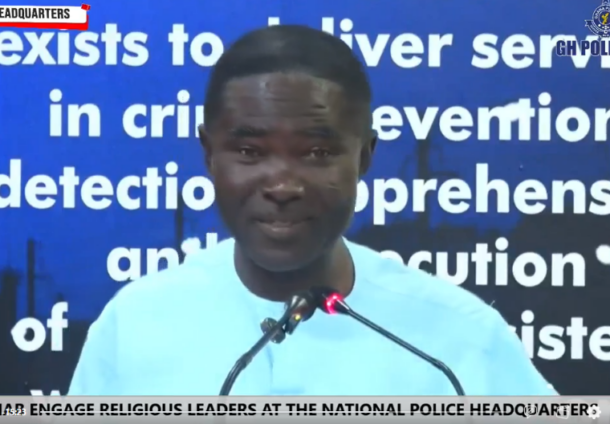
The National Peace Council has urged Ghanaians to protect the country’s religious diversity and ensure that differences in faith do not become a source of conflict. The Council said dialogue, tolerance and peaceful coexistence remained critical to maintaining Ghana’s peace, particularly amid recent incidents that have heightened religious tensions. Speaking on behalf of the Chairman […]
The Bar Council of India has rescinded its misguided directive to State Bar Councils not to enroll 2026 graduates of the NALSAR University of Law in Hyderabad. However, this singular act does not warrant a premature celebration. A thorough examination of the decision is warranted to understand how it intertwines the suppression of citizens' fundamental rights with the sweeping powers granted to the Bar Council; how it overreaches by attributing to itself functions it is constitutionally barred from; and how the Bar Council's failure to uphold its duties erodes the justice delivery mechanism.
The Bar Council's attempt to enforce blanket restrictions and impose collective punishment on an entire cohort of law students was triggered by Chief Justice of India Surya Kant's remarks following a controversy involving the CJI's comments on students' protests. This led to the formation of the Cockroach Janta Party, further fueling perceptions of judicial insensitivity.
In response, CJI Surya Kant distanced himself from the Bar Council, stating, "It's a dialogue between students and me. Who are they (BCI) to unnecessarily raise an issue?"
The CJI's rebuke is commendable, yet the Bar Council must undertake a candid self-evaluation. As the regulator of legal education, degree recognition, oversight of State Bar Councils, and adjudication of disciplinary issues against advocates, the BCI's attempt to impede the free expression of young citizens and restrict their dissent against a constitutional authority by ostracizing them constitutes a clear abuse of power.
Under the Advocates Act, 1961, the only permissible grounds for disqualification from enrollment include participation in peaceful student campaigns — a scenario that the BCI flagrantly disregarded. In its pursuit of aligning with judicial or political establishments, the BCI overlooks the constitutional right to free speech, which encompasses peaceful protests and the right to object to constitutional authorities.
The Bar Council's attempt to muzzle aspiring advocates is particularly distressing in the wake of the students' protests, revealing an institution that has not adequately absorbed the lessons from the streets. CJI Surya Kant's rebuke is insufficient to rectify the situation. BCI Chairman Manan Kumar Mishra has tarnished his reputation and damaged the institution he leads.
To fulfill its mandate, the Bar Council must initiate a course correction that begins with Mishra's departure.
Written by urgent.news from The Indian Express's reporting — not their text. Machine-written — may contain errors; check the original before relying on it.
This story
This is one outlet's version. Read the fullest account.
- Bar Council breaks the law to crawl, its chief must go indianexpress.com