ChatGPT Can Now Add Your Mac Activity to Its Memories
OpenAI’s latest feature can use your clicks, keystrokes and other interactions to supplement ChatGPT and Codex context.
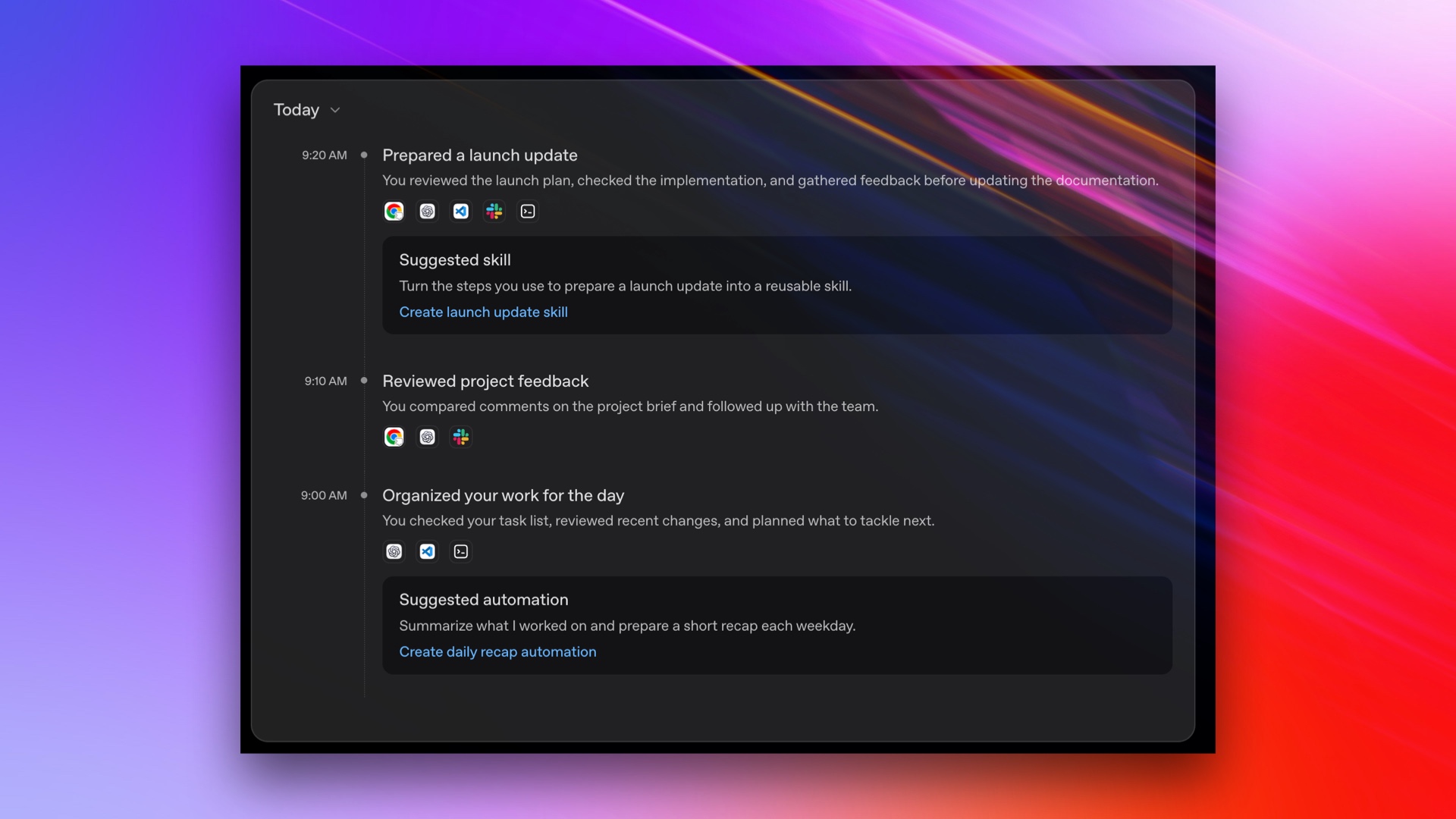
ChatGPT, OpenAI's chatbot and coding agent, has added a new feature to its MacOS application. This "Computer History" feature logs user activity on websites and applications, allowing the AI to follow a user's digital footsteps and anticipate their needs. Users can opt-in to this feature, which is currently available to subscribers of Pro, Business, and Enterprise plans on MacOS.
However, it's not yet available to users in the European Economic Area, Switzerland, or the United Kingdom. Admins can control user access for the latter two plans, and individuals can choose which applications and websites to track, as well as pause tracking at any time. Users can also view or delete their history. The feature doesn't capture screen content or voice input, unlike Microsoft's Windows Recall, which was later rolled back due to privacy concerns.
Instead, it uses macOS's accessibility API to capture actions like clicks, typing, keyboard shortcuts, app switches, and context. It then synthesizes this activity into a summary. While the summaries are generated in the cloud and stored locally, OpenAI doesn't retain the activity files unless legally required and doesn't use them for training.
However, users should be aware that the summaries can contain sensitive information and may be accessible to other programs running on the system. The feature creates tokens for summarizing and memory creation, potentially impacting the user's token budget and context window size. It's currently unknown if Windows or mobile app versions will be available.
Written by urgent.news from CNET's reporting — not their text. Machine-written — may contain errors; check the original before relying on it.