Can Zepto’s Revenue Engine Outrun Quick Commerce Costs?
In 2021, when much of India was still getting used to ordering groceries online, two teenage Stanford dropouts, Aadit Palicha…
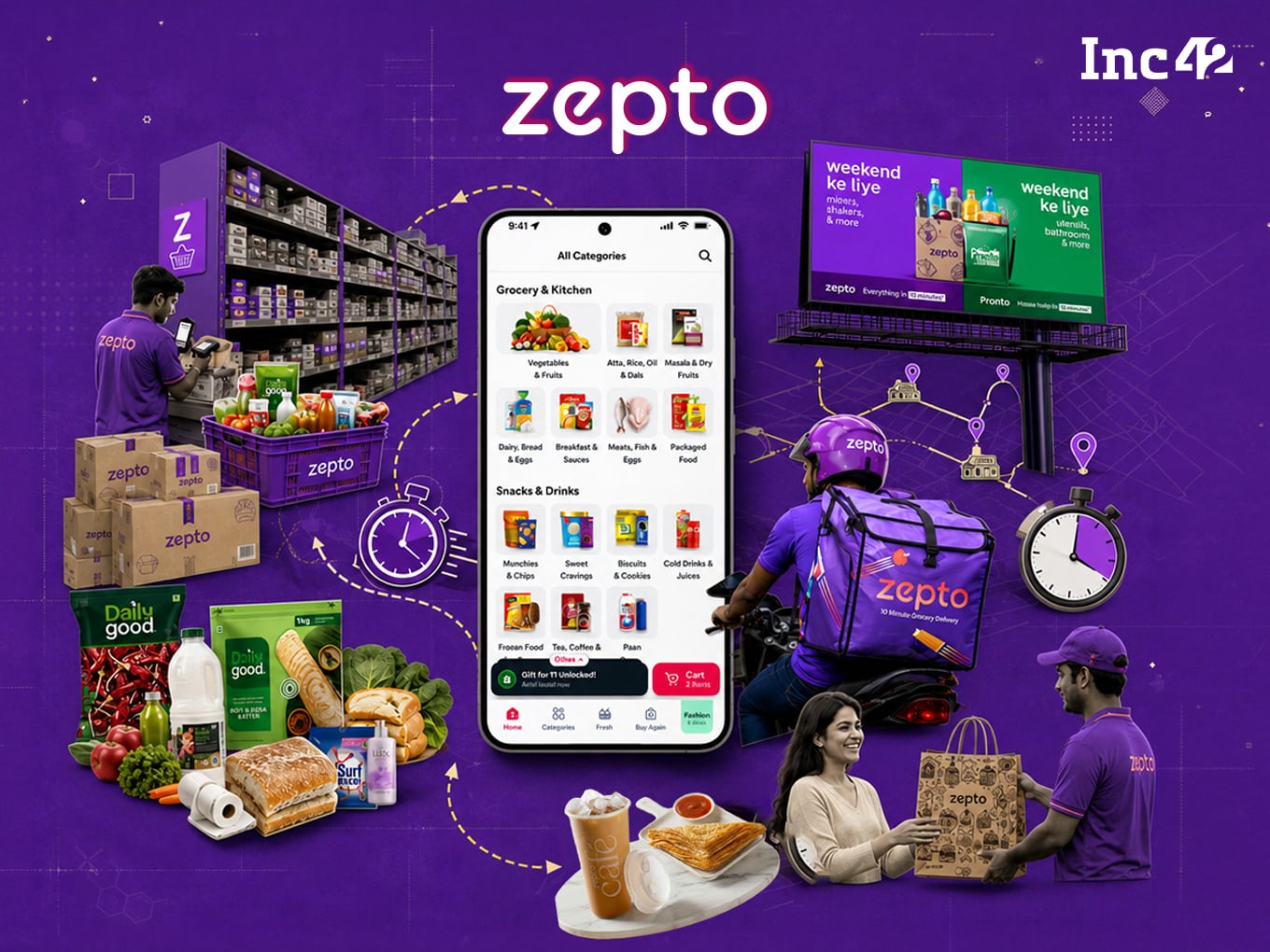
Zepto, the Indian quick commerce company, has been under scrutiny for its revenue model and ability to sustain growth amid rising costs. Founded by Stanford dropouts Aadit Palicha and Kaivalya Vohra, Zepto launched in 2021 with a revolutionary promise of delivering groceries and essentials within 10 minutes. However, the company's financials paint a different picture, with significant losses persisting even as its user base expanded.
As of FY26, Zepto generated ₹22,623.58 Cr in operating revenue but incurred a net loss of ₹5,905.19 Cr, highlighting the challenges of financing growth through losses. The company's primary revenue stream comes from the sale of traded goods, which surged from ₹3,905.19 Cr in FY24 to ₹17,587.92 Cr in FY26, comprising 77.7% of its operating revenue. This revenue is generated by procuring products and selling them through its platform.
Other significant revenue sources include services, which grew tenfold from ₹547.61 Cr in FY24 to ₹5,022.52 Cr in FY26, accounting for 22.2% of operating revenue. These services encompass warehousing, packaging, last-mile charges, platform services, advertising, subscription fees, and franchisee fees. The shift towards a marketplace model, initiated in April 2025, has allowed merchant partners to sell products on the platform, generating additional revenue.
Despite these revenue streams, the question remains whether Zepto's growth is sustainable in the long run. The company's heavy reliance on discounts and continuous spending to maintain its rapid delivery model may pose challenges post-IPO. Investors will closely examine how Zepto plans to transition from losses to profitability, as the costs associated with its 10-minute delivery promise may continue to be a burden even after the listing.
Written by urgent.news from Inc42's reporting — not their text. Machine-written — may contain errors; check the original before relying on it.