‘Among most dehumanising chapters’: Vice-President on India-Pak partition at DU
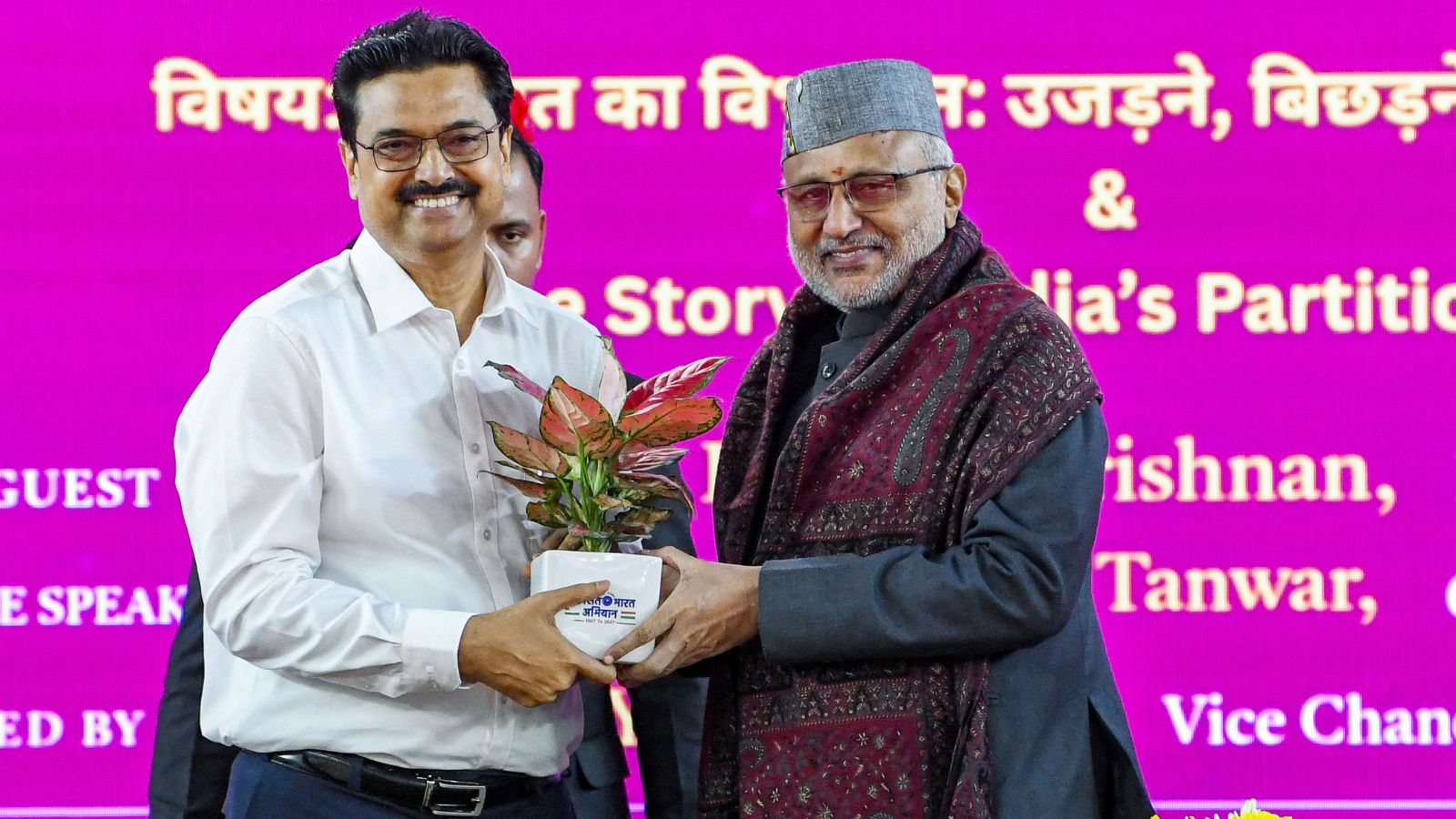
Vice-President C P Radhakrishnan described the India-Pakistan partition as one of the most tragic and dehumanising periods in the nation's history during a national seminar at the University of Delhi on Friday. He emphasized that the Partition Horrors Remembrance Day aimed to honor the suffering and sacrifices of those who endured the violence, displacement, and trauma of 1947, rather than reopening old wounds with bitterness.
Radhakrishnan, who is also the Chancellor of the University of Delhi, stressed that children should learn the truth about Partition, as its magnitude could not be reduced to a few lines in a textbook.
The Vice-President praised the survivors present at the seminar and expressed regret over the violence, displacement, and sufferings endured during that era. He highlighted the largest mass migration in human history, with over one crore people uprooted, and the tearing apart of families and neighbourhoods that stood for centuries.
Radhakrishnan also mentioned the immense suffering of women during Partition, including accounts of abduction, assault, forced marriage, and conversion. He shared stories of fathers taking their own daughters' lives rather than witnessing such violence.
The Vice-President called attention to the horrifying experiences of women during Partition, referring to accounts of abduction, assault, forced marriage, and conversion. He expressed deep sympathy for the devastation suffered by many survivors, whose homes were lost and whose sense of identity and belonging was permanently affected.
Radhakrishnan emphasized that time would not erase these experiences, and that the collective memory of Partition must be preserved. He also noted that the hurried redrawing of borders had led to disputes with ongoing consequences, affecting India's defence policy, national security, and relations with neighboring countries.
Written by urgent.news from The Indian Express's reporting — not their text. Machine-written — may contain errors; check the original before relying on it.