Afghan women tell the BBC their lives are unrecognisable after five years of Taliban rule
Women across the country speak of public floggings, losing their jobs, and barriers to healthcare that endanger lives.
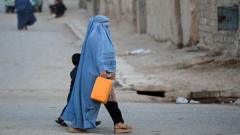
Five years after the Taliban seized control of Afghanistan, women and girls are living vastly different lives compared to the country's past. The hardline Islamist group has progressively curtailed the rights of the 22 million women residing in the nation since reclaiming power in 2021 - almost two decades after being ousted by a US-led military coalition.
The BBC, one of the few media outlets maintaining access to Afghanistan, engaged women from both urban and rural areas to document their experiences under the regime's rule.
The Taliban has barred girls aged 12 and above from attending school, restricted travel without a male escort, and introduced legislation necessitating legal consent for child marriage. When questioned by the BBC Afghan about the limitations women face, the Taliban's foreign minister claimed, "Women are not totally restricted on all walks of life." However, he acknowledged, "But the restrictions impact almost every part of their lives and make it difficult to tell their stories."
Many women have resorted to anonymity due to fear of retaliation. Ela, a resident of Kabul, stated, "Survival has become the priority, and many of us no longer have the time or energy to think about the future." Afghanistan remains the sole nation worldwide where girls are officially prohibited from pursuing secondary and higher education.
Shakiba, who recently completed her secondary education online, expressed her dismay at the loss of her aspiration to become a pilot, saying, "I wanted to fly freely and experience a world without limits."
The Taliban's foreign minister, Amir Khan Muttaqi, addressed the issue of education for girls, contending that "not everything is banned for women." He argued, "Right now, three million girls are attending schools and madrassas (religious centers focused on Islamic teachings)." Regarding the feasibility of religious schools producing doctors, Muttaqi maintained, "Only one small part (of their affairs) is restricted until further notice."
Employment opportunities for women have dwindled, with the United Nations reporting that only 7% of Afghan women are currently employed. News anchor Zuhal lost her job following a series of Taliban-imposed orders. "I was very passionate about my work and did it with love," she lamented. "The days when I woke up to the sound of my alarm clock and read the news felt proud and happy... but now, I wake up in the morning knowing I have to spend the entire day at home."
The Taliban has reintroduced corporal punishment, with official records indicating that hundreds have been flogged since 2021. Shaima recounted being whipped 50 times, leaving her body scarred and her family traumatized. She was forced to confess her alleged apostasy under the Taliban's watch, enduring a humiliating public ordeal. Shaima's eldest daughter now wakes up in fear almost every night, fearing her mother's safety.
Written by urgent.news from BBC World's reporting — not their text. Machine-written — may contain errors; check the original before relying on it.
This story
This is one outlet's version. Read the fullest account.
- 'Suffocating restrictions' shadow five years of Taliban rule in Afghanistan france24.com
- Afghan women tell the BBC their lives are unrecognisable after five years of Taliban rule bbc.co.uk
- Suffocating restrictions and a humanitarian crisis: Taliban marks five years in power in Afghanistan hindustantimes.com