5 Years After the Fall: Why the World Still Misreads the Taliban
The international community assumed that governing would change the Taliban. The Taliban, however, viewed government as a means of transforming society according to their ideology.
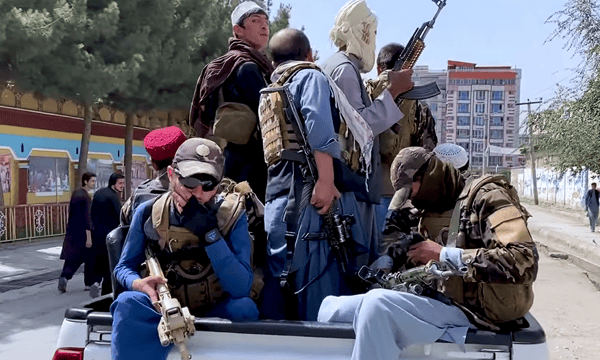
Five years have passed since the Taliban regained control over Afghanistan. Throughout this time, the global community attempted a variety of strategies to impact the Taliban’s actions, ranging from humanitarian aid and political pressure to diplomatic engagement and even direct talks. Meanwhile, human rights activists, political adversaries of the Taliban, and countless ordinary Afghans remained steadfast in their opposition.
These individuals employed tactics such as street protests, clandestine education, human rights campaigns, and various forms of civil disobedience to prevent the normalization of Taliban governance both within the country and on the international stage. Despite these efforts, neither the international community's primary objectives nor the aspirations of many Afghans were met.
An inclusive government never materialized, political and social limitations persisted, and instead of becoming more accommodating, the Taliban further entrenched their system of rule based on their own interpretation of religion. Women were barred from education, universities, employment, and significant aspects of public life, while civic space and fundamental rights were tightened even more.
The prevailing reaction to this situation was to conclude that the Taliban had not changed. However, this response raises a more critical question: why did so many international policies presume that the Taliban would change from the start? Why did a world that had invested two decades in building states, modern governance, and rule-based institutions in Afghanistan continue to believe that engagement, economic pressure, or the promise of international legitimacy could alter the group's behavior?
The central issue may not have been the Taliban's failure to change; rather, it was the international community's analytical framework, which was ill-equipped to comprehend the nature of such a movement. This article does not seek to understand why the Taliban govern as they do. Instead, it seeks to explain why, despite the Taliban's first regime, two decades of conflict, state-building efforts, and five years of direct observation of their rule post-power return, the international community continued to employ an analytical framework that was incompatible with the actual nature of the movement.
The answer to this question is vital not only for comprehending Afghanistan's recent past but also for reevaluating how ideological movements are assessed and how future peace processes are structured in other global conflicts. How the International Community Perceives the Taliban Much of the international community's approach to the Taliban was built upon a set of assumptions that ultimately proved incompatible with the reality of the group's rule.
These policies were shaped by the belief that, after two decades of war, the Taliban's primary goal was to secure political power, end their international isolation, and transform into a politically active entity within the established norms of international politics. Consequently, it was anticipated that involvement in negotiations, the responsibilities of governance, economic pressures, and the pursuit of international legitimacy would eventually moderate the group's behavior and priorities.
However, this analytical framework was based on three core assumptions. First, the Taliban understood concepts like statehood, legitimacy, peace, the rule of law, and human rights in the same manner these ideas are typically understood in international political and legal discourse. Second, the transition of an armed group from conflict to peace process, and eventually to government, would gradually transform them into actors compatible with modern governance principles.
Third, the responsibilities of governing and the need for engagement with the outside world would surpass the group's ideological objectives. These assumptions did not originate solely from analyses of the Taliban themselves. They also reflected the prevailing political climate of the time. Following two decades of war, the international community was eager to avoid prolonged conflict, the high military costs, and the failure of state-building initiatives in the former Afghan Republic.
In this context, achieving a peace agreement became a critical priority – sometimes even more important than a thorough understanding of the Taliban's nature and the conditions required for sustainable peace. The shortcomings of international policy cannot be attributed solely to tactical errors or political naivety. They stem from an analytical framework that perceived the Taliban primarily as a political actor, rather than as an ideological movement with a religious mission.
The Taliban were initially viewed as a political actor, rather than as an ideological movement, which led to the assumption that holding power would eventually align the group with the demands of modern governance. The Taliban's nature was less about political power and more about their religious ideology, where governing was considered a means to establish an order based on their beliefs.
Legitimacy was measured by adherence to these religious principles rather than by citizen consent or international recognition. Consequently, policies that seemed costly or irrational to foreign observers were consistent with the Taliban's internal logic. The Taliban not only altered the government structure but also redefined the concept of citizenship based on loyalty to their ideology.
Written by urgent.news from The Diplomat's reporting — not their text. Machine-written — may contain errors; check the original before relying on it.