Zhu Rongji’s legacy: how the late premier reshaped state firms, Pudong and China’s economy
Turn-of-the-century images of Zhu Rongji alongside former US president Bill Clinton have largely accompanied coverage following the former Chinese premier’s death on Wednesday. The moment in April 1999 was more than a diplomatic milestone. It underpinned some of China’s most consequential reforms that defined Zhu’s tenure, from its drive to join the World Trade Organization to an overhaul of the…
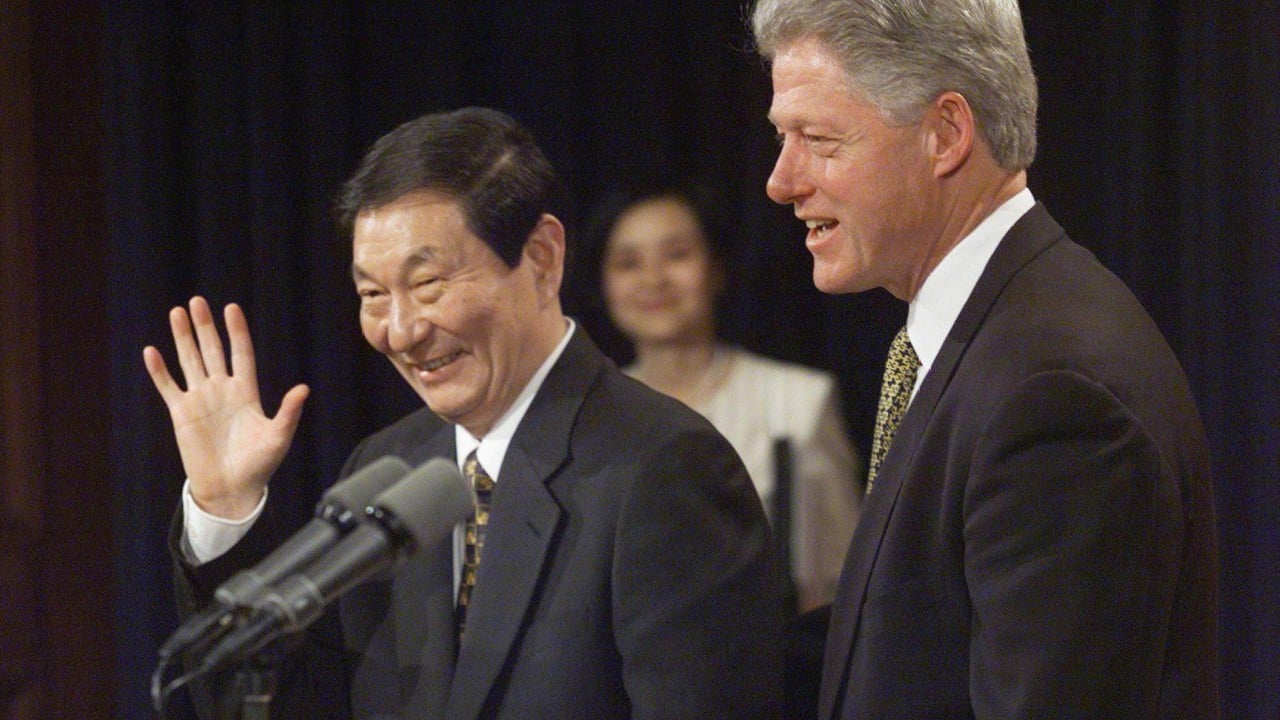
Zhu Rongji, the former Chinese premier, left an indelible mark on China's state-owned enterprises, Pudong, and the nation's economy. Born on January 1, 1934, he passed away on June 8, 2021, at the age of 97. Zhu was known for his intelligence, insightful approach, outspoken nature, and decisiveness. A key figure in China's economic reform journey, his strategic trip to Washington in the '90s has since become a focal point for American lawmakers, think tanks, and officials amid China's growing rivalry with the US.
Zhu's tenure was marked by significant reforms, including his drive to join the World Trade Organization, an overhaul of the state sector, and the opening of its markets to the world. He championed entrepreneurship, foreign management expertise, and the revival of Chinese enterprises. According to Zhang Chongqing, a former colleague, Zhu was always eager to learn foreign management expertise and find a way forward for state-owned enterprises, which formed the backbone of China's centrally managed economy for decades.
Domestically, Zhu valued home-grown entrepreneurs. In 1996, two years before Zhao Zhongyu's retirement from Pangang Group, a leading Chinese steelmaker, Zhu conducted a field inspection and helped advance the company's technological innovation and preparations for a stock market listing. Despite the controversy surrounding the layoffs of millions of workers due to the reformation of state-owned enterprises, Zhang acknowledged it was a price worth paying for China's economic revitalization.
Zhu's impact extended beyond his time as premier. As the founding honorary chairman of the CEIBS advisory board, he welcomed world-class entrepreneurs and scholars, including Elon Musk, Mark Zuckerberg, Tim Cook, Ray Dalio, Jamie Dimon, Stephen Schwarzman, and Henry Paulson. This board served as a crucial advisory body until 2024 when it was led by former vice-president Wang Qishan.
Written by urgent.news from South China Morning Post's reporting — not their text. Machine-written — may contain errors; check the original before relying on it.
Also reported by 3 other outlets
- S. Korean ambassador to China mourns death of ex-Chinese Premier Zhu Rongji koreatimes.co.kr
- The legacy of Zhu Rongji freemalaysiatoday.com
- S. Korean ambassador to China mourns death of ex-Chinese Premier Zhu Rongji en.yna.co.kr