What the Mecca military pact means for China
When Saudi Crown Prince Mohammed bin Salman, Turkish President Recep Tayyip Erdogan, and Pakistani Prime Minister Shehbaz Sharif signed the Mecca defence agreement, they executed a structural overhaul of the Middle East’s security architecture. The pact codifies a defence commitment, where an armed attack on one is treated as an assault on all. Building upon September’s Saudi-Pakistan defence…
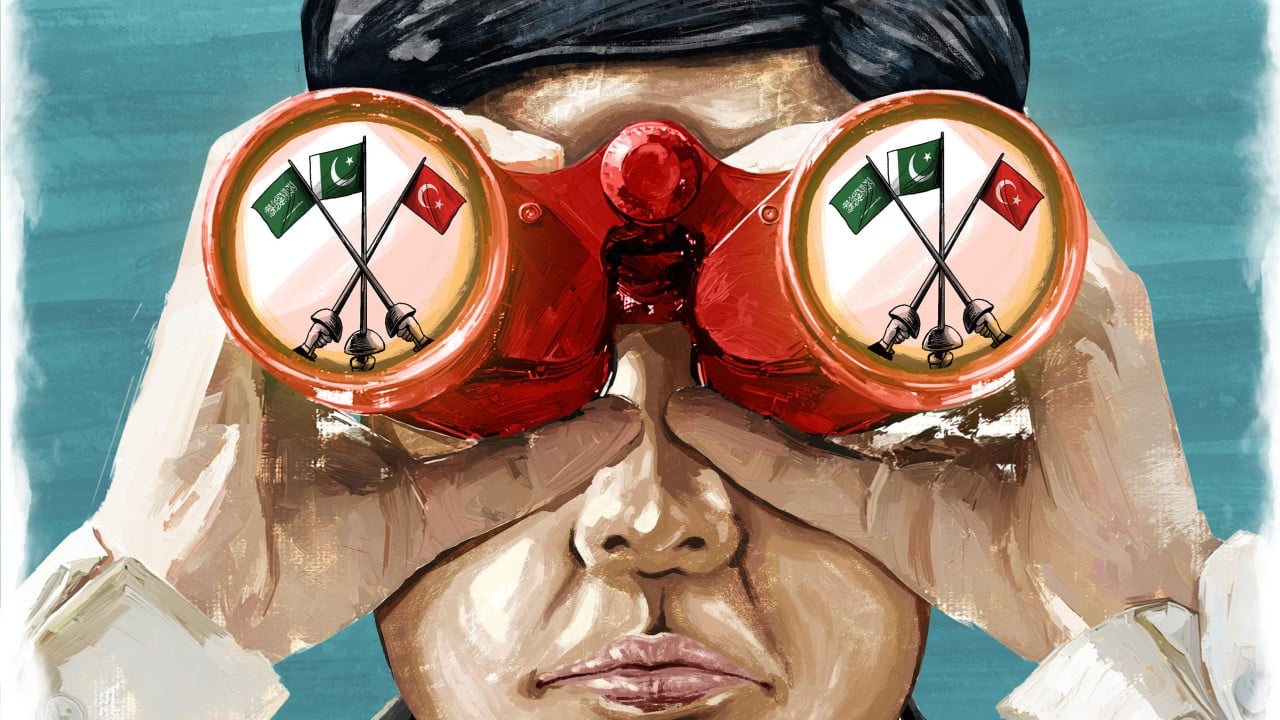
The Mecca defence agreement, signed by Saudi Crown Prince Mohammed bin Salman, Turkish President Recep Tayyip Erdogan, and Pakistani Prime Minister Shehbaz Sharif, represents a significant restructuring of the Middle East's security landscape. This pact establishes a mutual defense commitment, where an armed attack on one member is considered an attack on all.
Building on the Saudi-Pakistan defence pact, this new agreement combines the financial resources of the Gulf, the military might of NATO, and the nuclear capabilities of a South Asian state.
The agreement emerged from concerns over the reliability of Western security guarantees and the potential for regional instability, including threats from Iran-backed groups, attacks on energy infrastructure, and unpredictable American foreign policy. For Saudi Arabia, the pact serves as a safeguard for Vision 2030, protecting major projects and energy routes from regional threats and American policy volatility.
For Turkey, it provides a platform to project power across the Islamic world, focusing on defense exports and regional influence through its Bayraktar drones and Kaan fighter jets. For Pakistan, the agreement ensures critical financial support and energy supplies, elevating Pakistan's military status as a key regional player.
While some critics label the pact as an "Islamic NATO", its structure differs significantly. Unlike the transatlantic alliance, which operates under a rigid, institutionalized command structure with American hegemony, the Mecca pact functions as a flexible, transactional coalition. It lacks a permanent headquarters, relying instead on state-to-state defense integration, intelligence sharing, and defense-industrial collaboration.
This arrangement reflects a shift in Middle Eastern powers away from dependence on American guarantees towards a more balanced, multi-vector security approach.
From China's perspective, the Mecca pact has both opportunities and challenges. On the positive side, China welcomes the diminishing American security presence in the Gulf, as it aligns with Beijing's vision of a multipolar global order where regional actors assume more responsibility for their own security. This shift supports China's Belt and Road Initiative by safeguarding critical maritime trade routes and energy supplies.
However, the pact also poses potential risks. Firstly, there is the concern of disrupting China's diplomatic relations with Iran, given Beijing's reliance on Iranian oil and its efforts to mediate between Saudi Arabia and Iran. The pact's anti-Iran stance could complicate China's position, potentially forcing a choice between supporting Iran or maintaining its energy and strategic partnerships with the Mecca bloc.
Additionally, the pact's competitive edge in arms technology, particularly in Pakistan and the Gulf, could impact China's defense industry, especially in comparing with Chinese exports like the FC-31 stealth fighter and Wing Loong UAVs.
China's official stance towards the Mecca pact will be one of cautious support, emphasizing the principle of "regional ownership of security" and urging mutual stability without Western intervention. However, privately, Chinese officials will seek to prevent the alliance from becoming a formally anti-Iran bloc, which could escalate regional tensions.
To maintain its economic interests and ensure energy security, China will intensify its role as a crucial economic partner to both sides of the Gulf divide. This includes leveraging China's economic ties with Iran to promote stability and counter provocative actions that could trigger the pact's mutual defense clause. Additionally, China is likely to promote integration between the signatories' economic corridors, such as the Saudi Vision 2030, Turkey's Middle Corridor, and China-Pakistan Economic Corridor, through large-scale infrastructure investments, digital grid development, and green energy technologies.
By doing so, China aims to ensure that while the Mecca pact controls regional security, it remains the dominant economic player in the Middle East.
Written by urgent.news from Reuters Business via SCMP's reporting — not their text. Machine-written — may contain errors; check the original before relying on it.
This story
This is one outlet's version. Read the fullest account.